UNITED NATIONS, May 7 2020 (IPS)* – The world’s poorer nations, reeling under an unrelenting attack on their fragile economies by the COVID-19 pandemic, have suffered an equally deadly body blow: being buried under heavy debt burdens.
6 May 2020 (UN News)* — Lockdowns, travel restrictions, resource cutbacks and other measures to curb the spread of the new coronavirus are putting victims of human trafficking at risk of further exploitation, while organized crime networks could further profit from the pandemic, according to the UN Office on Drugs and Crime (UNODC).
7 May 2020 (UN Environment)* — The coronavirus pandemic is reminding us that we live in a connected world. It’s an opportunity to revisit our relationship with nature and rebuild a more environmentally responsible world.
It highlights the importance of conserving and restoring the ecosystems that support the natural cycles essential for the survival and well-being of migratory birds.
Migratory birds are part of our shared natural heritage and they depend on a network of sites along their migration routes for breeding, feeding, resting and overwintering.
3 May 2020 (Wall Street International)* – “The Past is a Foreign Country; they do things differently there”, so stated L.P. Hartley in his award-winning novel the Go-Between (1953). Beyond the mainstream critique of that text and accusations of its culturally narrow reference base, I would argue that before long we will have need to revisit textbook diagrammatic representations of the human timeline, and perhaps even the dendrochronological carbon record as we traverse this momentous watershed called Coronavirus.
What happened to balanced budgets, austerity, tight money, cut-backs in public spending, restructuring, streamlining, debt? – the entire architecture of fiscal and financial orthodoxy?
.
Agence Olloweb on Unsplash. | Some rights reserved.
The world is changed. I feel it in the water. I feel it in the earth. I smell it in the air. Galadriel
5 May 2020 (openDemocracy)* — There is a prevailing journalistic narrative that the COVID-19 emergency will prove to be the portal to a brave new world of increasingly powerless citizens and increasingly powerful governments.
6 May 2020 (UN News)* — The COVID-19 pandemic is not only a health crisis, but it is also proving to be an economic disaster for huge numbers of people worldwide. A senior UN official with the UN Development Programme (UNDP) is calling for countries to provide citizens with a universal basic income, to help the millions who have lost their jobs, because of measures to curb the virus, combined with increasing levels of inequality.
UN Photo/Kibae Park | A woman in Viet Nam makes environmentally-friendly biomass briquettes, a biofuel substitute to coal and charcoal cooking fuel.
Kanni Wignaraja, who runs the UNDP’s Asia-Pacific bureau, spoke to UN News and started by explaining why the idea of universal basic income (where governments give a minimum sum of money to all citizens, based on work status or income) is starting to gain traction.
(UN News)* — Unabated violence, particularly in and around the Libyan capital, has now been raging for more than a year, the Prosecutor of the International Criminal Court (ICC) told the Security Council in a virtual briefing on Tuesday [5 May 2020], warning that war crimes may have been committed.
“Of particular concern to my Office are the high numbers of civilian casualties, largely reported to be resulting from airstrikes and shelling operations”, said Fatou Bensouda.
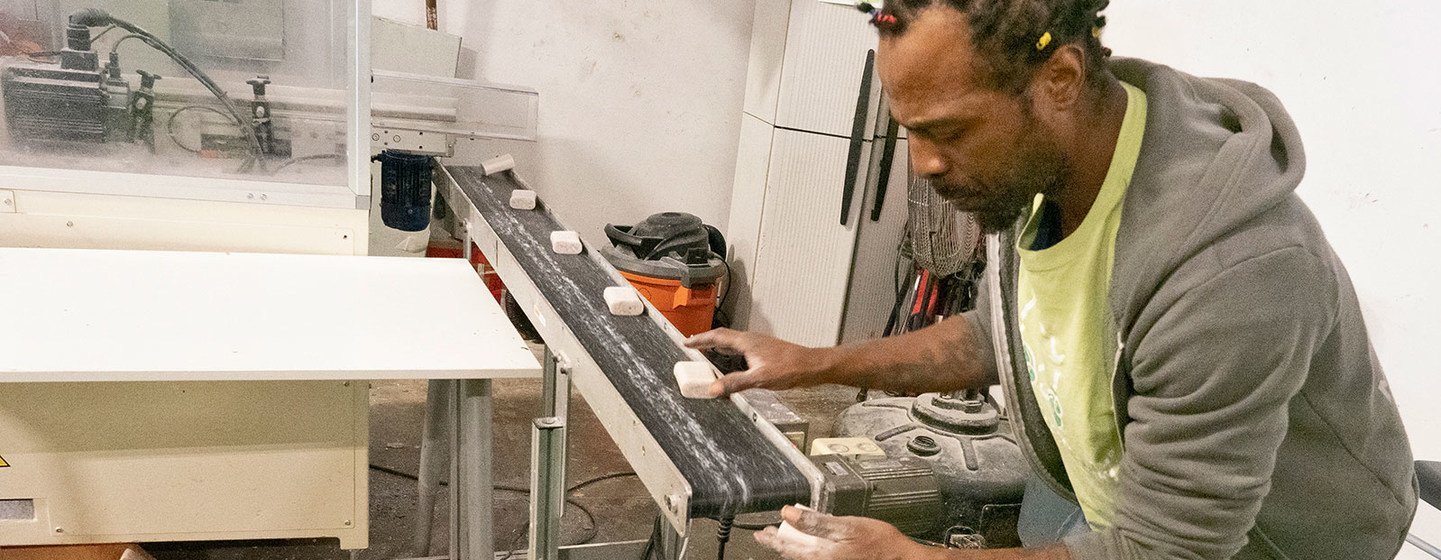
(UN News)* — Handwashing with soap and water has been identified by the World Health Organization (WHO) as an extremely important way to reduce the spread of COVID-19 but, in many countries, even basic facilities are hard to come by. On Hand Hygiene Day, marked on Tuesday [5 May 2020], we look in-depth at the work that one US-based NGO is doing, providing soap in shelters supported by the UN refugee agency (UNHCR), in Mexico.
ILO Photo/John Isaac | An employee at Clean the World collecting the completed recycled bars (the finished product for distribution) of soap coming off of the conveyor belt.
In Tijuana and Mexicali, close to the border with the US, some 30 shelters house refugees and migrants, including thousands of Nicaraguans; part of an exodus of people in Central and South America, claiming asylum from persecution and human rights abuses.
7 May 2020 (United Nations)* — “Vesak”, the Day of the Full Moon in the month of May, is the most sacred day to millions of Buddhists around the world. It was on the Day of Vesak two and a half millennia ago, in the year 623 B.C., that the Buddha was born. It was also on the Day of Vesak that the Buddha attained enlightenment, and it was on the Day of Vesak that the Buddha in his eightieth year passed away.
The UN General Assembly, by its resolution 54/115 of 1999, recognized internationally the Vesak Day [7 May]to acknowledge the contribution that Buddhism, one of the oldest religions in the world, has made for over two and a half millennia and continues to make to the spirituality of humanity.
This day is commemorated annually at the UN Headquarters and other UN offices, in consultation with the relevant UN offices and with permanent missions, which also wish to be consulted.
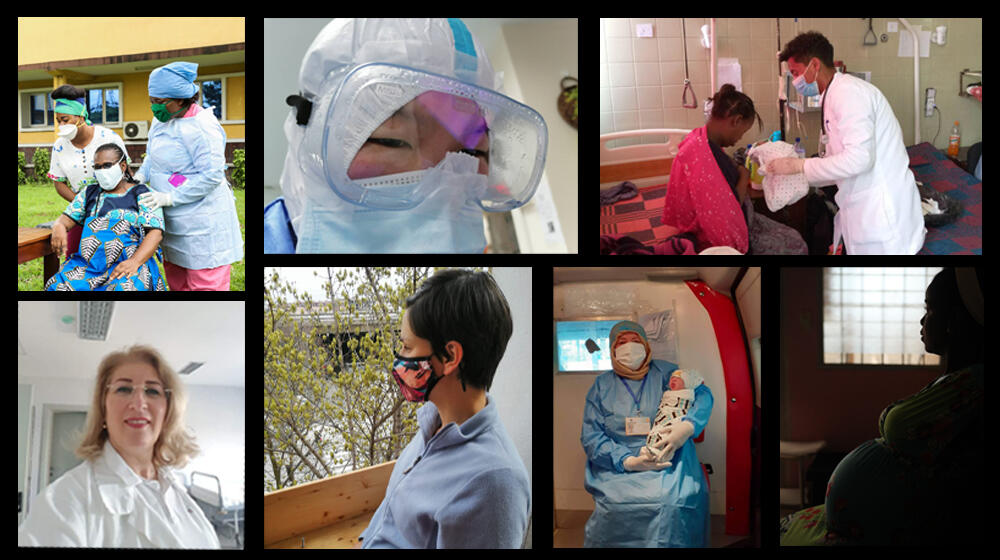
UNITED NATIONS, New York, 4 April 2020 (UNFPA)* – Around the world, May is a time to celebrate mothers and the health workers who help them enter motherhood. Dozens of countries observe Mother’s Day in May and, on 5 May, the International Day of the Midwife honours the life-saving work of midwives everywhere. Yet this May, as the COVID-19 pandemic sweeps through the world, these celebrations arrive on a sombre note.

 Photo by Pixabay
 Yayoi Kusama, The spirits of the pumpkins descended into heavens (2015) Installation view at Museum MACAN © Yayoi Kusama | Image posted here from Wall Street International.
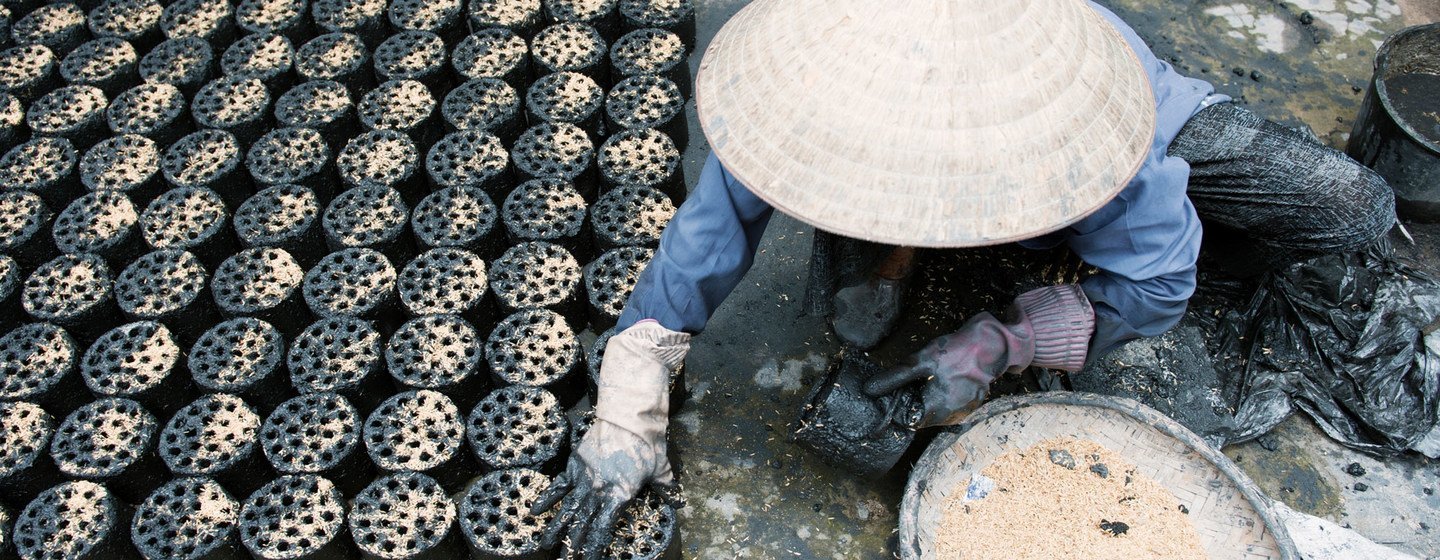 UN Photo/Kibae Park | A woman in Viet Nam makes environmentally-friendly biomass briquettes, a biofuel substitute to coal and charcoal cooking fuel.

 HUMAN WRONGS WATCH