10 April 2020 (Wall Street International)* — Although springtime has arrived this year just when it always does, no one is there to welcome it. No sigh of relief as winter coats and scarves, boots and gloves are exchanged for shorts and t-shirts. Instead we are all protectively sequestered, staring out our windows and doors with amazement that the seasons, the rhythms of life go on without us.
SYDNEY and KUALA LUMPUR, Apr 9 2020 (IPS)* – Within weeks, the Covid-19 epidemic was classified by the World Health Organization (WHO) as an epidemic of international significance, triggering a pre-agreed WHO response. By the end of the first week of April, more than 1.3 million people had been confirmed as infected, with over 65,000 deaths across the world.
Many governments of developing, especially poor countries are unsure what to do, fearing the likely economic consequences of the ‘lockdowns’ increasingly adopted by Western economies.
Indeed, lockdowns may shut down businesses relying on daily turnover and eliminate incomes for daily rated workers.
Meanwhile, most East Asian and some other governments have acted early to trace, test, isolate and treat the infected without lockdowns. Yet, most measures recommended have been criticized as beyond the means of the most vulnerable societies and populations.
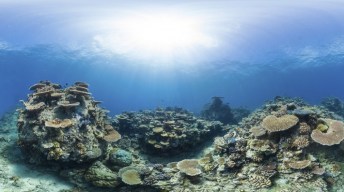
Schools, events and activities in so much of the world have come to a standstill in the wake of COVID-19, with little or no movement recommended. But that does not mean we cannot still enjoy the world and mysteries that abound below and above its surface.
Photo by IYORBank CoralReefs/ TheOceanAgency
The Ocean Agency, a partner of the United Nations Environment Programme, is inviting parents and their little ones to experience the ocean and its astounding life forms from the comfort of their homes through a little armchair travel.
The U.S. and its allies confiscated 17 ships loaded with food and fuel heading for Yemen.
An oil tanker held off the coast of Yemen. April, 2020. | Photo: Twitter/ @Hispantv
10 April 2020 (teleSUR)* — The U.S. and Saudi Arabia Friday confiscated 17 ships loaded with food and fuel heading for Yemen, even though the vessels had the necessary permits to arrive in that country.
Although 14 ships carrying oil and three vessels carrying food had permits issued by the United Nations to enter Yemen, the coalition’s marine forces prevented them from doing so.
BARCELONA, Apr 10 2020 (IPS)* – We have long speculated on the moment when the shift of global leadership from the United States to China would take place. From Washington to Beijing for the political power, from New York to Shanghai for the economic one. It seems that we are witnessing it now.
Wuhan City. Credit: UNESCO
Some saw the Beijing Olympics (2008) and especially its opening ceremony as an attempt by China to display this new reality. Others saw it later, with the creation of the Asian Investment and Infrastructure Bank (2015), as opposed to the Bretton Woods system (IMF and World Bank) that for decades has been a fundamental pillar of North American hegemony.
(UN News)* — As governments struggle to cope with the COVID-19 pandemic, billions of people living in countries teetering on the brink of economic collapse are being threatened further by a looming debt crisis, according to a new UN report released on Thursday [9 April 2020].
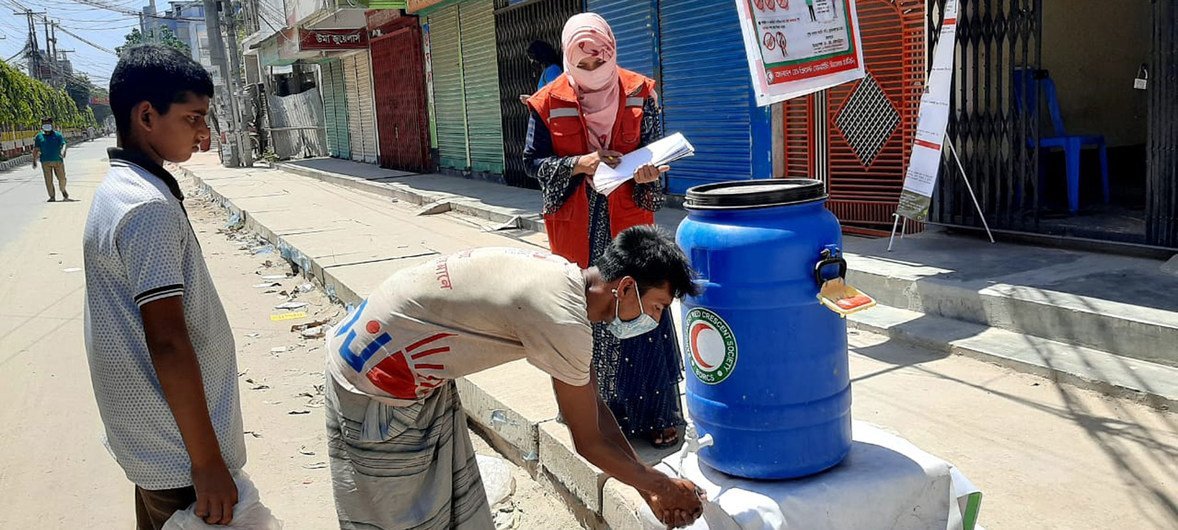
International Federation of Red Cross and Red Crescent Societies | Bangladesh Red Crescent Society’s staff and volunteers promote hand washing, spray disinfectant and provide emergency food, to fight against COVID-19.
Q&A with Berhe Tekola, FAO’s Director for Animal Health and Production
Farmer with her livestock in Mongolia.
9 April 2020 (FAO)* — In this interview, Berhe Tekola, FAO’s Director for Animal Health and Production, sets the record straight about COVID-19 when it comes to animals – be that pets or livestock, and eating foods of animal origin.
10 April 2020 (UN Environment)* — The coronavirus pandemic is forcing us to think deeply about human beings’ relationship with the natural world on which we all depend for our survival.
Photo by Trond Larsen/Conservation International, 2017
Past crises show that workers and employers need to work together to address the impact of COVID-19, says a new joint report from the International Labour Organization’s workers’ and employers’ groups.
GENEVA,9 April 2020 (ILO)* – Collective efforts and solidarity between Employers’ and Workers’ Organizations is critical to respond effectively to the impact of the COVID-19 pandemic in the world of work, according to a new International Labour Organization (ILO) report.
COVID-19 has in many parts of the world jeopardized the health and safety of millions of people, and put immense pressure on businesses, jobs, and livelihoods.
 Spring | Image from Wall Street International.




 HUMAN WRONGS WATCH