It is nothing less than a “moral, ethical and economic imperative” to take more action to mitigate the existential threat posed by climate change, said top executives from across the United Nations system on Thursday [9 May 2019].
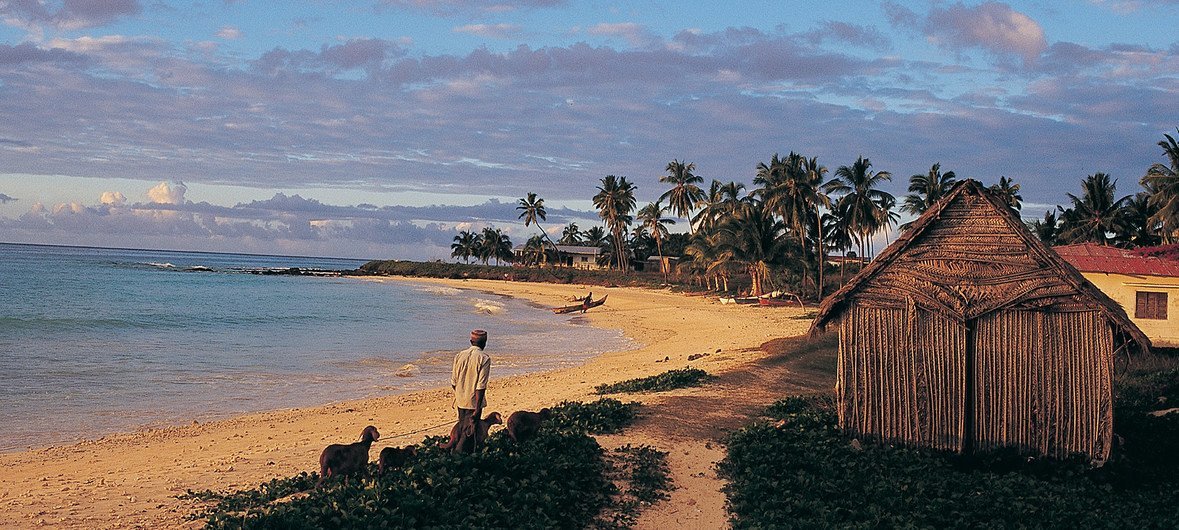
UNDP Comoros/James Stapley | People living on the Comoros archipelago in the Indian Ocean are needing to adapt to climate change.
Calling on Member States to take “urgent action to limit global temperature rise to 1.5°C above pre-industrial levels”, the leaders of more than 30 UN agencies and entities, issued a formal, joint appeal for governments everywhere to “step up ambition and take concrete action” ahead of the landmark Climate Action Summit, which has been convened by UN chief António Guterres this September.
10 May 2019 (UN Environment)* — Every year, birds make epic journeys across the world to survive. Over millions of years certain species of birds have become hard-wired to seek food and nesting sites along routes.
Photo by Bob Peyton/USFWS, Flickr
Take the red knot, a tiny shorebird that migrates from the tip of South America all the way to the Arctic Circle. They fly for up to 3,200 km without stopping at altitudes of 6,000 metres where the air is incredibly thin. And as they fly north, there are only a handful of specific places where they land.
9 May 2019 — The “race is on” in Indonesia to halt the illegal trade in wildlife and the loss of biodiversity according to the UN Development Programme (UNDP).The “race is on” in Indonesia to halt the illegal trade in wildlife and the loss of biodiversity according to the UN Development Programme (UNDP).*
UNDP Indonesia | Sumatran tigers are found only on the Indonesian island of Sumatra, where less than 400 exist today.
The trade in wildlife in the South-East Asian country, which is estimated to be worth up to US$1 billion a year, has already led to the extinction of some animal species and disrupted the region’s ecological balance.
8 May 2019 — Now in its tenth month, the Ebola epidemic in the Democratic Republic of the Congo (DRC) has claimed more than a thousand lives, prompting Secretary-General António Guterres to throw the support of “the whole United Nations system” into stemming the spread of the deadly virus.
.
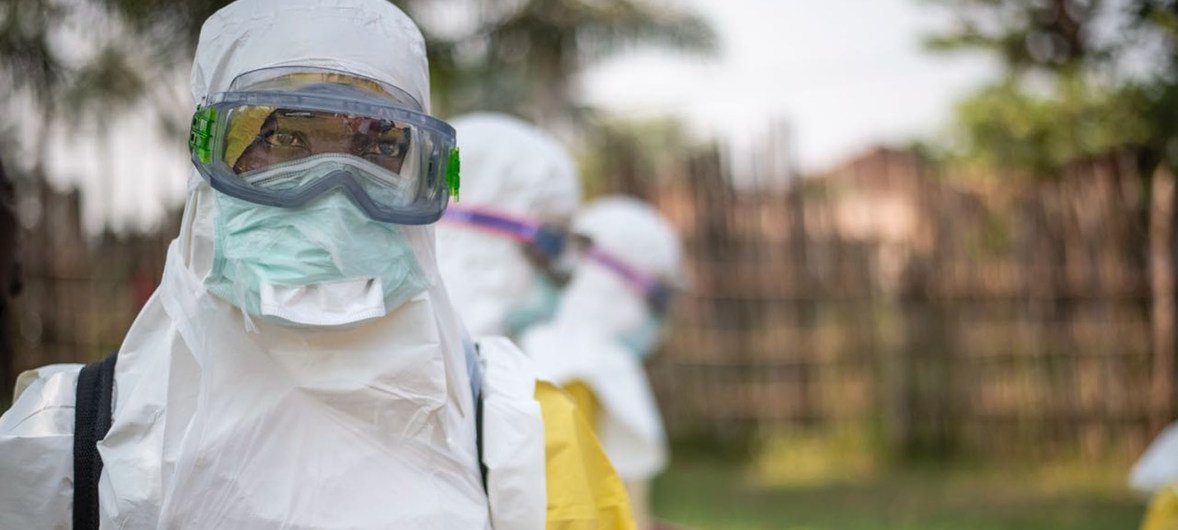
International Federation of Red Cross and Red Crescent Societies | Clinic in Mbandaka, Democratic Republic of the Congo, where health care workers treat Ebola patients.
“When people hear it from their peers who say ‘we’re fucked,’ that will be really powerful.”
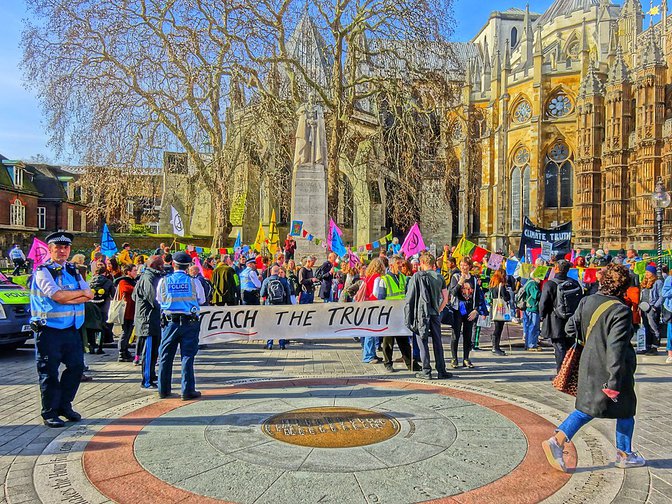
Extinction Rebellion Tell the Truth Protest, London February 22 2019. | David Holt via Wikimedia Commons. CC BY 2.0.
7 May 2019 (openDemocracy)* — In one mad sunny week over the Easter weekend, Extinction Rebellion brought public attention to the problem of climate change in a way that had rarely been achieved before. The group’s most ambitious demand – to cut greenhouse gas emissions completely by 2025 – is unlikely to be met.
Repeated and increasingly sophisticated armed attacks in the Sahel and food shortages linked to last year’s severe drought, have reached unprecedented levels, putting the future of a “whole generation” at stake, three top UN humanitarian officials said on Wednesday [8 May 2019].
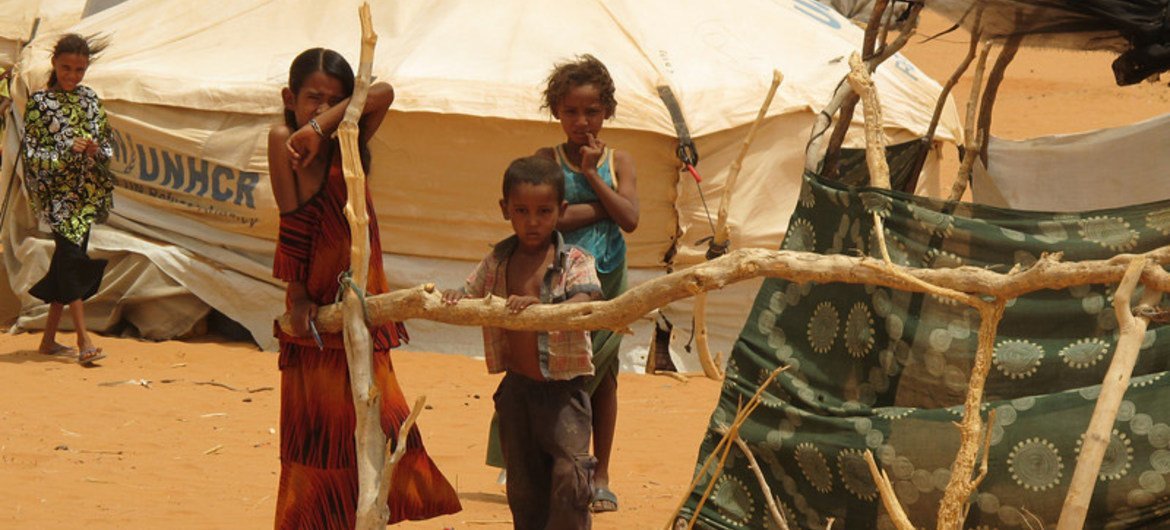
WFP/Justin Smith | Drought has affected residents of the Mbera refugee camp, Mauritania, in the Sahel region of Africa.
In an appeal for increased funding to support millions of people affected by spreading violence in Mali, Niger and Burkina Faso, the UN Resident and Humanitarian Coordinators for the three countries warned that the instability risked spilling over into other West African countries.
Needs are growing, they maintained, amid a five-fold rise in displacement in the last 12 months which has seen more than 330,000 people leave their homes, in addition to 100,000 refugees.
A new European Union-funded FAO, IFAD and WFP initiative seeks to empower rural women and men, boys and girls for food security, better nutrition and sustainable agriculture.
.
Women working in a vegetable garden in the village of Ndiama Peulh, Senegal.
ROME (FAO)* — Three United Nations agencies on 8 May 2019 launched a new European Union-supported global initiative to address the root causes of rural gender inequalities and thus strengthen efforts to end hunger, achieve food security and improved nutrition and promote sustainable agriculture.
9 May 2019 (UN Environment)* — From Lagos and Lahore to London, it’s the poorest people who are most affected by air pollution. The poor tend to be priced out of the leafy suburbs where there are fewer highways and air quality is better.
Photo by Joshua Okunfolami, Wikimedia Commons
Air pollution is caused by harmful particulates and gases released into the air. It leads to premature death from heart disease, stroke, and cancer, as well as acute lower respiratory infections. Indoor and outdoor (ambient) air pollution caused an estimated 7 million deaths globally in 2016, according to the World Health Organization.
Millions of dollars in emergency funding is needed in Gaza to save the shattered limbs of some 1,700 people who have been seriously injured in demonstrations against Israel along the border fence, a top UN humanitarian official said on Wednesday [8 May 2019].
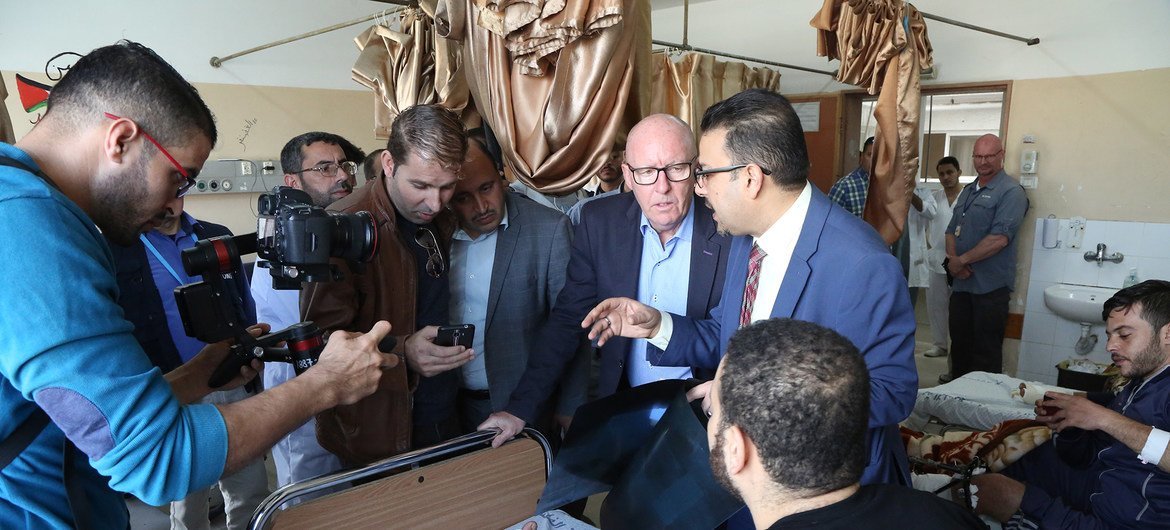
UNRWA/Khalil Adwan | UN Humanitarian Coordinator for the Occupied Palestinian Territory, Jamie McGoldrick (centre), visits patients in Al-Shifa Hospital in Gaza, along with doctors and WHO’s representative.
.
In an appeal for $20 million to help victims hurt during protests dubbed the Great March of Return – weekly rallies on Fridays by Gazans that began a year ago, leaving 29,000 people injured, many by live ammunition – Jamie McGoldrick, Humanitarian Coordinator for the occupied Palestinian territory (oPt), said that more resources were urgently required.
Conflicts and widening rural-urban gaps hamper the region’s efforts to end hunger by 2030
A child collects eggs in Al-Ghizlaniyah near Damascus. In Syria, FAO assists vulnerable communities to increase their dietary diversity and improve food and nutrition security through backyard poultry production.
8 May 2019, Cairo/Rome (FAO)* – Hunger in the Near East and North Africa region (NENA) continues to rise as conflicts and protracted crises have spread and worsened since 2011, threatening the region’s efforts to achieve the 2030 Agenda for Sustainable Development, including Zero Hunger.





 HUMAN WRONGS WATCH