1 March 2019 (UN Women)* — A bus to get to work. A clinic for health care. A monthly pension for old age. Some people can take these for granted. But many others suffer from the lack of infrastructure, public services and social protection that affect their rights and well-being. Women and girls are often foremost among those who miss out.
4 March 2019 (FAO)* — High up in Guatemala’s Cuchumatanes mountains, lunch is served in the Torres household. Mom Catarina places a steaming plate of empanadas – pastry stuffed with tomatoes, onions and greens – on the dining table in front of her three daughters, whose eyes shine bright in anticipation.
Although the recipe comes from a new cookbook created specifically for the 2 000 or so families from the Ixil Triangle, in the region of Quiché, the recipes are based on ancestral knowledge and native crops.
UNRWA* — The Commissioner-General of the United Nations Relief and Works Agency for Palestine Refugees in the Near East (UNRWA), Pierre Krähenbühl, on 29 January 2019 called for a total of US$ 1.2 billion to fund the Agency’s vital core services and life-saving humanitarian aid for 5.4 million Palestine refugees across the Middle East. It is the amount needed to keep UNRWA operations at the same level as in 2018.
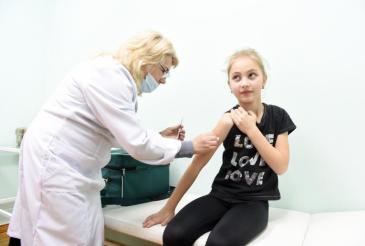
Ten countries accounted for approximately three-quarters of the total increase in measles in 2018, including significant outbreaks in Brazil, Madagascar, the Philippines, Ukraine, and Yemen
UNICEF/UN0284080/ Dyachyshyn | Maryana Dzuba, 9, receives her first dose of MMR vaccine on 21 February 2019 in the medical centre of the Lapaivka village school, Lviv region, Ukraine, as part of a three-week long catch-up vaccination campaign to increase MMR coverage among school aged children in the region. Photo: Yurko Dyachyshyn
NEW YORK, (UNICEF)* – UNICEF on 1 March 2019 warned that global cases of measles are surging to alarmingly high levels, led by ten countries accounting for more than 74 per cent of the total increase, and several others that had previously been declared measles free.
23 February 2019 (Wall Street International)*— Generalized anxiety disorder (GAD) accounts for 8% of primary-care visits in the United States and has a lifetime prevalence of 18%. At present, 13% of the elderly population and 10% of younger adults are being treated with antidepressant medications. Lifetime prevalence for major depressive disorder is 16.5%.
Other common conditions include: post-traumatic stress disorder (PTSD), with a lifetime prevalence of 6.8%; panic disorder, with a lifetime prevalence of 4.7%; bipolar disorder, with a lifetime prevalence of 3.9%; and obsessive–compulsive disorder, with a lifetime prevalence of 1.6%.
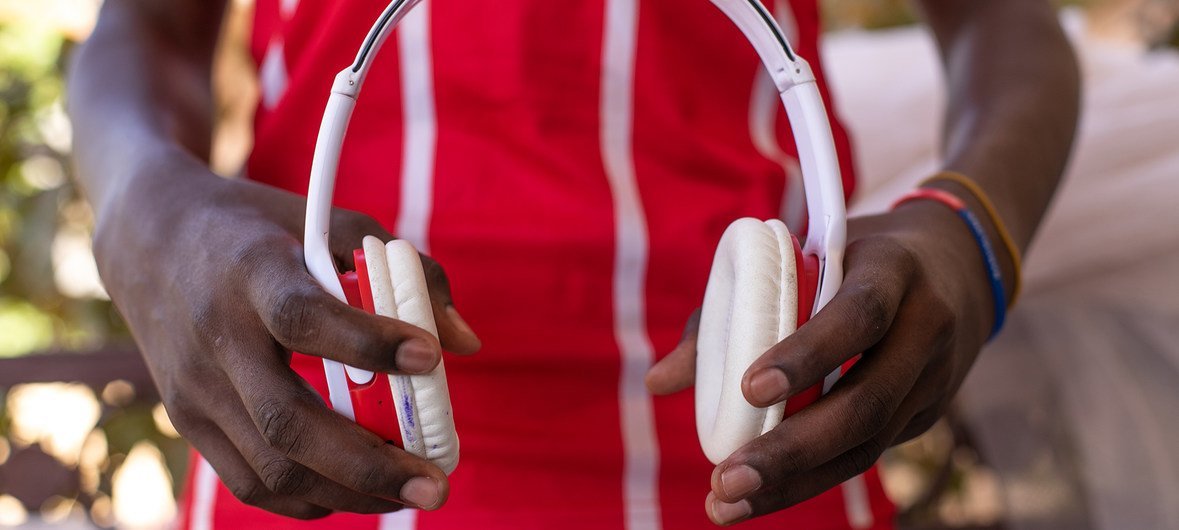
3 March 2019 – Many people live with unidentified hearing loss, often failing to realize that they are missing out on certain sounds and words. To address this problem, the World Health Organization (WHO) is urging people on this year’s World Hearing Day, held on March 3, to check their hearing.
Worldwide, some 466 million people have disabling hearing loss, and the WHO estimates that by 2050 that figure will almost double, affecting one in 10 people. The cost of unaddressed hearing loss is believed to be around US$ 750 billion.
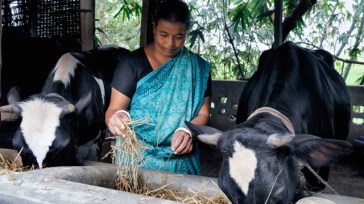
First, it was the doors of her neighbours in Panjor Bhanga, her home village in northern Bangladesh. She had an idea for them: what if they formed a milk cooperative?
They didn’t have much to lose. “The women of this village are very poor and raise only local Deshi cattle,” Renu explains. “I thought that if I could start a dairy business, and encourage other women to join, if I could make them aware, then we could all profit.”
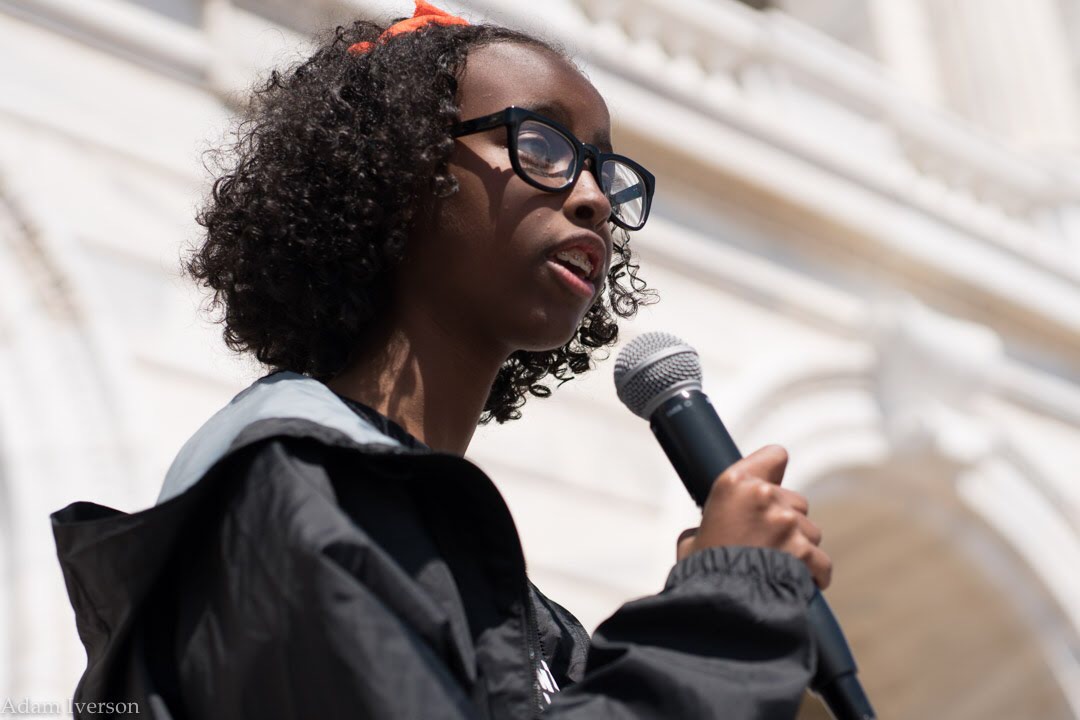
Isra Hirsi just turned 16 years old. To celebrate, she came home from school and spent three hours on conference calls.
Isra, a student at South High School in Minneapolis, is one of thousands of students around the world planning a massive Youth Climate Strike for March 15. With a few weeks to go, there are already strikes planned for 47 countries and almost all 50 states. Isra is one of three organizers who are bringing the movement — inspired by Swedish activist Greta Thunberg’s weekly climate strikes — to the United States.
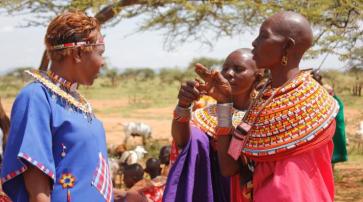
As the Samburu fight for control over natural resources, Samburu women are demanding to be heard
Photo by The Samburu Women’s Trust | Photo fromUN Environment.
1 Match 2019 (UN Environment)* — The Samburu, a pastoralist indigenous tribe from the vast semi-arid and arid rangelands of Northern Kenya, face many of the same challenges as other indigenous communities around the world.
They have few opportunities to influence or manage activities that affect their environment, and insufficient information and understanding of their entitlements and rights when large development and infrastructure projects come to do business on their lands.



 HUMAN WRONGS WATCH