Archive for ‘Africa’

23/02/2019

Migrant Crisis in Europe? Look at Yemen

Just to be clear, this means that more desperate people crossed the Red Sea into Yemen in 2018 than crossed the Mediterranean heading for Europe. 

lead

Euronews screenshot.Dozens of Somali refugees killed in Saudi airstrikes off Yemen, 2017. Youtube.| Image from openDemocracy.

19 February 2019 (openDemocracy)* — While Brexit is giving UK residents a break from media focus on desperate people attempting to reach wealthy Europe by crossing the Mediterranean by sea, a few figures should help to put things in perspective, as the issue will surely soon re-emerge in the headlines.

Xenophobia remains a fundamental rallying cry of the right throughout Europe, including the UK, and is all too frequently manifested through Islamophobic populism.

read more »
23/02/2019

Stopping Fish Bombing

Human Wrongs Watch

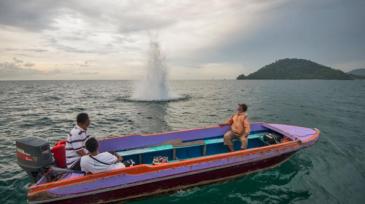
February 2019 (UN Environment)* — Sabah, Malaysia: George Woodman’s first experience of fish bombing in Sabah—a Malaysian state in the northern part of the island of Borneo—was in 1994 during an underwater survey of the area’s renowned coral reefs.

.

fish bombing 1.jpg
Photo by Scubazoo | Photo from UN Environment.

“It’s not so much something you hear, but something you feel,” said Woodman, a founding member of the Hong Kong-based non-governmental organization Stop Fish Bombing!.

“At a range of a few kilometres, a fish bomb going off feels like you’ve been kicked in the chest by a horse,” he said.

Over the course of the four-month survey carried out by divers, his team experienced this extremely destructive fishing practice a few times a week.

read more »

22/02/2019

“I’m really proud of what she is doing”

Human Wrongs Watch

Challenging gender norms by providing equal opportunities for both men and women

a34762229c.jpg

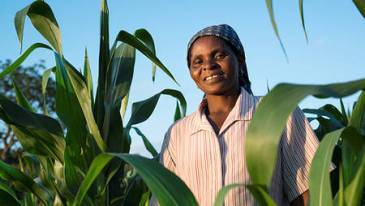
Calista Maguramhinga is a lead farmer in FAO’s Livelihoods and Food Security Programme in Zimbabwe. She is teaching other farmers to benefit from conservation agriculture. ©FAO

21 February 2019 (FAO)* — When Calista Maguramhinga shows visitors a section of her half-hectare farm, she keeps a small notebook clutched in her hands with details of how she is growing her food.

On her farm, the maize plants are tall with green leaves and chunky cobs nearly ready to harvest. She points to one section: “Maize variety 633,” she says. “Plot prepared with tine ripper plow, planted 20 December with organic compost; fertilizer applied on 3 January and again on 20 January.”

read more »

22/02/2019

The Biodiversity that Is Crucial for Our Food and Agriculture Is ‘Disappearing by the Day’, Putting the Future of Our Livelihoods, Health and Environment under ‘Severe Threat’

Human Wrongs Watch

FAO launches the first-ever global report on the state of biodiversity that underpins our food systems

Photo: ©FAO/Zinyange Auntony

Many associated biodiversity species, such as bees, are under severe threat.

ROME, 22 February 2019 (FAO)*  – The first-ever report of its kind presents mounting and worrying evidence that the biodiversity that underpins our food systems is disappearing – putting the future of our food, livelihoods, health and environment under severe threat.

read more »

22/02/2019

Pregnant, Nursing Women Can Now Be Given Ebola Vaccine – World Health Organization

Human Wrongs Watch

Reversing an earlier decision, the World Health Organization (WHO) now recommends vaccinating pregnant and breastfeeding women against the Ebola virus.

© UNICEF/UN0264160/Hubbard | An Ebola survivor cares for her six-month-old son at a UNICEF-supported crèche in Beni, eastern DR Congo, December 2018.
.
The announcement was issued on Wednesday [] from Beijing after a consultation meeting by the Strategic Advisory Group of Experts (SAGE) on Immunization, which the WHO Director-General established in 1999 to provide guidance on the UN health agency’s work.

Last August, the Democratic Republic of the Congo’s (DRC) Ministry of Health declared a fresh outbreak of Ebola virus disease (EVD) in North Kivu Province.

read more »

22/02/2019

World Youth Report: Addressing the Complex Challenges Facing Young People Today

Human Wrongs Watch

22 February 2019 (United Nations)* — Today, there are 1.2 billion young people aged 15 to 24 years, accounting for 16 per cent of the global population.

World Youth Report: Addressing the Complex Challenges Facing Young People Today

The active engagement of youth in sustainable development efforts is central to achieving sustainable, inclusive and stable societies by the target date, and to averting the worst threats and challenges to sustainable development, including the impacts of climate change, unemployment, poverty, gender inequality, conflict, and migration.

read more »

22/02/2019

‘At Least 43 Percent of the 7,000 Languages Spoken in the World Today Are Endangered; Many of Them Belong to Indigenous Peoples’

Human Wrongs Watch

By IWGIAInternational Work Group for Indigenous Affairs*

At least 43 percent of the 7,000 languages spoken in the world today are endangered. Many of these belong to indigenous peoples and if something doesn’t change soon, UNESCO predicts that we will lose as many as 3,000 indigenous languages by the end of this century.

Photo from IWGIA

In an effort to raise public awareness of this threat to the world’s cultural and linguistic diversity, the UN General Assembly has proclaimed 2019 to be the International Year of Indigenous Languages.

22/02/2019

‘Due to Globalization Processes, Mother Languages Are Increasingly under Threat, or Disappearing Altogether’ – International Day

Human Wrongs Watch

.

.

When languages fade, so does the world’s rich tapestry of cultural diversity. Opportunities, traditions, memory, unique modes of thinking and expression — valuable resources for ensuring a better future — are also lost.

read more »

22/02/2019

How Bangladesh Spearheaded Creation of International Mother Language Day

Human Wrongs Watch

Concerned that one language goes extinct every two weeks, the United Nations is honouring linguistic diversity and celebrating indigenous languages on International Mother Language Day. And the roots of the Day start in a South-Asian country with a bloody and historic connection to 21 February.

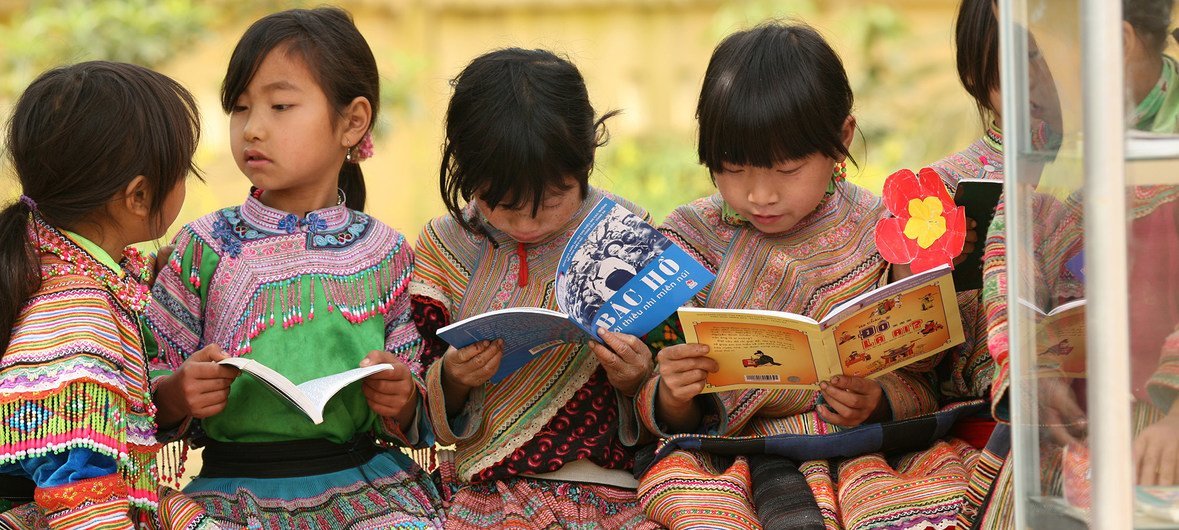
UNICEF/UNI10236/Estey | Girls from an indigenous community read outdoors at Ban Pho Primary School in Bac Han District in remote Lao Cai Province, Viet Nam.

“We have to protect our heritage, our culture, our existence,” said Ambassador Masud Bin Momen, of Bangladesh, the country which successfully lobbied the UN Educational, Scientific and Cultural Organization (UNESCO) in 1999 to create International Mother Language Day. The UN General Assembly formally recognized the Day in 2008.

read more »

21/02/2019

Wake Up and Smell the Organic Coffee

Human Wrongs Watch

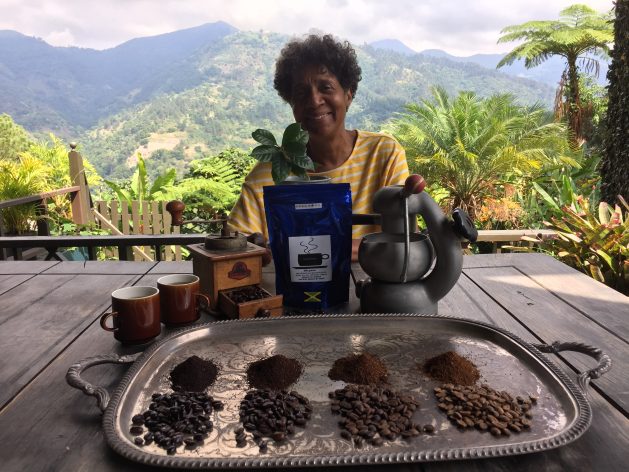
BULAWAYO, Zimbabwe, Feb 20 2019 (IPS)* In 1992, the idea of replanting her father’s ruined coffee farm seemed foolhardy at the time. But in retrospect it was the best business decision that Dorienne Rowan-Campbell, an international development consultant and broadcast journalist, could have made.

Dorianne-Rowan-Campbell-is-an-organic-coffee-farmer-in-Jamaica-credit-Dorienne-Rowan-Campbell-629x472.jpg

Dorianne Rowan-Campbell is an organic coffee farmer in Jamaica. Taking over her father’s farm in 1992 and turning it into an organic one was a huge risk at the time. However, she sustainably grows 1,800 coffee trees and harnesses nature to deal with pests, rather than using pesticides. Courtesy: Dorienne Rowan-Campbell

read more »