Port Sudan, 6 June 2024 (IOM)* – The International Organization for Migration (IOM) is warning that the number of people displaced by conflict inside Sudan could top 10 million in the coming days. The world’s worst internal displacement crisis continues to escalate, with looming famine and disease adding to the havoc wrought by conflict.
Hafsa, a mother of four, fled her home in Khartoum when conflict erupted. Now displaced in Gedaref, she faces an uncertain future. Photo: IOM Sudan 2024/Omer Tariq
IOM’s Displacement Tracking Matrix, which issues weekly statistics, recorded 9.9 million people internally displaced across all 18 states in Sudan this week – 2.8 million prior to the April 2023 war, and 7.1 million since. More than half of all internally displaced persons (IDPs) are women, and over a quarter are children under the age of five.
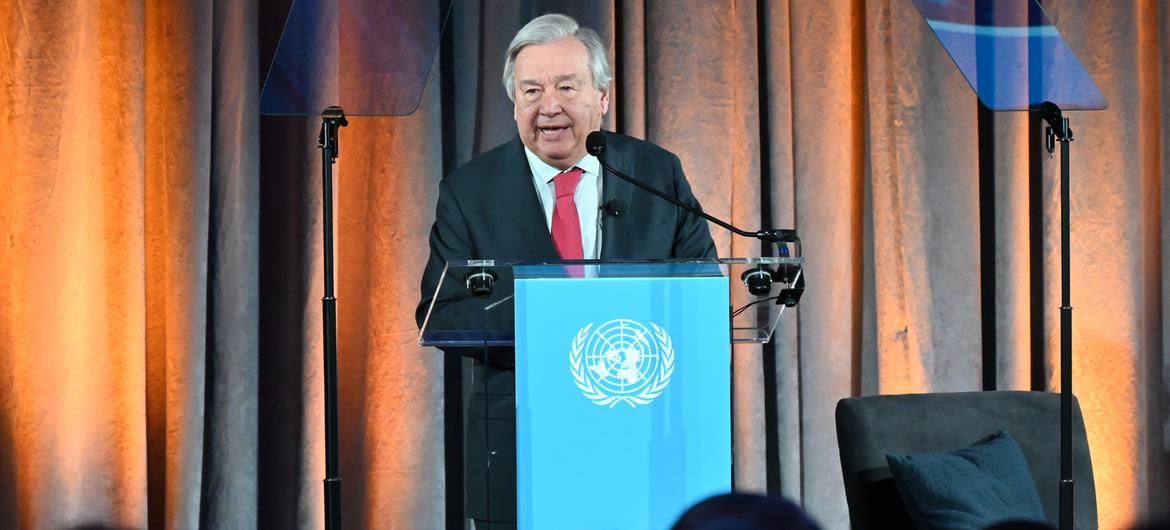
(UN News)* — “It’s climate crunch time” when it comes to tackling rising carbon emissions the UN Secretary-General said on Wednesday [], stressing that while the need for global action is unprecedented, so too are the opportunities for prosperity and sustainable development.
Play video
United Nations | UN Secretary-General António Guterres delivers his special address on climate action from the American Museum of Natural History in New York.
Choosing the iconic Family Hall of Ocean Life at the American Museum of Natural History in New York to deliver his impassioned plea to grasp the solutions at hand, António Guterres warned that we stand at “a moment of truth”.
“In the case of climate, we are not the dinosaurs. We are the meteor. We are not only in danger – we are the danger. But we are also the solution.”
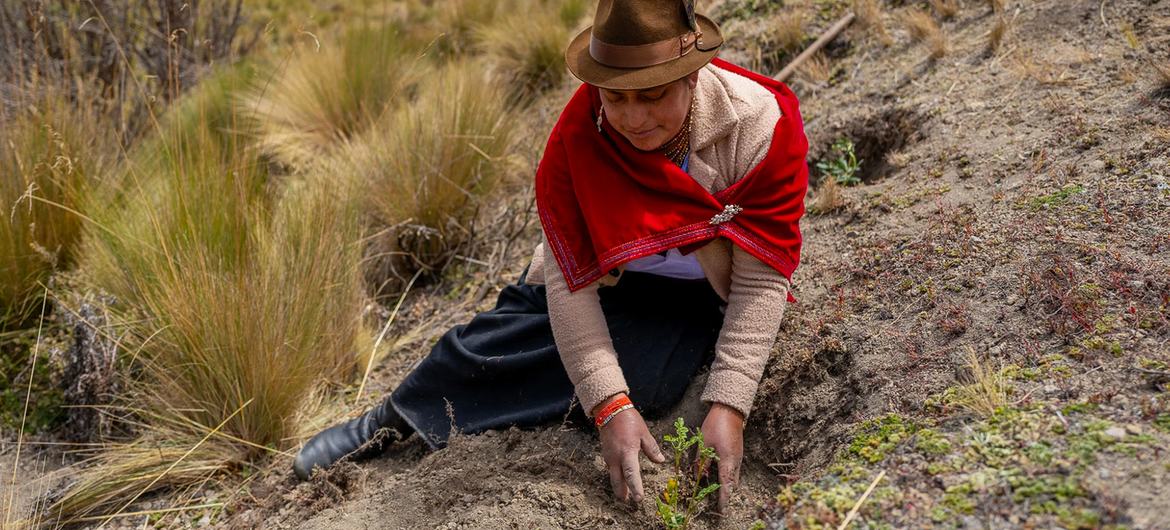
5 June 2024 (United Nations)* —All over the world, ecosystems are threatened. From forests and drylands to farmlands and lakes, natural spaces on which humanity’s existence depends are reaching a tipping point.
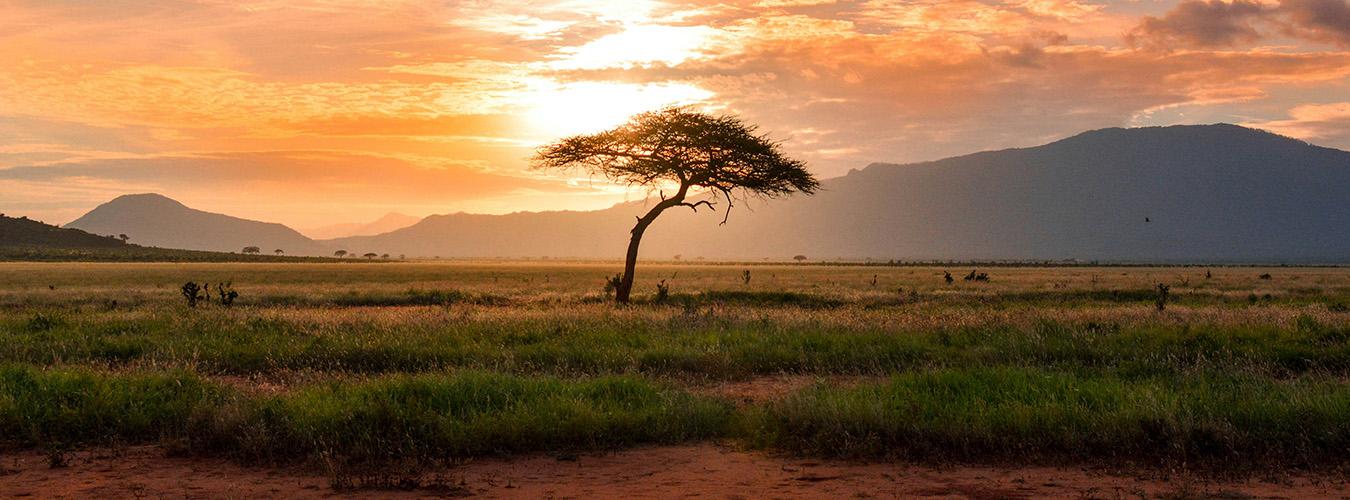
Grasslands, shrublands and savannahs cover approximately half of the world’s terrestrial surface. Distributed from Eurasia and Patagonia to Africa and Australia they are home to millions of people. PHOTO:Damian Patkowski/Unsplash
According to the UN Convention to Combat Desertification, up to 40 per cent of the planet’s land is degraded, directly affecting half of the world’s population. The number and duration of droughts has increased by 29 per cent since 2000 – without urgent action, droughts may affect over three-quarters of the world’s population by 2050.
4 June 2024 (UNEP)* —The world is warming at arecord pace, with unseasonable heat baking nearly every continent on Earth. April, the last month for which statistics are available, marked the 11th consecutive month the planet has set a new temperature high.
Photo: PSI/Science Photo Library via AFP
Experts say that is a clear sign the Earth’s climate is rapidly changing. But many believe – or at least say they believe – that climate change is not real, relying on a series of well-trodden myths to make their point.
(UN News)* — The UN Secretary-General has called for safeguarding Earth’s vital ecosystems from rampant pollution, worsening climate impacts and “biodiversity decimation”.
In a message marking 5 June 2024’s World Environment Day, António Guterres emphasized that countries “must deliver” on all their commitments to restore degraded ecosystems and land, and on Kunming-Montreal Biodiversity Framework, the global agreement to protect biodiversity.
GENEVA/NEW YORK/ROME (UNICEF)* —Three United Nations agencies on 30 May 2024 issued a stark warning that all indications point to a significant deterioration of the nutrition situation for children and mothers in war-torn Sudan.
UNICEF/UNI426052/Dejongh
The lives of Sudan’s children are at stake and urgent action is needed to protect an entire generation from malnutrition, disease and death.
A recent analysis conducted by the UN Children’s Fund (UNICEF), UN World Food Programme (WFP) and World Health Organization (WHO) highlights that the ongoing hostilities are worsening the drivers of child malnutrition.
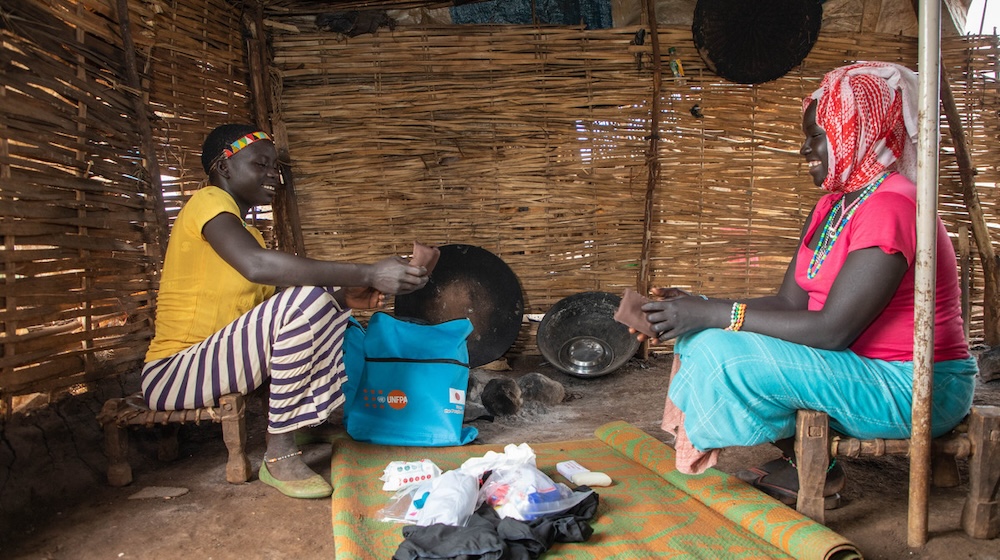
UNITED NATIONS, New York, 28 May 2024 (UNFPA)* – Every month, nearly 2 billion people menstruate, but gender inequality, poverty and other forms of marginalization mean the world has still not adapted to become period-friendly. In a humanitarian crisis, these inequities are greatly exacerbated.
When forced to flee their homes because of violence, conflict or climate disasters, people leave most of their possessions behind – including, usually, sanitary items.
KUALA LUMPUR, Malaysia, May 30 2024 (IPS)* –The World Bank expects the international economic slowdown to be at its worst in over four decades in 2024. This is mainly due to powerful Western nations’ contractionary macroeconomic and geopolitical policies.
Dismal outlook According to the Bank’s last Global Economic Prospects report, world economic growth will be weakest by the end of 2024. Only the US economy’s strength will statistically prevent a world recession.
Jomo Kwame Sundaram
World economic growth was expected to slow to 2.4 per cent in 2024. But even the US-controlled World Bank acknowledges growing geopolitical tensions are the main threat.
Medium-term prospects for most developing economies have worsened due to slower growth in most major economies. This has been exacerbated by tighter monetary policy and credit, sluggish trade and investment growth.
(UN News)* — Famine in Sudan is “imminent” if aid agencies continue to be prevented from providing relief, UN humanitarians warned on Friday [].
In a bleak assessment of the dire situation in Sudan where conflict is in its second year, the heads of 19 global humanitarian organizations issued an alert that further obstacles to providing aid “rapidly and at scale” will mean that “more people will die”.
UNITED NATIONS, May 30 2024 (IPS)* – Scattered over the vast area of our oceans, Small Island Developing States (SIDS) are often pictured as blue, serene and beautiful paradises. However, we are risk losing the beauty of these islands, due to the triple threats of climate change, loss of biodiversity, and pollution, especially marine plastic debris.
If not stopped, the annual flow of plastic into the ocean will nearly triple by 2040, to 29 million metric tonnes per year, 50 kilgrammes of plastic for every metre of coastline worldwide. Credit: UN Development Programme (UNDP)
If business continues as usual, the annual flow of plastic into the ocean will nearly triple by 2040, to 29 million metric tonnes per year, equivalent to 50 kilogrammes of plastic for every metre of coastline worldwide. Soon, the ocean will turn into plastic soup, and islands will be covered in, and surrounded by, plastic waste.





 HUMAN WRONGS WATCH