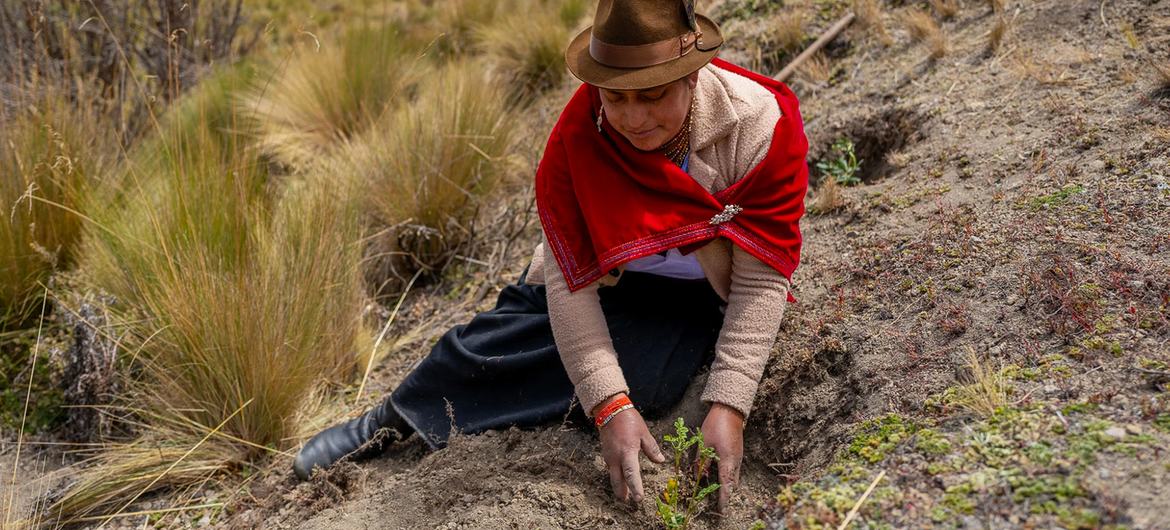
(UN News)* — The UN Secretary-General has called for safeguarding Earth’s vital ecosystems from rampant pollution, worsening climate impacts and “biodiversity decimation”.
In a message marking 5 June 2024’s World Environment Day, António Guterres emphasized that countries “must deliver” on all their commitments to restore degraded ecosystems and land, and on Kunming-Montreal Biodiversity Framework, the global agreement to protect biodiversity.
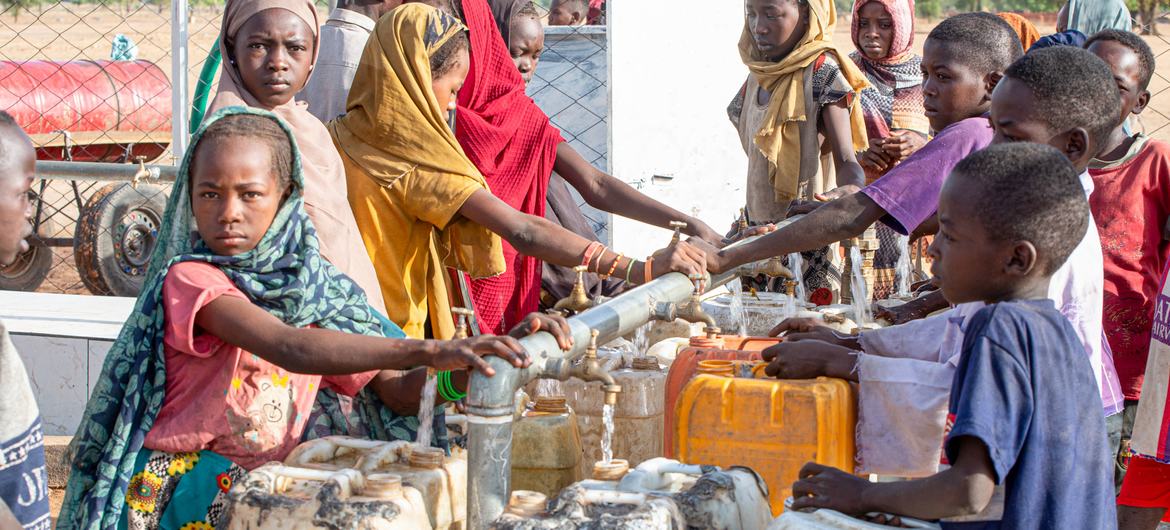
GENEVA/NEW YORK/ROME (UNICEF)* —Three United Nations agencies on 30 May 2024 issued a stark warning that all indications point to a significant deterioration of the nutrition situation for children and mothers in war-torn Sudan.
UNICEF/UNI426052/Dejongh
The lives of Sudan’s children are at stake and urgent action is needed to protect an entire generation from malnutrition, disease and death.
A recent analysis conducted by the UN Children’s Fund (UNICEF), UN World Food Programme (WFP) and World Health Organization (WHO) highlights that the ongoing hostilities are worsening the drivers of child malnutrition.
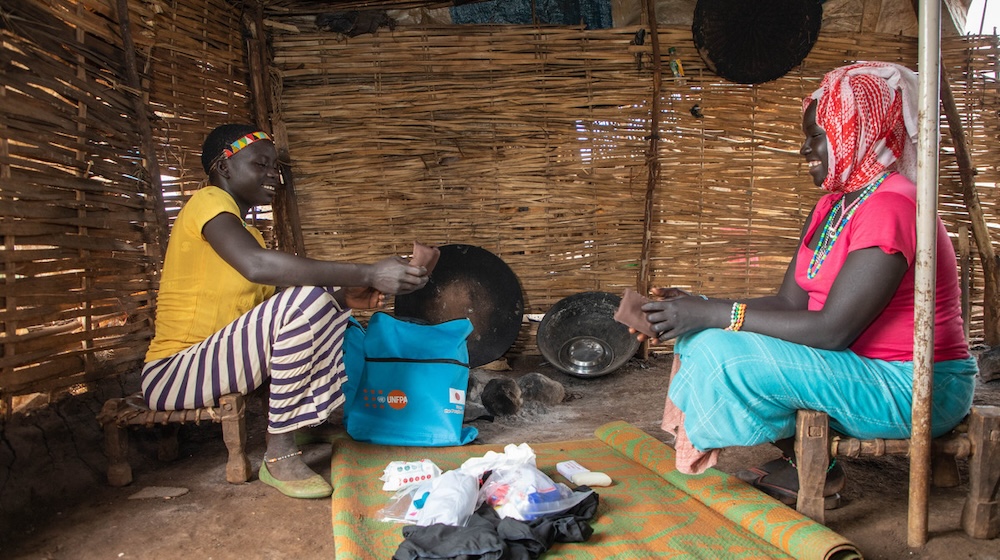
UNITED NATIONS, New York, 28 May 2024 (UNFPA)* – Every month, nearly 2 billion people menstruate, but gender inequality, poverty and other forms of marginalization mean the world has still not adapted to become period-friendly. In a humanitarian crisis, these inequities are greatly exacerbated.
When forced to flee their homes because of violence, conflict or climate disasters, people leave most of their possessions behind – including, usually, sanitary items.
KUALA LUMPUR, Malaysia, May 30 2024 (IPS)* –The World Bank expects the international economic slowdown to be at its worst in over four decades in 2024. This is mainly due to powerful Western nations’ contractionary macroeconomic and geopolitical policies.
Dismal outlook According to the Bank’s last Global Economic Prospects report, world economic growth will be weakest by the end of 2024. Only the US economy’s strength will statistically prevent a world recession.
Jomo Kwame Sundaram
World economic growth was expected to slow to 2.4 per cent in 2024. But even the US-controlled World Bank acknowledges growing geopolitical tensions are the main threat.
Medium-term prospects for most developing economies have worsened due to slower growth in most major economies. This has been exacerbated by tighter monetary policy and credit, sluggish trade and investment growth.
(UN News)* — Famine in Sudan is “imminent” if aid agencies continue to be prevented from providing relief, UN humanitarians warned on Friday [].
In a bleak assessment of the dire situation in Sudan where conflict is in its second year, the heads of 19 global humanitarian organizations issued an alert that further obstacles to providing aid “rapidly and at scale” will mean that “more people will die”.
UNITED NATIONS, May 30 2024 (IPS)* – Scattered over the vast area of our oceans, Small Island Developing States (SIDS) are often pictured as blue, serene and beautiful paradises. However, we are risk losing the beauty of these islands, due to the triple threats of climate change, loss of biodiversity, and pollution, especially marine plastic debris.
If not stopped, the annual flow of plastic into the ocean will nearly triple by 2040, to 29 million metric tonnes per year, 50 kilgrammes of plastic for every metre of coastline worldwide. Credit: UN Development Programme (UNDP)
If business continues as usual, the annual flow of plastic into the ocean will nearly triple by 2040, to 29 million metric tonnes per year, equivalent to 50 kilogrammes of plastic for every metre of coastline worldwide. Soon, the ocean will turn into plastic soup, and islands will be covered in, and surrounded by, plastic waste.
29 May 2024 — Starting in April, flash floods have wreaked havoc across Afghanistan, leaving at least 300 dead, hundreds injured, and nearly 9,000 homes destroyed. Thousands are now homeless. Roads, bridges, schools, and health facilities in Baghlan, Badakshan, Takhar, Faryab and Ghor are in ruins.
Once again, Afghanistan is heavily affected by a climate catastrophe after last year’s earthquakes in Herat, and frequent sandstorms and drought hitting the most vulnerable, particularly women and children, the hardest.
But why are these sudden deluges so deadly, and what makes this disaster particularly devastating?
Geneva/ Addis Ababa, 29 May – Over 3 million people were internally displaced in Ethiopia by the end of last year according to the latest National Displacement Report by the International Organization for Migration’s (IOM) Displacement Tracking Matrix (DTM).
Displaced families in Dubuluk IDP Camp. Photo:: IOM/ Ethiopia.
The Report shows that the majority – 69 per cent – of those displaced were a direct result of conflict, whereas drought and other climate induced events such as floods, landslides and fires on the other hand contributed to 17 per cent, and 9 per cent respectively.
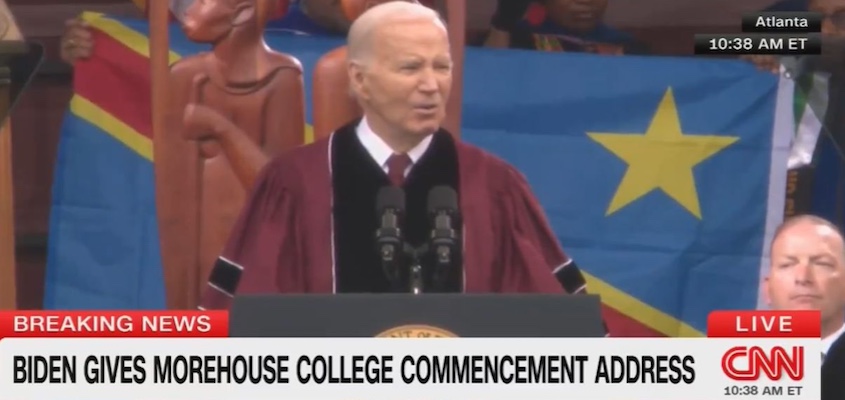
Morehouse College professors protested US complicity in Congo Genocide by unfurling a Congolese flag behind Joe Biden as he addressed the 2024 graduating class. A brief, quixotic coup took place in Congo on the same day.
In 2011, Congolese American Christian Malanga offered to pay me to promote his candidacy for president of the Democratic Republic of the Congo. I declined, believing he suffered from delusions of grandeur.
(UN News)* — International financing is the fuel for sustainable development, but small island States are “running on empty” – drowning in debt and rising sea levels due to climate change and through no fault of their own.
Play video
UN Photo/Eskinder Debebe | A view of Antigua and Barbuda, the host of the fourth International Conference on Small Island Developing States (SIDS4).
That’s the warning from UN Secretary-General António Guterres on Day Two of the pivotal Fourth International Conference on Small Island Developing States (SIDS4) taking place in the Caribbean twin island nation of Antigua and Barbuda this week.
The 39 States known collectively as SIDS have been uniquely vulnerable to the trifecta of COVID – which crippled the tourism many rely on – the Russian invasion of Ukraine; and “battered by a climate catastrophe they did not create”, said Mr. Guterres.





 HUMAN WRONGS WATCH