On February 7, 2024, a U.S. drone strike assassinated an Iraqi militia leader, Abu Baqir al-Saadi, in the heart of Baghdad. This was a further U.S. escalation in a major new front in the U.S.-Israeli war on the Middle East, centered on the Israeli genocide in Gaza, but already also including ethnic cleansing in the West Bank, Israeli attacks on Lebanon and Syria, and the U.S. and U.K.’s bombing of Yemen.
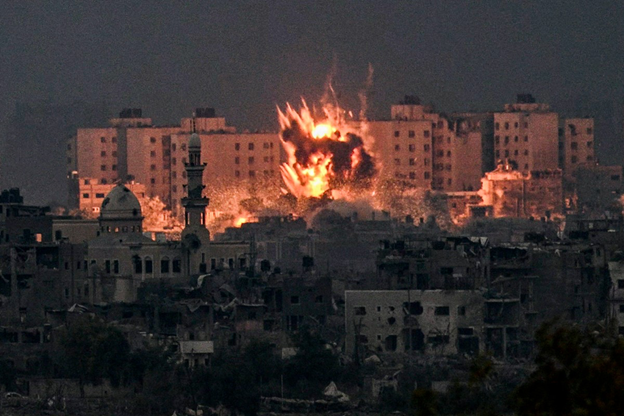
Israeli airstrike on an apartment building in Rafah, the last refuge in southern Gaza, Feb 2024. Photo credit: MENAFN
Today in Rafah, despite the chaos, continued bombardment, the fear and the ongoing displacement, UNRWA teams are still working and delivering critical food supplies. UNRWA
13 February 2024 (OCHA)* —The scenario we have long dreaded is unraveling at alarming speed.
More than half of Gaza’s population – well over 1 million people – are crammed in Rafah, staring death in the face: They have little to eat, hardly any access to medical care, nowhere to sleep, nowhere safe to go.
They, like the entire population of Gaza, are the victims of an assault that is unparalleled in its intensity, brutality and scope. More than 28,000 people – mostly women and children – have been killed across Gaza, according to the Ministry of Health.
KATHMANDU, Nepal, Feb 14 2024 (IPS)* –A gathering ‘perfect storm’ – due to various developments, several quite deliberate – now threatens much devastation in the global South, likely to most hurt the poorest and most vulnerable.
Jomo Kwame Sundaram
Globalisation’s protracted decline The age of globalization had mixed consequences, unevenly incorporating national markets for labour, goods and even some services.
It ended gradually, with the trend far more pronounced following the protracted worldwide stagnation since the 2008 global financial crisis.
Sometimes still referred to as the Great Recession, Western central banks resorted to unconventional monetary policies, mainly ‘quantitative easing’, to keep their economies afloat.
But easier credit enabled more financialization and indebtedness, rather than recovery, let alone sustainable development.
(UN News)* — UN High Commissioner for Human Rights Volker Türk on Monday [12 February 2024] appealed for restraint in the face of an Israeli military incursion in Rafah, warning of the risk of further atrocity crimes in the Gaza war.
Nearly 1.5 million people are now crammed into the southern city on the border with Egypt, and with nowhere further to flee.
‘Terrifying’ situation
A potential full-fledged incursion in Rafah “is terrifying, given the prospect that an extremely high number of civilians, again mostly children and women, will likely be killed and injured,” Mr. Türk warned.
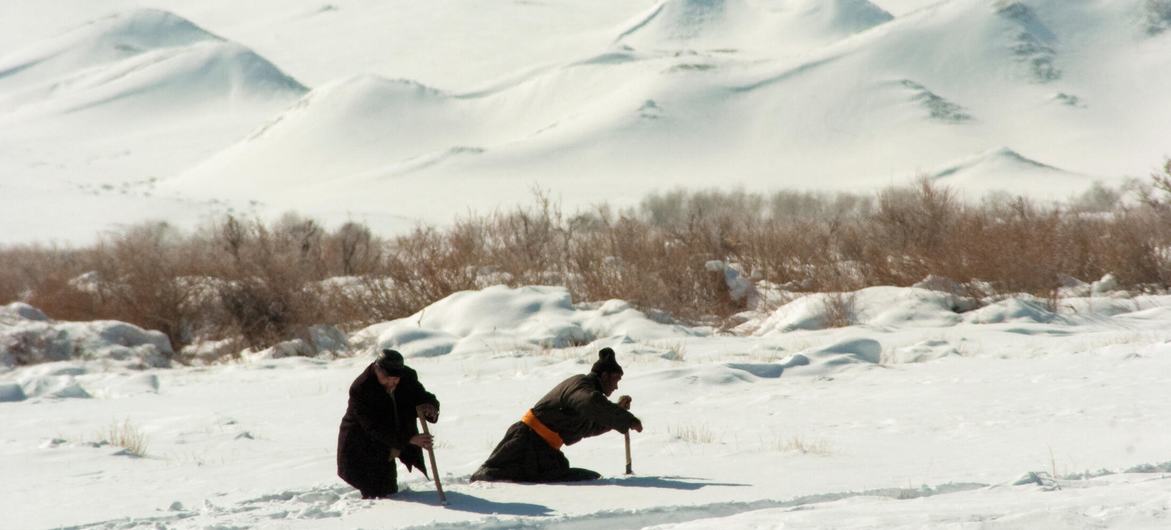
(UN News)* — The ongoing “white and iron” dzud in Mongolia has reached a “critical” level, with over 90 per cent of the country facing high levels of risk from the unique weather phenomenon, UN agencies have reported.
About 190,000 herder households are struggling with inadequate feed, skyrocketing prices and heightened vulnerabilities, according to the Office of the UN Resident Coordinator in Mongolia.
Herding and livestock have traditionally been integral to Mongolia’s economy, culture and way of life. Estimates indicate that there are over 64 million livestock this winter season in Mongolia.
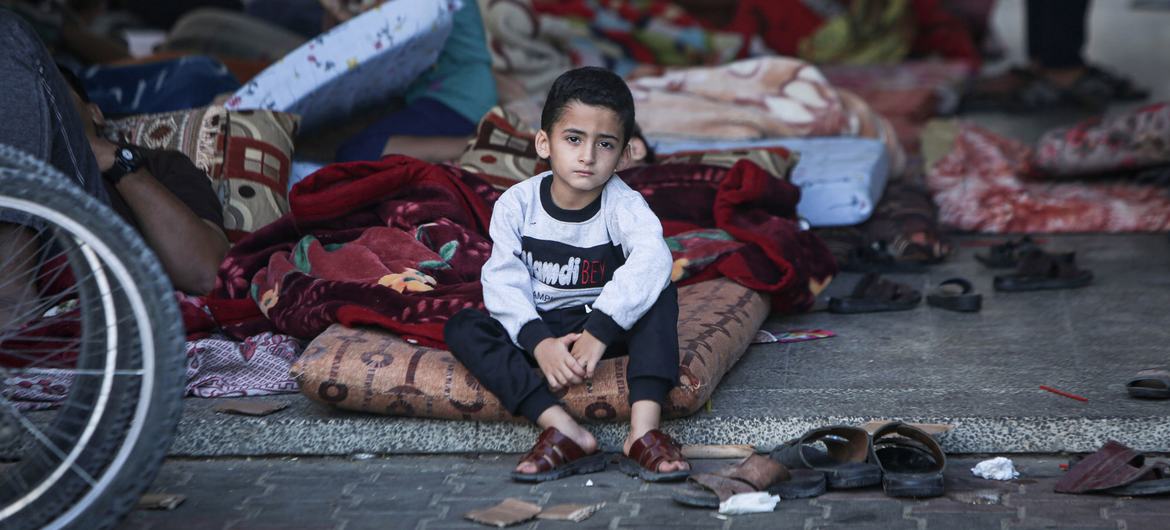
(UN News)* — Children account for around half of the almost two million Gazans who have been forced to leave their homes and search for shelter elsewhere in the Strip, since Israel’s current military operation began. The UN children’s agency, UNICEF, estimates that around 17,000 have been orphaned.
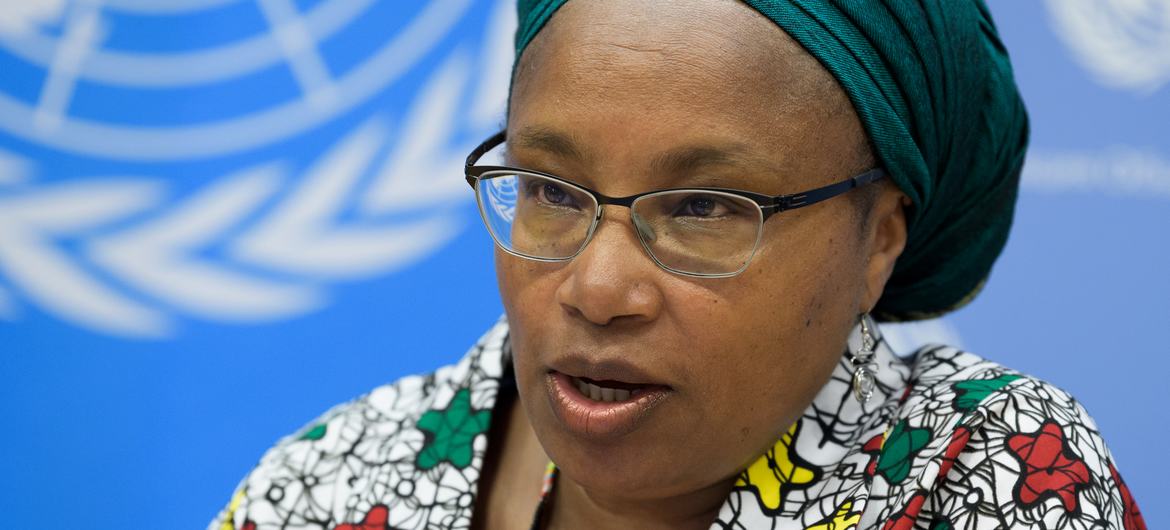
(UN News)* — The UN Special Adviser on the Prevention of Genocide on Friday [] expressed profound horror at the ongoing situation in the Middle East, reiterating the call for a humanitarian ceasefire and protection of civilians.
UN Photo/Manuel Elías | Alice Wairimu Nderitu, UN Special Adviser on the Prevention of Genocide.
Alice Wairimu Nderitu also underscored the need to intensify diplomatic efforts to bring the crisis to an end.
“Civilians should never pay the price of a conflict for which they bear no responsibility,” she said in a statement.
“Their most basic rights must be protected and preserved, and their humanitarian needs must be met,” she added.
Wednesday marked the fourth month of the brutal war in Gaza.
(UN News)* — The unprecedented population density in Rafah in southern Gaza makes it nearly impossible to protect civilians in the event of ground attacks, the UN humanitarian affairs office, OCHA, warned on Friday [9 February 2024].
More than half of Gaza’s population of over two million is now crammed into the city, which is located on the border with Egypt and originally home to some 250,000 people.
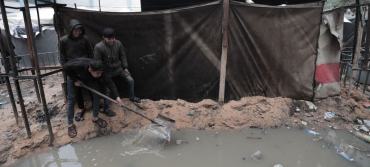
Congestion has reached a point where normal routes are blocked by tents set up by families seeking any flat, clean space available, OCHAsaid.
Garbage mounting, basics lacking
In the past three months, Rafah has produced the equivalent of a year’s worth of garbage, according to municipal authorities.
PANAMA CITY, Feb 8 2024 (IPS)* – At the bar that Sandra manages in Panama City’s central financial district, the variety offered on the menu has shrunk due to delays in ship traffic through the Panama Canal, one of the world’s major shipping routes. | En español
.
A ship passes through the Pedro Miguel lock on its way to the Miraflores system to cross the Panama Canal. The infrastructure faces water shortages due to drought in the country, which limits the pace of maritime cargo transport through the bioceanic route that moves six percent of the world’s maritime trade. CREDIT: Emilio Godoy / IPS
“We are out of stock of some of our foreign beers, because the shipment didn’t arrive. I hope it will get here one of these days,” the Panamanian bar-keeper told IPS, as she pointed to a half-empty refrigerator in the bar nestled between skyscrapers.
“Sanctions,” as imposed by the US, is a sanctimonious word for economic warfare and outright theft, and Venezuela is a textbook case.
Anya Parampil’s book tells the story of US hybrid warfare on Venezuela and of the tectonic social and economic shifts reshaping the world today.
As Anya Parampil demonstrates in Corporate Coup: Venezuela and the End of US Empire, sanctions were part of a multi-pronged regime change war that included diplomatic aggression, economic terrorism, covert operations, and information warfare.




 HUMAN WRONGS WATCH