The recommendation from the World Health Organization (WHO) is based on a review of available evidence which suggests that artificial sweeteners do not help control body mass or reduce the risk of weight-related illnesses.
.
Common NSS include acesulfame K, aspartame, advantame, cyclamates, neotame, saccharin, sucralose, stevia, and other stevia derivatives.
.
“Replacing free sugars with NSS does not help with weight control in the long term. People need to consider other ways to reduce free sugars intake, such as consuming food with naturally occurring sugars, like fruit, or unsweetened food and beverages,” says Francesco Branca, WHO Director for Nutrition and Food Safety.”
In his 1987 book The Rise and Fall of the Great Powers, historian Paul Kennedy reassured Americans that the decline the United States was facing after a century of international dominance was “relative and not absolute, and is therefore perfectly natural; and that the only serious threat to the real interests of the United States can come from a failure to adjust sensibly to the newer world order.”
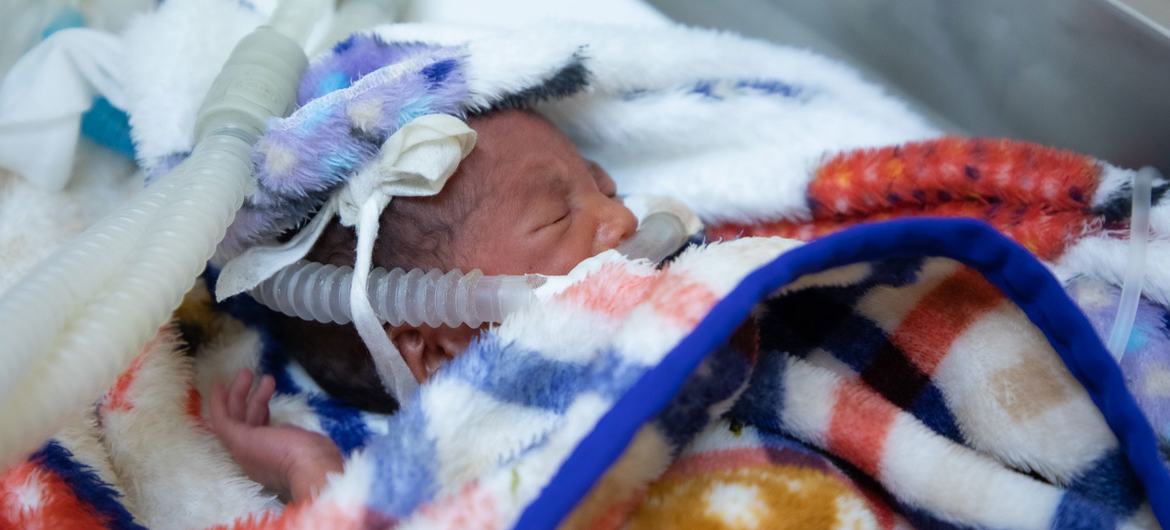
(UN News)* — A “silent emergency” that is claiming one million tiny lives born premature each year requires concerted action to swiftly improve children’s health and survival, according to a new report released by UN agencies and partners on .
An estimated 13.4 million babies were born premature in 2020, with nearly a million dying from pre-term complications, according to Born too soon: Decade of action on preterm birth.
Produced by a range of agencies, including the UN Children’s Fund (UNICEF) and the World Health Organization (WHO), with its Partnership for Maternal, Newborn and Child Health (PMNCH), the report outlines a strategy forward to address this phenomenon, which has been long under-recognized in its scale and severity.
But, for hundreds of thousands of women globally, this gratitude only goes so far, the UN Population Fund (UNFPA) said on the occasion of Mother’s Day, observed on Sundays (14 May) throughout May.According to recently released data, a woman dies from pregnancy or childbirth every two minutes, with the vast majority of these deaths due to preventable causes like bleeding and infection, the UN reproductive health agency said.
11 May 2023 (FAO)*— People around the world have taken to e-commerce due to its convenience, particularly during the COVID-19 pandemic. However, many people may not realize that plants and regulated goods, such as agricultural products, bought or sold online may carry pests and diseases that can harm a country’s flora.
In 2021, Emily* unexpectedly received a parcel in her hometown in Christchurch, New Zealand. Her 12-year-old daughter had purchased insect eggs online without her knowledge.
“My daughter has always loved insects. She has gone through different phases of loving sea creatures, ants and various insects,” Emily shared.
ROME, May 10 2023 (IPS)* – Two big facts are impressive enough: plants are the source of 80% of all food, and as much as 98% of all oxygen. Logically, it would be taken for granted that human beings would do whatever is needed to protect this essential source of life.
But do they?
.
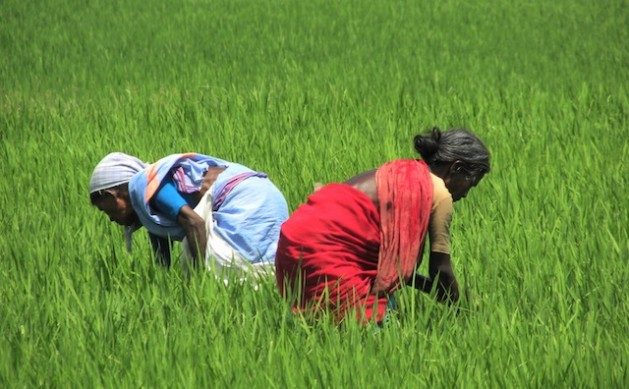
Several human-caused threats lay behind the current annual loss of up to 40% of food crops globally, mainly due to plant pests and the introduction of alien species. Credit: Jency Samuel/IPS
Not at all. Rather the whole contrary.
Several human-caused threats lay behind the current annual loss of up to 40% of food crops globally, mainly due to plant pests and the introduction of alien species.
Among them stands the massive international travel and trade business, which has been associated with the introduction and spread of so many pests.
What are we to think when governments make every effort to keep their actions secret from their own citizens? We can only conclude that although they may call themselves democracies, such governments are in fact oligarchies or dictatorships.
In a democracy, the citizens must control the actions of their government. If they are unable to do so because those actions are secret, then any claim to democratic government is lost.
Many governments have agencies for performing undercover operations (usually very dirty ones). We can think, for example, of the KGB, the CIA, M5, or Mossad.
How can countries that have such agencies claim to be democracies, when the voters have no knowledge of or influence over the acts that are committed by the secret agencies of their governments?
Nuclear weapons were developed in secret. It is doubtful whether the people of the United States would have approved of the development of such anti-human weapons, or their use against an already-defeated Japan, if they had known that these things were going to happen.
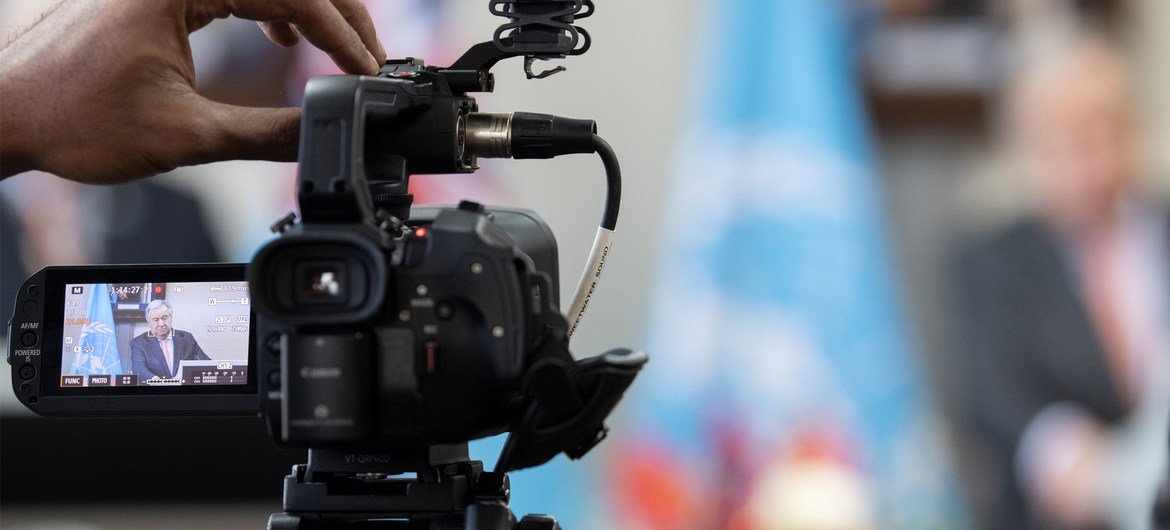
(UN News)* — Disinformation, hate speech and deadly attacks against journalists are threatening freedom of the press worldwide, UN Secretary-General António Guterres said on Tuesday [], calling for greater solidarity with the people who bring us the news.
UN Photo/Mark Garten | File photo of UN Secretary-General António Guterres (on screen) holding a virtual press conference.
The appeal comes in his message ahead of World Press Freedom Day, celebrated annually on 3 May, in line with a 1993 UN General Assembly resolution. The focus this year is on the connection between press freedom and overall human rights.
A global problem
“Freedom of the press is the foundation of democracy and justice. It gives all of us the facts we need to shape opinions and speak truth to power. But in every corner of the world, freedom of the press is under attack,” Mr. Guterres said.
UNITED NATIONS, May 1 2023 (IPS)* – The United Nations has consistently been a vociferous advocate of freedom of the press – and, most importantly, the right of journalists to report without fear of reprisals.
Credit: UNESCO Attribution 3.0 IGO
But regrettably, the UN is also one of most opaque institutions where transparency is never the norm.
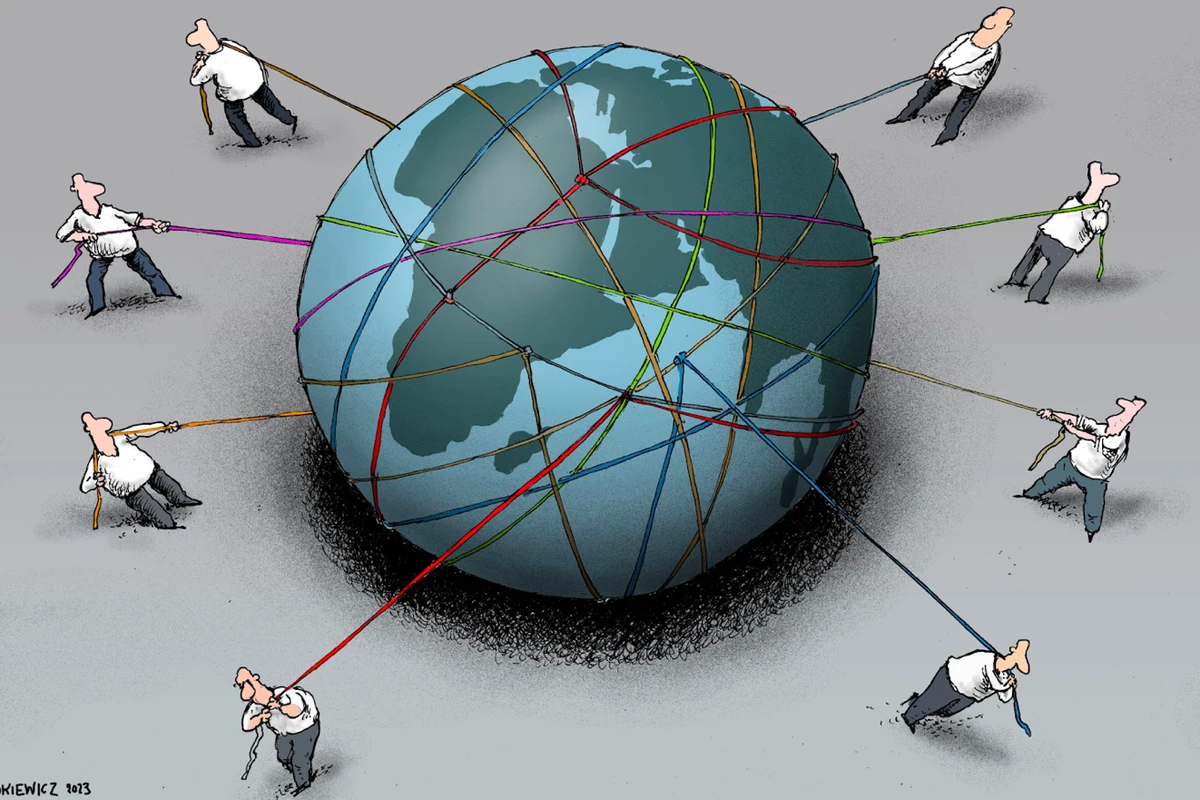
The present world that we are all part of, shows imperialism or domination of large parts of the world by some imperial power such as USA, China, Britain.
In fact, Britain used to pride itself at the end of WWII by the statement that ‘the sun never sets on the British empire’ since Britain had colonised several countries north and south, east and west — from North America to Australia to New Zealand.
India was one of its proudest, biggest colonies among these regions. Britain had entered India for trade purposes, by the agency known as ‘East India Company’, but gradually metamorphosed into a colonial power.
This happened not only in India (which was under British rule for two centuries), but in several other regions from North America to South Africa, Singapore, New Zealand, and so on.





 HUMAN WRONGS WATCH