3 November 2021 (UNEP)* — The impact of climate change on global peace and security is high on the agenda as world leaders gather at the COP26 UN Climate Change Conference in Glasgow this week.
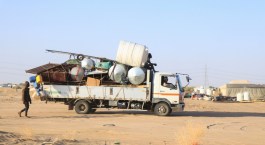
Photo: Reuters/Muhammad Fuhaid | Belongings on a truck heading to a camp for internally displaced people in Marib, Yemen.
As UN Secretary-General António Guterres said in his landmark state of the planet speech: climate change is one of the biggest dangers to peace. “The fallout of the assault on our planet is impeding our efforts to eliminate poverty and imperiling food security. And it is making our work for peace even more difficult, as the disruptions drive instability, displacement and conflict.”
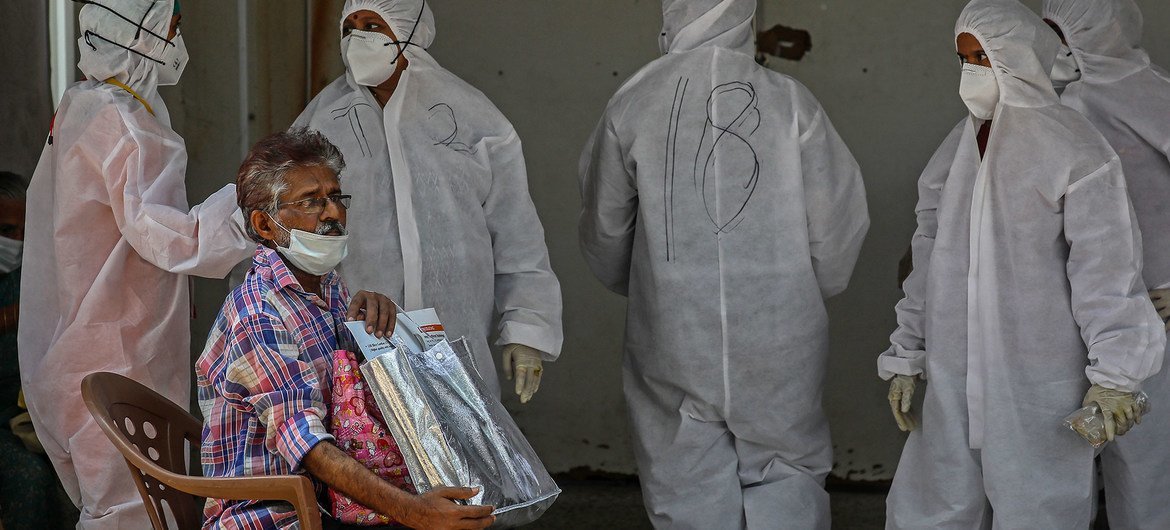
3 November 2021 (UN News)* — The World Health Organization (WHO) on Wednesday approved an eighth vaccine against COVID-19, which follows a slight uptick in new cases globally.
COVAXIN, made by Indian company Bharat Biotech, has received WHO emergency use listing (EUL), meaning it could soon be available to millions worldwide.
The EUL process assesses the quality, safety and efficacy of vaccines and is a prerequisite for their inclusion in the global solidarity initiative, COVAX.
Brexit showed that a few ruthless, well-connected people with big money behind them can change history. Now they’re at it again, and the stakes are even higher
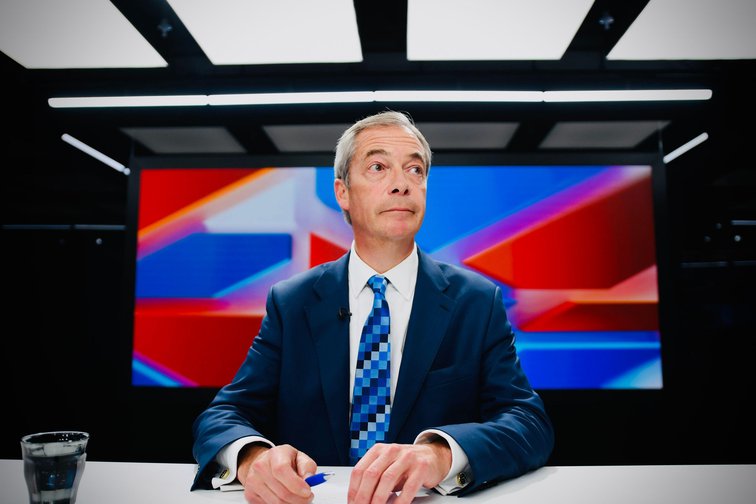
Nigel Farage presents his first show on GB News channel in London | SOPA Images Limited / Alamy Stock Photo
1 November 2021 (openDemocracy)* — If Brexit proved anything, it’s that a handful of people with powerful connections can go a long, long, way.
Conflict and the environment are deeply interlinked. Around the world, at least 40 per cent of all intrastate conflicts have had an important natural resource dimension. Rising temperatures due to climate change now threaten to further amplify environmental stresses and tensions.
And, all too often, the environment is among the casualties of war, through deliberate acts of destruction or collateral damage, or because, during conflicts, governments fail to control and manage natural resources.
A Nepalese peacekeeper with the African Union-UN Hybrid Operation in Darfur (UNAMID) plants a tree outside UNAMID Headquarters in El Fasher, Sudan.
PHOTO:UN Photo/Albert Gonzalez Farran
3 November 2021 (United Nations)* — Though humanity has always counted its war casualties in terms of dead and wounded soldiers and civilians, destroyed cities and livelihoods, the environment has often remained the un-publicized victim of war. Water wells have been polluted, crops torched, forests cut down, soils poisoned, and animals killed to gain military advantage.
The U.S. Military is the greatest polluter and creator of chaos on the planet.
The Roman Empire, as bad as it was, left cobblestone streets and aqueducts in areas it conquered or occupied, many of which are still in use today throughout the world.
It very often happens that political leaders tell lies to gain public support before they start wars. For example, Adolf Hitler lied about the persecution of German minorities to justify his invasions of Poland and Czechoslovakia.
John Scales Avery
In the case of Poland, Hitler’s government also arranged several false flag attacks to justify the invasion. On August 2, 1939, Hitler told his generals,
“I will provide a propagandistic causus belli. Its credibility doesn’t matter. The victor will not be asked whether he told the truth.”
The Nazi invasion of Poland marked the start of World War II.
Approximately 75 million people were killed during World War II, including about 40 million civilians, many of whom died because of deliberate genocide, massacres, mass-bombings, disease, and starvation.
2 November 2021 (UNEP)* — Air pollution is an invisible killer with a stranglehold on many parts of our fragile planet. Nine out of 10 of us breathe air containing levels of pollutants that exceed World Health Organization limits. Every year, around 7 million people die from diseases and infections related to air pollution – that’s more than five times the number of people killed in road collisions and more than the official death toll of COVID-19.
SYDNEY and KUALA LUMPUR, Nov 2 2021 (IPS)* – Current climate mitigation plans will result in a catastrophic 2.7°C world temperature rise. US$1.6–3.8 trillion is needed annually to avoid global warming exceeding 1.5°C.
Creative accounting
Rich countries have long broken their 2009 Copenhagen COP16 pledge to mobilize “US$100 billion per year by 2020 to address the needs of developing countries”. The pandemic has worsened the situation, reducing available finance. Poor countries – many already caught in debt traps – struggle to cope.
Anis Chowdhury
While minuscule compared to the finance needed to adequately address climate change, it was considered a good start. The number includes both public and private finance, with sources – public/private, grants/loans, etc. – unspecified.
Such ambiguity has enabled double-counting, poor transparency and creative accounting, noted the UN Independent Expert Group on Climate Finance. Thus, the rich countries’ Organisation for Economic Co-operation and Development (OECD) reported US$80bn in climate finance for developing countries in 2019.
1 November 2021 (UN News)* — As the World Leaders Summit opened on day two of COP26, UN chief António Guterres sent a stark message to the international community. “We are digging our own graves”, he said, referring to the addiction to fossil fuels which threatens to push humanity and the planet, to the brink, through unsustainable global heating.
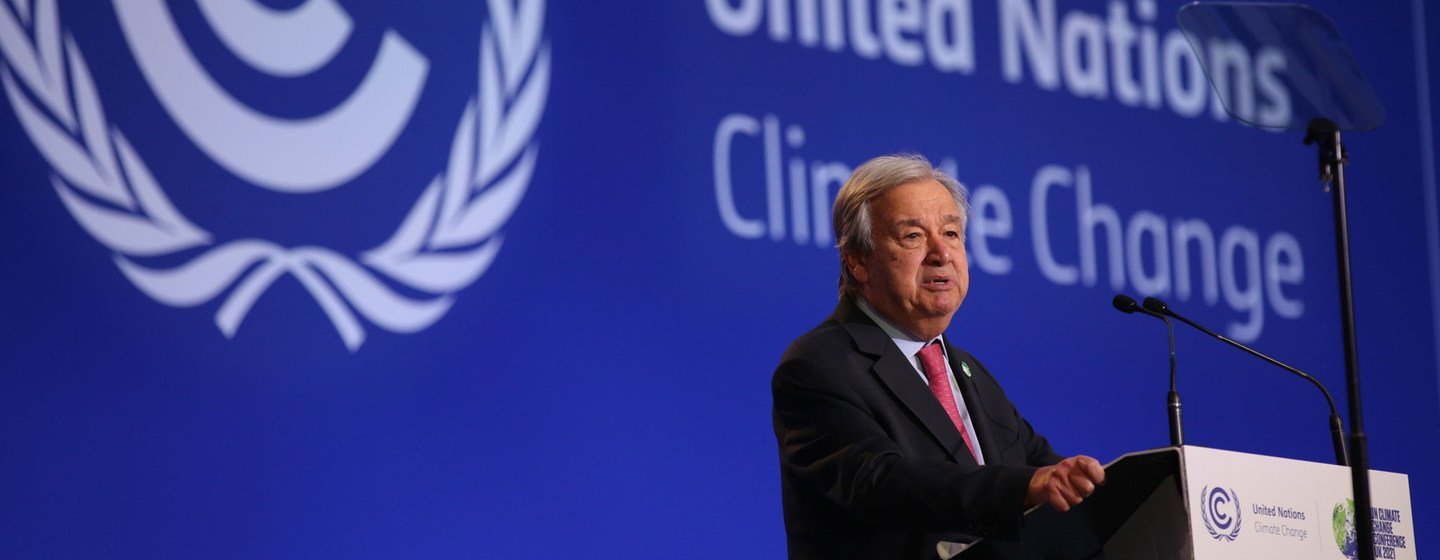
UNFCCC/Kiara Worth | UN Secretary-General António Guterres addresses the opening of the COP26 Climate Change Conference in Glasgow, Scotland.
It was a grey and windy morning, as dozens of world leaders arrived at the Scottish Event Campus, of the key United Nations climate conference, in the city of Glasgow.
Since 6.30am, long lines of people gathered at the gates to get their accreditations, and pass through tight security, which included presenting proof of negative COVID-19 tests.
Journalists from all over the world set to work side by side in the event halls, armed with a host of microphones, cameras, lights and recording equipment.





 HUMAN WRONGS WATCH