(UN News)* — When Israeli forces in Gaza issue a new displacement order ahead of an incursion into a neighbourhood or city, Palestinian civilians are expected to pack their bags and flee – perhaps for the third, fourth, or tenth time.
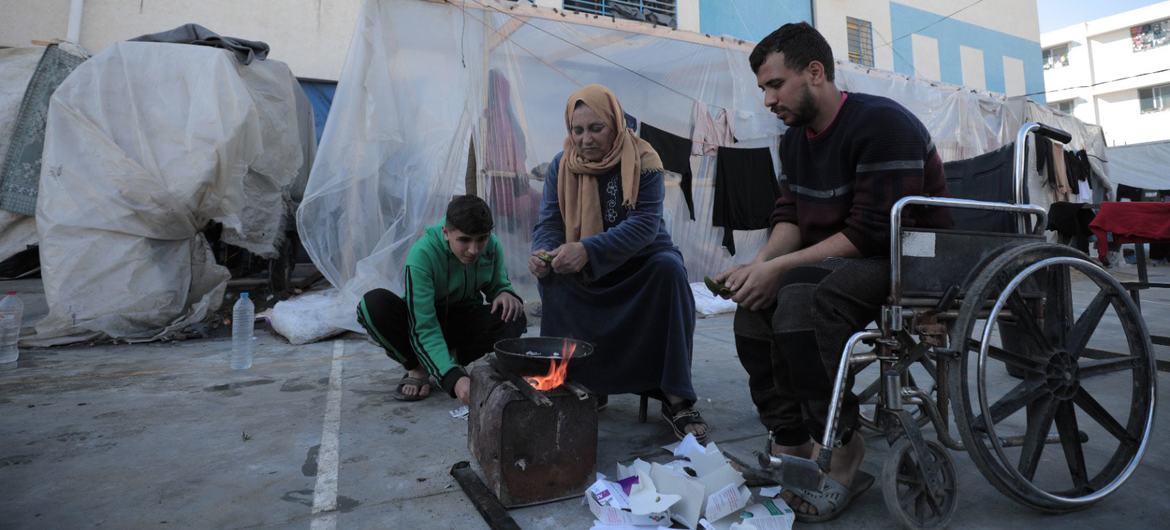
But for an increasing number of Palestinians, including those who cannot hear the orders or whose mobility is impaired, following these orders may be impossible. Yet, failure to do so, could cost them their lives.
“In a normal situation, people with disabilities suffer the most. And in wartime, of course, the situation is heightened further,” said Muhannad Salah Al-Azzeh, member of the UN Committee on the Rights of Persons with Disabilities at a public dialogue this week in Geneva.
With the number of disabled people in Gaza increasing every day, Mr. Al-Azzeh said that the minimum level of safety for people with disabilities is not being upheld.
JNOUB, Lebanon, Aug 15 2025 (IPS)* ––“Special, targeted operations in southern Lebanon,” a phrase that has echoed repeatedly over the past two years in Israeli Defence Force (IDF) statements.
.
But behind these clinical military terms lies a human cost that statistics cannot capture.
Morning after an Israeli attack in Tyre, Lebanon. Credit: Nour
.
.
.
.
.
.
.
.
The residents of southern Lebanon—mothers, fathers, children, and elders—are the ones who face the daily reality of displacement, loss, and uncertainty.
Their homes become coordinates on military maps; their neighborhoods, theaters of “operations.”
(UN News)* — Sexual violence in conflict zones rose sharply in 2024, increasing by a quarter compared to the previous year, the UN reported on Thursday [].
More than 4,600 survivors endured abuses used as weapons of war, torture, terrorism and political repression.
According to the annual Report of the Secretary-General on Conflict-Related Sexual Violence, both State and non-State actors were responsible for violations in 21 countries, with the highest numbers recorded in the Central African Republic (CAR), the Democratic Republic of the Congo (DRC), Haiti, Somalia and South Sudan.
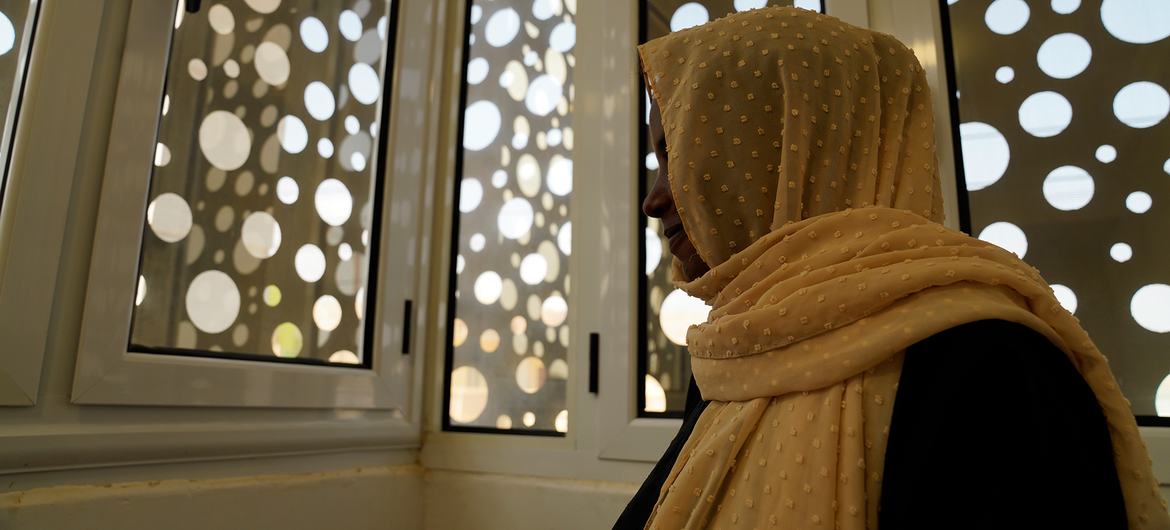
Women and girls made up 92% of victims, but men, boys, people with diverse sexual orientations and gender identities, racial and ethnic minorities – together with some persons with disabilities – were also targeted, ranging in age from one to 75.
FREIBURG, Germany, Aug 15 2025 (IPS)** –– The EU likes to think of itself as a normative power — a community of values, committed to upholding international law, promoting peace, protecting civilians and building a rules-based global order.
These are not just lofty ideals; they are enshrined in EU treaties, declarations and Council conclusions.
Credit: alliance/Anadolu/Moiz Salhi
But when it comes to the brutal, drawn-out destruction of Gaza and the continued illegal occupation of Palestine, these principles seem to have become hollow rhetoric.
Worse, they are being actively undermined by the craven inaction of the EU’s institutions and the blockage of governments like Germany, Italy, Hungary and the Czech Republic.
The European Commission has been shamefully absent as well.
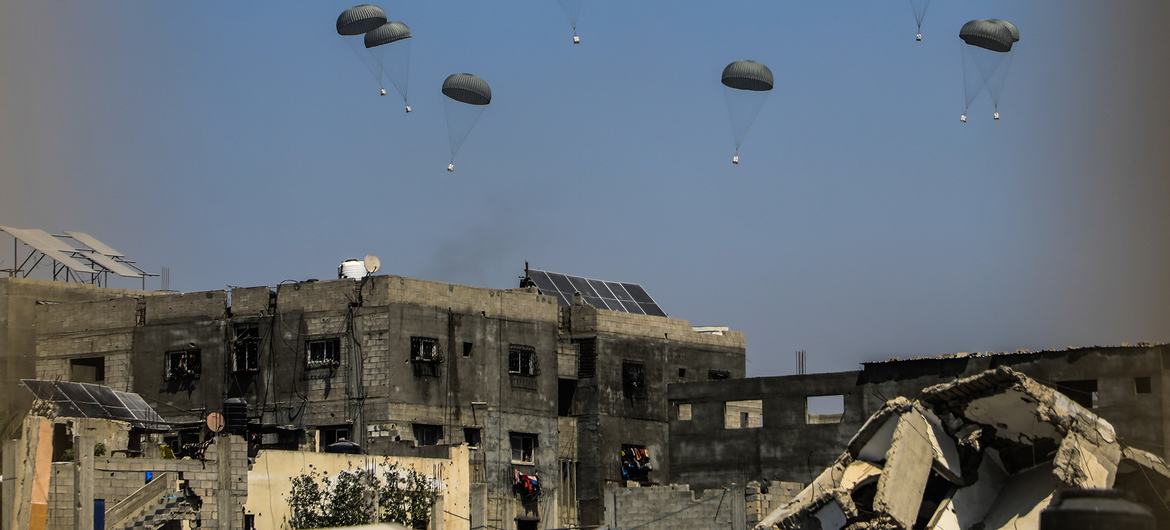
(UN News)* — At least 100 children in Gaza have died from malnutrition and hunger, prompting humanitarians to underscore the need to speed up medical evacuations from the enclave while also allowing more food to enter.
These young deaths are “the latest in the war on children and childhood in Gaza,” Philippe Lazzarini, head of UN Palestine refugee agency UNRWA, said in a tweet on Wednesday [].
The toll also includes some 40,000 boys and girls reported killed or injured due to bombardment and airstrikes, at least 17,000 unaccompanied and separated children, and one million deeply traumatised youngsters who are not getting an education.
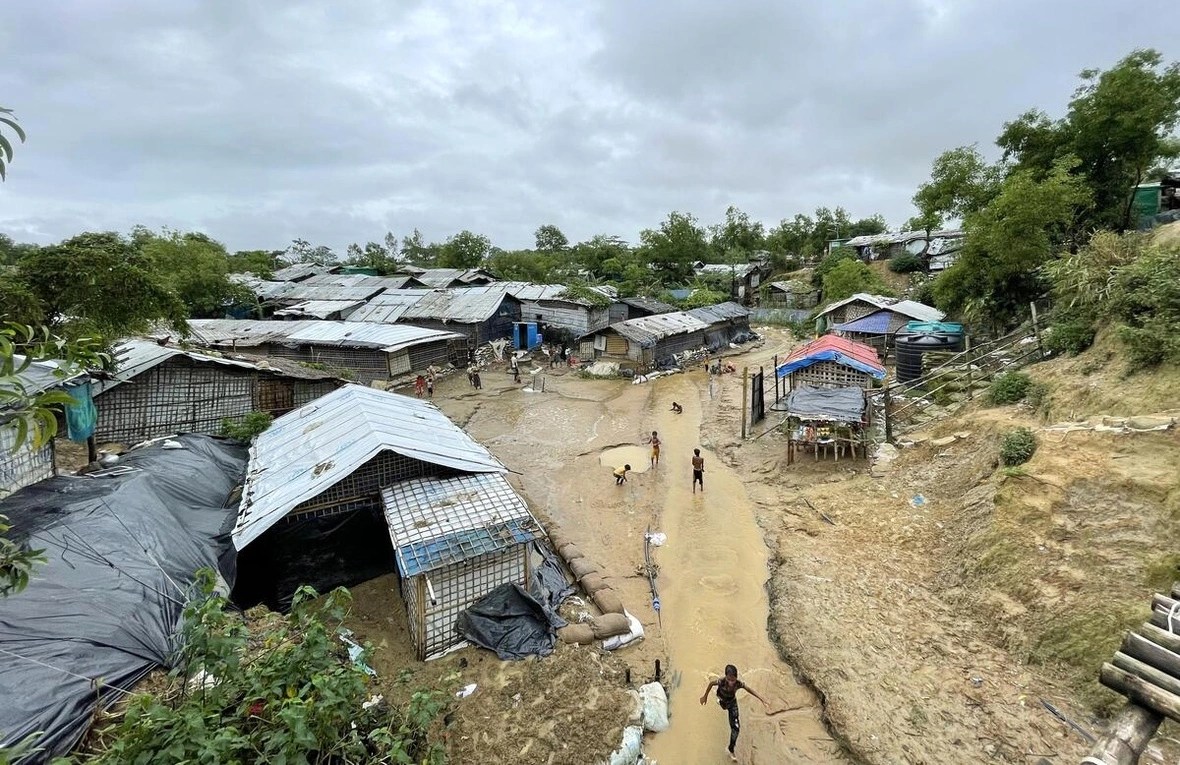
Cuts to a programme that maintained communal facilities for refugees in Cox’s Bazar have meant lost income for families and a more precarious environment in the camps.
(UN Refugee Agency (UNHCR)* — In the hilly terrain of Cox’s Bazar, life for over 1 million Rohingya refugees in the world’s largest and most densely populated refugee camp is always a struggle, but monsoon season brings fresh challenges.
(UN News)* — UN-mandated independent investigators have uncovered “systematic torture” in Myanmar’s military-run detention facilities – including beatings, electric shocks, strangulations and gang rape – a pattern of atrocities which is intensifying across the country.
In its annual reportreleased on Tuesday [], the Independent Investigative Mechanism for Myanmar(IIMM) said it had made “important progress” documenting crimes and identifying those responsible, including commanders of security forces overseeing detention facilities.
Myanmar descended into civil war following the military coup of February 2021 and the detention of civilian leaders, including President Win Myint and State Counsellor Aung San Suu Kyi.
At 22 pages, the current draft text contains 32 draft articles which will be discussed in fine detail, according to the UN. The text is designed to shape the future instrument and will serve as a starting point for negotiations. For 10 days from 5-14 August, delegations from 179 countries will pore over the text as they meet at UN Geneva, alongside more than 1,900 other participants from 618 observer organizations including scientists, environmentalists and industry representatives.
Plastic garbage is offloaded from a fishing boat on the east coast of China. Credit: UNEP/Justin Jin
GENEVA, Aug 12 2025 (IPS)** –– The future plastics treatyis being sold as potentially an environmental breakthrough. But in its current form during this week’s negotiations, it contains adangerous flawthat must be addressed before the final text is agreed — or it could undercut the world’s most widely ratified health treaty, the WHO Framework Convention on Tobacco Control (FCTC), and hand the tobacco industry the tools to expand its market under the banner of environmental action.
Land degradation and drought are fueling a hidden health crisis – but we still have time to act. When we speak of desertification or drought, we often think of dry rivers, cracked soil and failed harvests.
But there is another, less visible toll – one that strikes deep into the lungs, hearts and daily lives of the world’s most vulnerable people.
A new policy brief from the UNCCD reveals the far-reaching health impacts of land degradation and drought — and it delivers a stark message: the health of the planet and the health of people are inseparable.
Around the world, land is deteriorating at an alarming pace.
Between 2015 and 2019, more than 100 million hectares of productive land were lost each year. That’s an area roughly the size of Egypt — gone annually.
KUALA LUMPUR, Malaysia, Aug 12 2025 (IPS)* –– The accumulation of still growing greenhouse gas emissions (GHG) in an increasingly unequal world is accelerating planetary heating. It is also worsening disparities, especially between the rich and others, both nationally and internationally.
Jomo Kwame Sundaram
Unequal emissions In our grossly unequal world, international disparities account for two-thirds of overall income inequalities.
National income aggregates and averages can mislead by obscuring significant disparities within countries.
Meanwhile, GHG emissions continue to grow as their accumulation accelerates planetary heating.
Emissions disparities within nations now account for almost two-thirds of worldwide emissions inequality, nearly doubling from slightly over a third in 1990.
The bottom halves of rich country populations are already at – or close to – the 2030 per capita carbon dioxide equivalent emission targets set by their governments. Yet North America’s wealthiest 10% or decile are the world’s biggest GHG emitters.




 HUMAN WRONGS WATCH