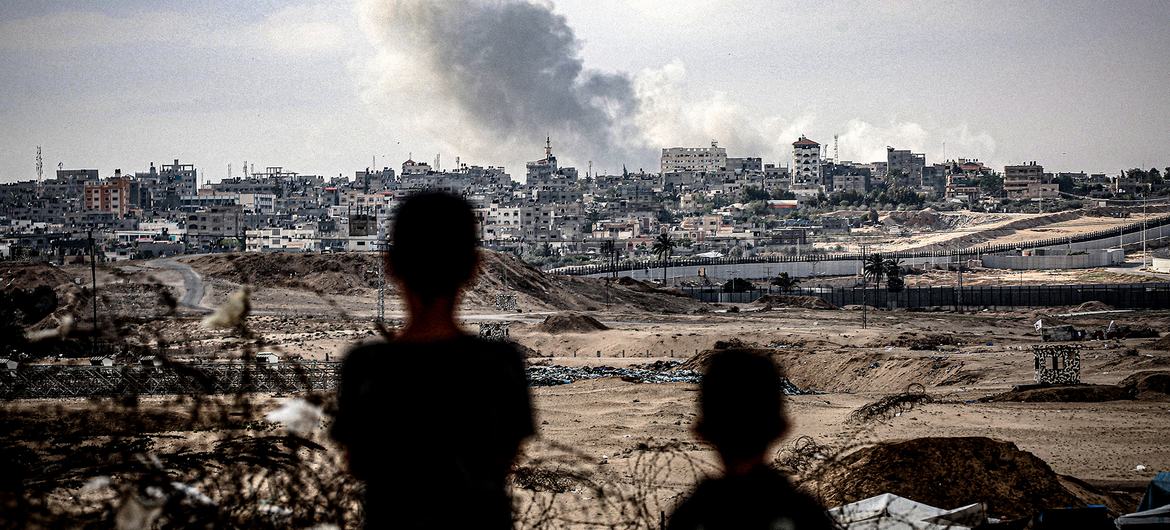
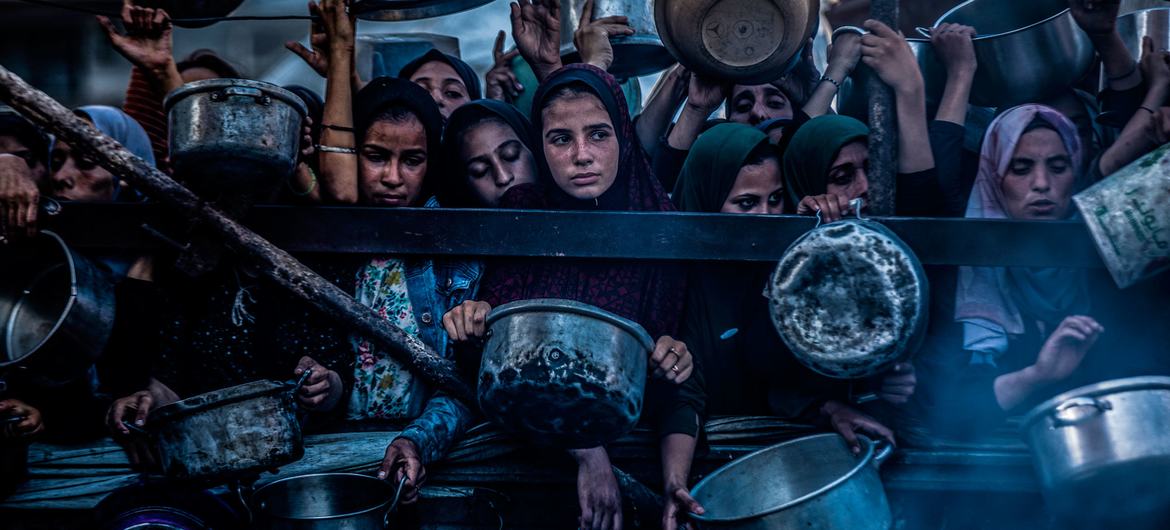
The sheer, unrelenting horror unfolding in Gaza is not unique in its scale of human suffering. Sudan has endured catastrophic famine for over a year, reaching the same “fifth stage of starvation” Gaza now tragically enters.
Every second of august, under the GENOCOST celebration , the Congolese community and its allies around the world come together to honor the memory of the victims of the Congolese genocide.
(UN News)* — UN Secretary-General António Guterres has condemned the killing of six Palestinian journalists in Gaza this past weekend, his Spokesman said on Monday [].
The reporters – five of whom worked for the Al Jazeera media network – were killed in a targeted Israeli strike in Gaza City the previous day.
“These latest killings highlight the extreme risks journalists continue to face when covering the ongoing war,” UN Spokesperson Stéphane Dujarric said during his regular media briefing from New York.
“The Secretary-General calls for an independent and impartial investigation into these latest killings.”
N’Djamena, Chad, 8 August 2025 – In a country where legal frameworks are still taking root and taboos around human trafficking and exploitation run deep, Julienne Deyo stands as a determined force. A lawyer by training and justice advocate by conviction, she has been at the frontlines of the Chad’s fight against human trafficking since 2018.
Now Chair of the National Commission to Combat Trafficking in Persons and Director of Legal Affairs at the Ministry of Justice and Human Rights, Madame Deyo leads with both a steady resolve and a heart marked by the suffering she’s witnessed.
“It started with the stories of young boys,” she recalls. “Children sold off to cattle herders, sent into the bush, far from their families, walking behind herds. Some were bitten by snakes and died alone. No one seemed to care. How can anyone stay unmoved?”
Madame Deyo’s focus is as much on the survivors as it is on building a foundation that prevents such abuse from happening again. Illustration: AI-generated image
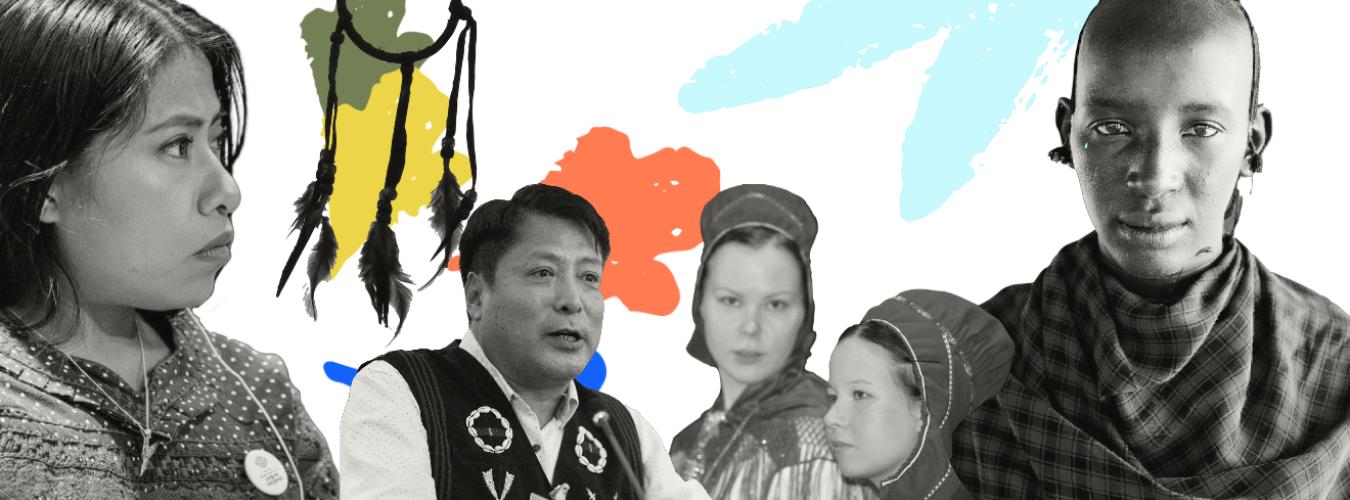
Indigenous peoples consider 22% of the world’s land surface their home. They live in areas where around 80% of the planet’s biodiversity is found on not-commercially-exploited land. UN Composition with photographs by Manuel Elias, Alessia Pierdomenico, Evan Schneider and Marcel Crozet (left to right.)
Watch
Young Indigenous Activists Fight to Save Their Languages and Cultures | United Nations
An estimated 476 million Indigenous Peoples live across 90 countries, representing 5,000 different cultures.
Without proper safeguards, AI risks harming Indigenous rights through inequitable distribution of the groundbreaking technology, environmental damage and the reinforcement of damaging colonial legacies.
The growing amount of electricity generation needed for AI data centres and other infrastructure is also intensifying climate change pressures, according to the UN.
Sana’a, Yemen — Fourteen men and four women set off from the Horn of Africa, drifting into the unknown across the sea.
After surviving the journey to Yemen, Sennait gave birth at a migrant centre and now hopes to rebuild her life with her baby. Photo: AI-generated image
.
Among them was Sennait*, a 20-year-old Ethiopian woman carrying the weight of her father’s recent death and the scars of a harrowing trek from her village to the coastal town of Bossaso.
.
Her life had once been simple. She went to school, laughed with friends, and helped her father tend their small farm.
(UN News)* — UN Secretary-General António Guterres has expressed grave concern over Israel’s decision to “take control of Gaza City”, his Spokesperson said in a statement on Friday [].
The announcement following an Israeli cabinet meeting “marks a dangerous escalation and risks deepening the already catastrophic consequences for millions of Palestinians, and could further endanger more lives, including of the remaining hostages,” it said.
The statement noted that Palestinians in Gaza continue to endure a humanitarian catastrophe of horrific proportions.
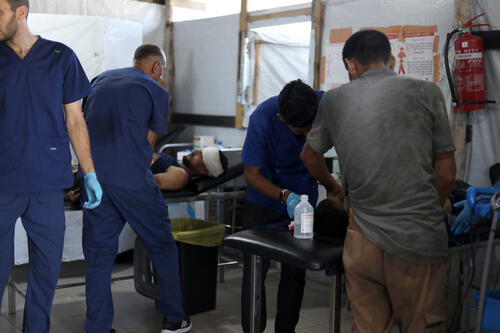
JERUSALEM, 7 August 2025–An analysis of Médecins Sans Frontières (MSF) medical data, patients’ testimonies, and first-hand medical witnessing at two MSF clinics in Gaza, Palestine, point to both targeted and indiscriminate violence by Israeli forces and private American contractors against starved Palestinians at food distribution sites run by the so-called Gaza Humanitarian Foundation (GHF).
The GHF-run food distributions in Gaza, Palestine, have become sites of “orchestrated killing and dehumanisation”, not humanitarian aid.
STOCKHOLM, Sweden, Aug 7 2025 (IPS)* –– On August the first, the Italian daily La Repubblica published an interview with David Grossman, Israel’s most renown author and supporter of a “two-state solution”, as well as an outspoken critic of Israel’s violence against Palestinian civilians.
Grossman’s interview received international attention and was quoted by respected newspapers like The Guardian, Le Figaro and Haaretz.
Israeli presence on the West Bank. The orange and red patches are what remains of Palestinian controlled areas.
(UN News)* —Extreme heat is breaking records around the world, with wildfires and poor air quality compounding the crisis, according to a report from the World Meteorological Organization (WMO) released Thursday [].
Extreme temperatures caused approximately 489,000 heat-related deaths annually between 2000 and 2019, with 36 per cent occurring in Europe and 45 per cent in Asia.
The health impacts of heat are especially severe in cities due to the so-called ‘urban heat island effect’ – the over-heating of dense city areas compared with their rural surroundings – which is magnifying problems as urbanisation continues.
Amid rising 21st-century temperatures, the WMO underscored that July 2025 was the third-warmest July ever recorded, behind those in 2023 and 2024.







 HUMAN WRONGS WATCH