The UN System together with UN Women is joining hands with survivors, activists, decision-makers, and people from every walk of life, to shine a light on the need for funding, essential services, prevention and data that shapes better-informed responses. | PHOTO:UN Women
24 November 2020 (United Nations)* — Since the outbreak of COVID-19, emerging data and reports from those on the front lines, have shown that all types of violence against women and girls, particularly domestic violence, has intensified.
This is the Shadow Pandemic growing amidst the COVID-19 crisis and we need a global collective effort to stop it.
(UN News)* — COVID-19 is overshadowing what has become a “pandemic of femicide” and related gender-based violence against women and girls, said independent UN human rights expert Dubravka Šimonović on Monday [23 November 2020], calling for the universal establishment of national initiatives to monitor and prevent such killings.
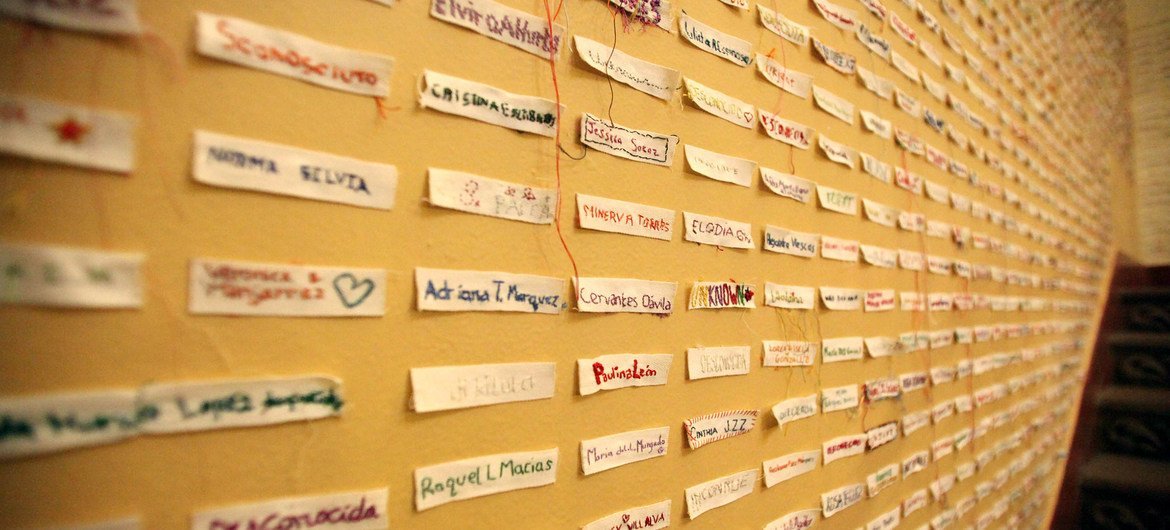
UN Women/Alfredo Guerrero | Labels with the names of victims of femicide, as well as the ‘unknown’ represent the victims of femicide at an exhibition in Mexico.
Ahead of the International Day for the Elimination of Violence against Women, marked on 25 November, Ms. Šimonović said the rise in femicides and violence was “taking the lives of women and girls everywhere” around the world, as the coronavirus continues to rage out of control.
(UN News)* — Levels of carbon dioxide (CO2) in the atmosphere hit a new record of 410.5 parts per million in 2019, and are expected to keep rising this year, the World Meteorological Organization (WMO) said in its annual Greenhouse Gas Bulletin on Monday [23 November 2020].
Unsplash/Johannes Plenio | Carbon dioxide levels continue at record levels, despite the economic slowdown caused by the COVID-19 pandemic.
“We breached the global threshold of 400 parts per million in 2015. And just four years later, we crossed 410 ppm. Such a rate of increase has never been seen in the history of our records. The lockdown-related fall in emissions is just a tiny blip on the long-term graph. We need a sustained flattening of the curve”, WMO Secretary-General Petteri Taalas said in a statement.
UNITED NATIONS, Nov 20 2020(IPS)* – The world’s major military powers exercise their dominance largely because of their massive weapons arsenals, including sophisticated fighter planes, drones, ballistic missiles, warships, battle tanks, heavy artillery—and nuclear weapons of mass destruction (WMDs).
Credit: United Nations
But the sudden surge in the coronavirus pandemic last week, particularly in the US and Europe, has resurrected the lingering question that cries out for an answer:
Will overwhelming fire power and WMDs become obsolete if biological weapons, currently banned by a UN convention, are used in wars in a distant future?
According to the latest figures from Cable News Network (CNN), the grim statistics of the coronavirus pandemic include 56.4 million infections and 1.5 million deaths worldwide.
As of last week, the US alone has been setting records: more than 11.5 million pandemic cases and over 250,500 deaths since last March, with more than 193,000 infections every day.
Pneumonia kills more children than any other infectious disease.
UNICEF/UN0198282/Njiokiktjien VII Photo
(UNICEF)* — Many people associate pneumonia with the elderly, but it is actually the biggest infectious killer of children worldwide. It claims the lives of over 800,000 children under five every year, including over 153,000 newborns, who are particularly vulnerable to infection. That means a child dies from pneumonia every 39 seconds and almost all of these deaths are preventable.
(UN News)* — UN Children’s Fund (UNICEF) is working with more than 350 logistics partners, including major airlines, shipping lines and logistics associations from around the world, to deliver COVID-19 vaccines to over 92 countries, as soon as doses become available, the UN agency said on Monday [23 November 2020].
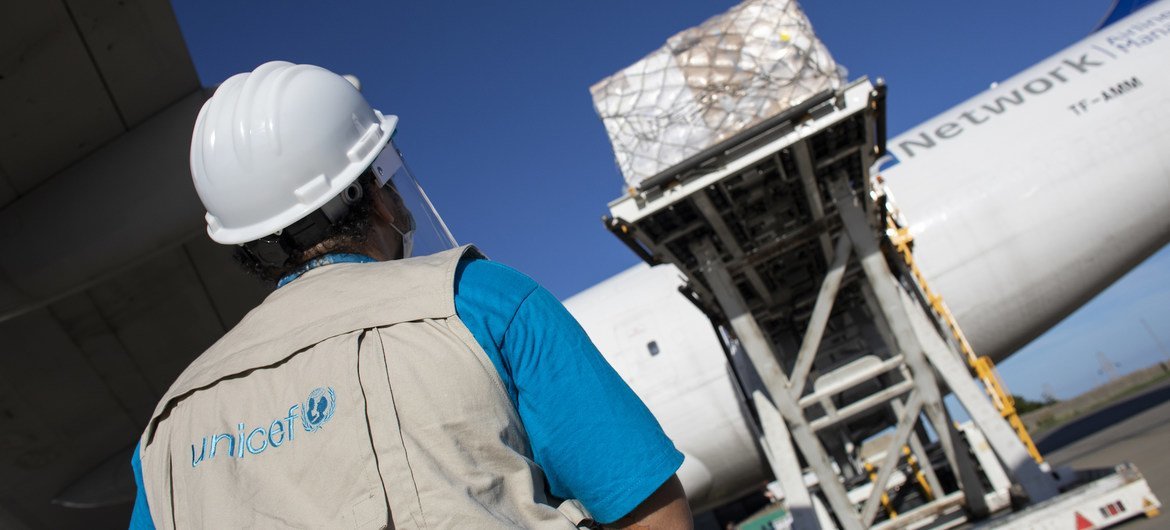
UNICEF/Fernandez | A UNICEF staff member watches as several tons of supplies to combat COVID-19 are unloaded at Venezuela’s main airport in Caracas. (August 2020)
Etleva Kadilli, Director of UNICEF’s Supply Division, highlighted the importance of the partnership to ensure capacity for the massive undertaking.
“As work continues to develop COVID-19 vaccines, UNICEF is stepping-up efforts with airlines, freight operators, shipping lines and other logistics associations to deliver life-saving vaccines as quickly and safely as possible,” she said.
‘Act urgently’ to stave off catastrophic famine in Yemen: UN chief to international community
.
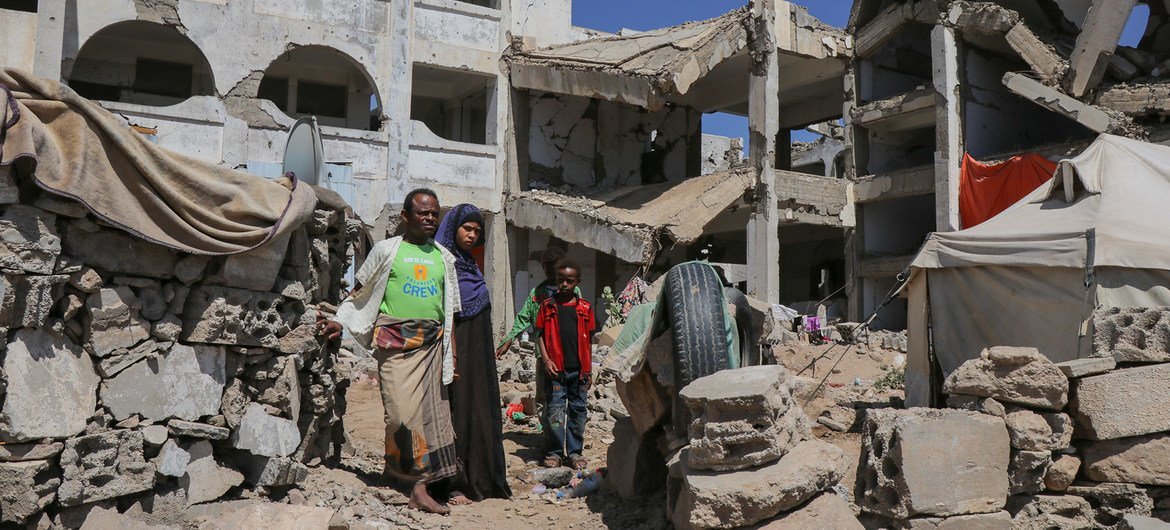
YPN for UNOCHA | A family in the Al Dhale’e camp for people displaced by the conflict in Yemen.
(UN News)* — Yemen is in “imminent danger of the worst famine the world has seen for decades”, the UN chief warned in a statement released on Friday [20 November 2020], calling for urgent action on the part of the international community to “stave off catastrophe”.
UN Secretary-General António Guterres warned that without immediate action to protect civilians battered and starved, after more than five years of grinding civil conflict, “millions of lives may be lost.”
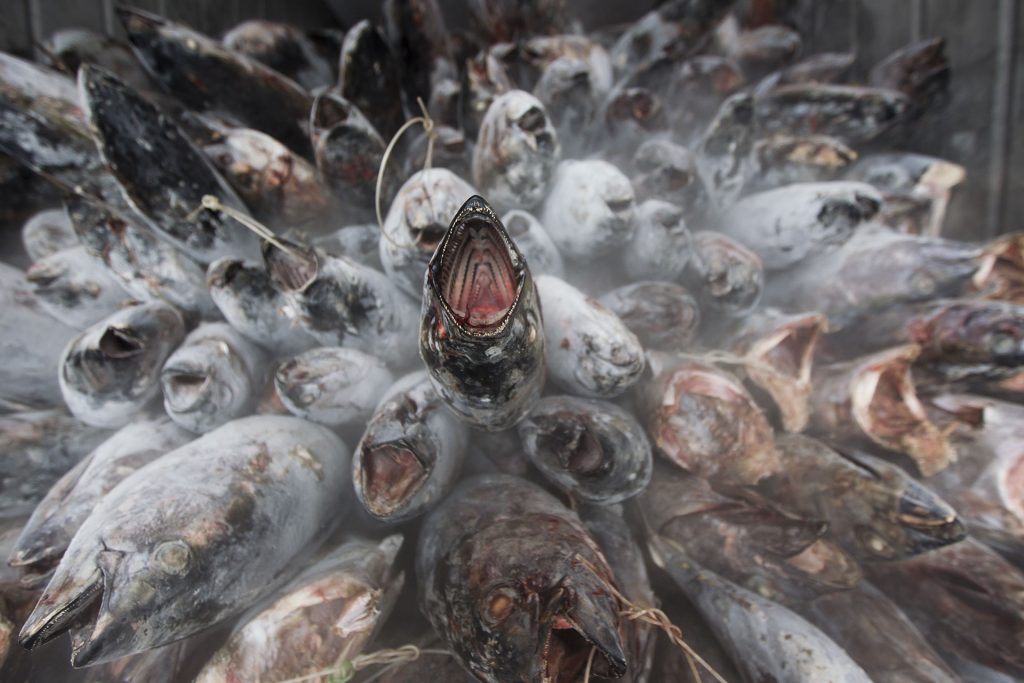
(Greenpeace International)* — November 21st marks World Fisheries Day, and whilst there’s plenty to celebrate about small and sustainable fisheries ALL around the world, there is a huge shadow cast by a few greedy, corporate entities which we cannot afford to ignore.
21 November marks World Fisheries Day, celebrating a profession and a way of life that supports the livelihoods of 1 out of every 10 people on the planet
21 November 2020 (FAO)* — To celebrate World Fisheries Day on 21 November, FAO and the Holy See will jointly organize an event aimed at focusing international attention on the need to improve working conditions in the fisheries sector.
19 November 2020 (FAO)* — Wasted food. Polluted seas. Landfill sites full to bursting. After years of using our precious natural resources as if they were limitless, the outcomes of our behaviours are making it clear that it is time to change our ways. And the answer? Well, a no-waste, environmentally and socially considerate bioeconomy is an excellent place to start.






 HUMAN WRONGS WATCH