(UN News)* — The head of the main UN agency responsible for Palestinian refugees, UNRWA, issued a stark warning on Monday [24 June 2024] that it “will crumble” unless funding is found quickly, with an “entire generation” of children at risk of being condemned to “poverty…hatred, resentment and future conflict”.
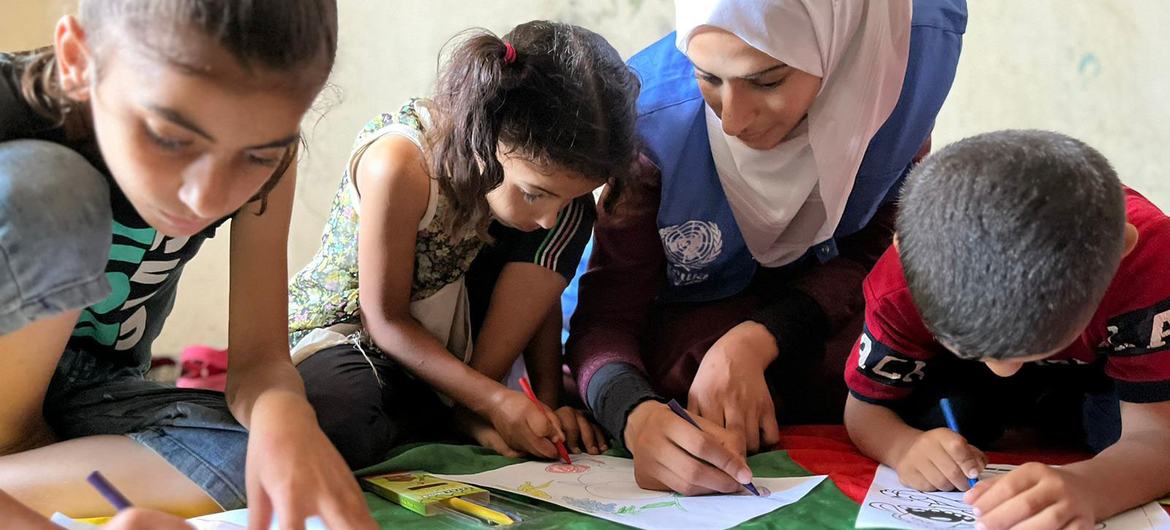
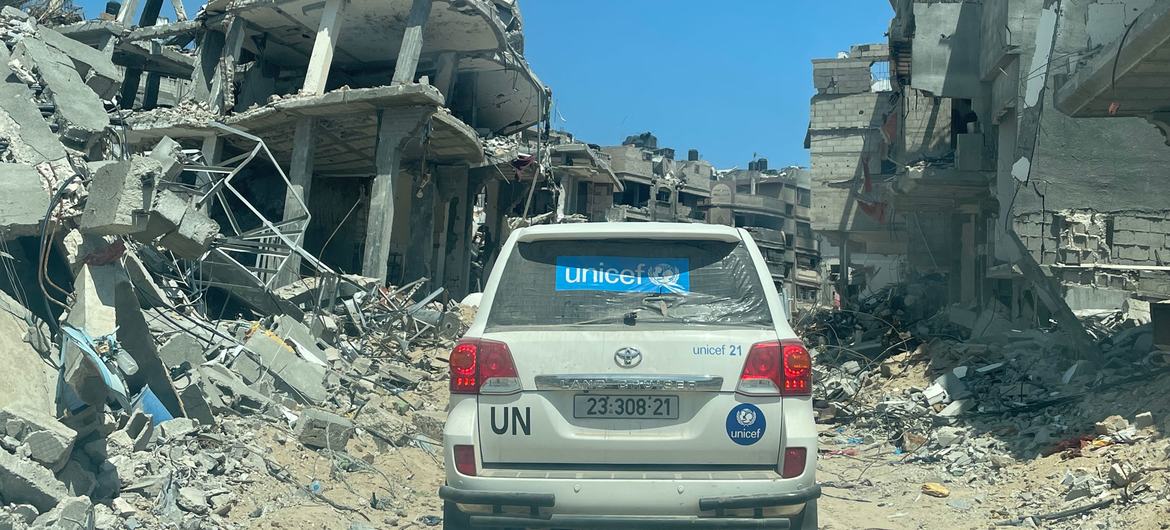
(UNRWA)* —This World Refugee Day [20 June 2024], Palestine Refugees in Gaza are struggling to survive a humanitarian tragedy that, for the older generations, is a chilling echo of their past dispossession.
Young and old alike continue to survive amid the unspeakable violence of nearly nine months of war.
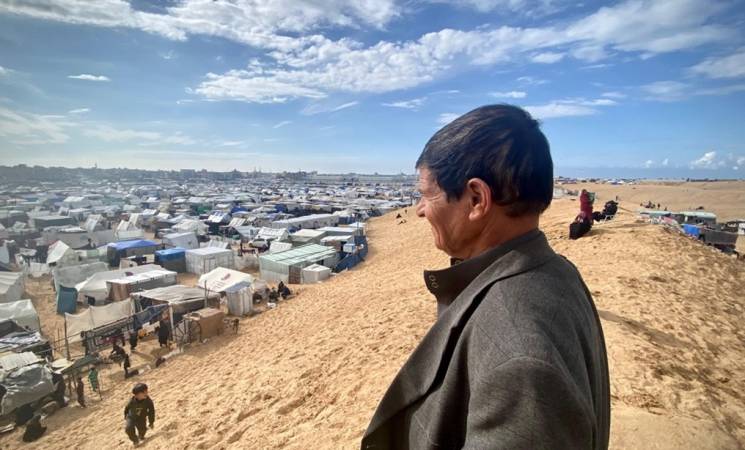
Abu Kefah Qadih, is an 81-year-old Palestine Refugee from Khan Younis. He has weathered forced displacement not once, but twice in his lifetime. As a child, he endured the horror of the Nakba – the mass displacement and dispossession of Palestinians during the 1948 Arab-Israeli war. Now he has been forced to witness the dispossession of his own grandchildren.
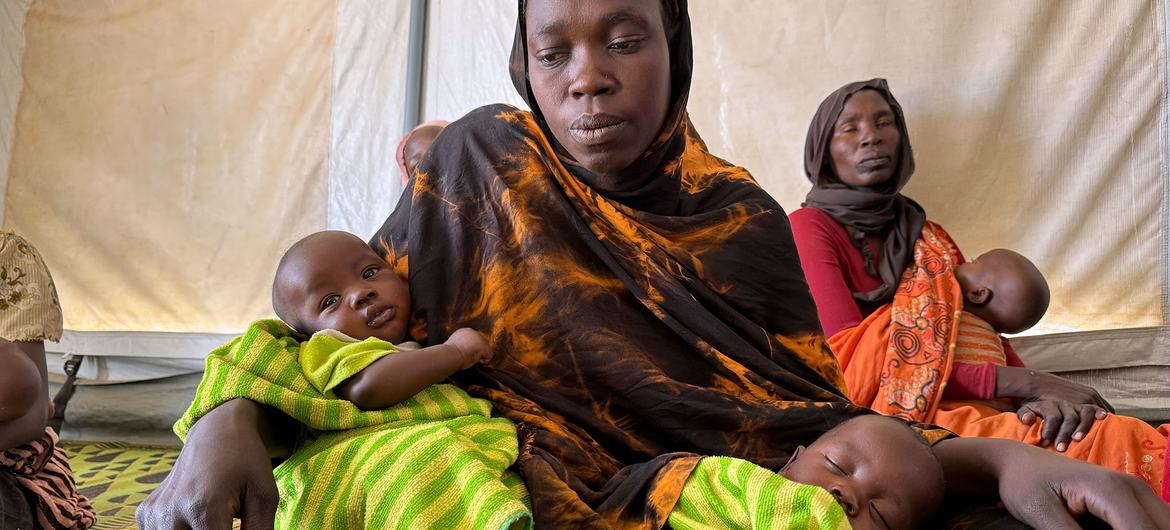
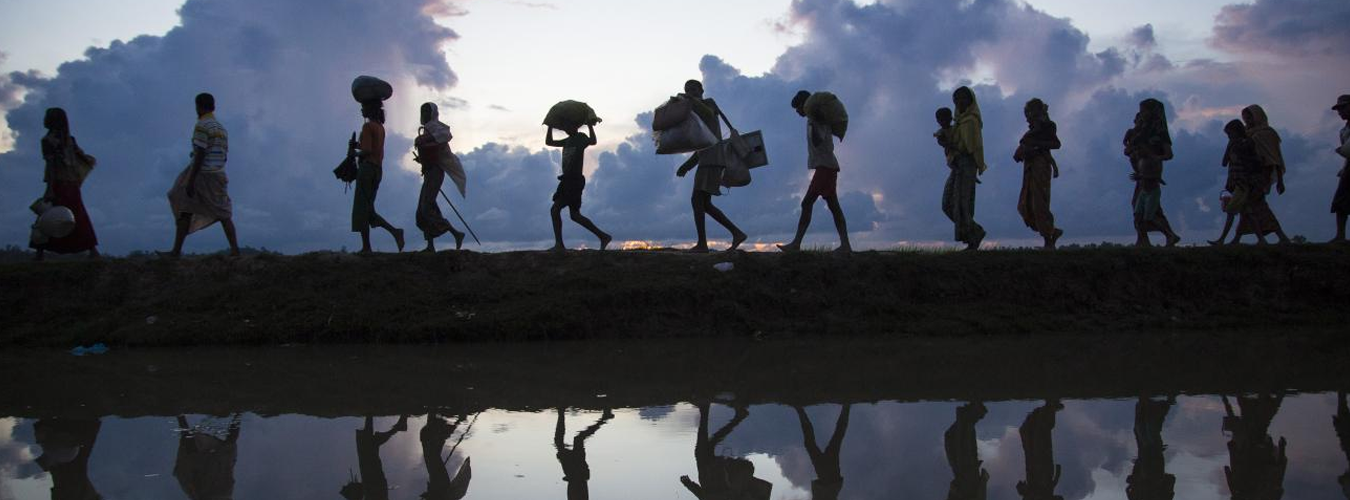
(UN News)* —“Conflict, climate chaos and upheaval” have forced more than 120 million people from their homes including 43.5 million who have fled across national borders said the UN Secretary-General in his message for World Refugee Day, marked on Thursday [20 ].
That’s a record number on the move – “fuelling profound human suffering”, António Guterres added, while at the same time honouring their strength and courage.
Drawing attention to the day each 20 June, is also about stepping up efforts to protect and support those forced from their homes “on every stop of their journey.”
(United Nations)* — Refugees need our solidarity now more than ever. Solidarity means keeping our doors open, celebrating their strengths and achievements, and reflecting on the challenges they face.
Solidarity with people forced to flee also means finding solutions to their plight – ending conflicts so they can return home in safety, ensuring they have opportunities to thrive in the communities that have welcomed them, and providing countries with the resources they need to include and support refugees.
(UN News)* — A UN probe into the Israeli military’s bombing of Gaza has pointed to the laws of war being “consistently violated” with regard to the use of hugely powerful bombs and an alleged lack of distinction between combatants and civilians, the Organization’s human rights chief said on Wednesday [].
To all the people of Gaza I send you my deepest love and sympathy on the death of your beloved family and friends who have been murdered by the Israeli military in its ongoing war on Gaza.
I also send my deepest sympathy to all the many thousands of Palestinians who have been injured and maimed, many of whom have not been able to access medical help due to the killing of medical staff and bombing by Israel of many hospitals.
I cannot begin to understand the depth of your pain on the loss of those you love. I can only say ‘I am sorry – please forgive me that I did not do enough to help stop this madness of military violence which cruelly took away the ones you love.’
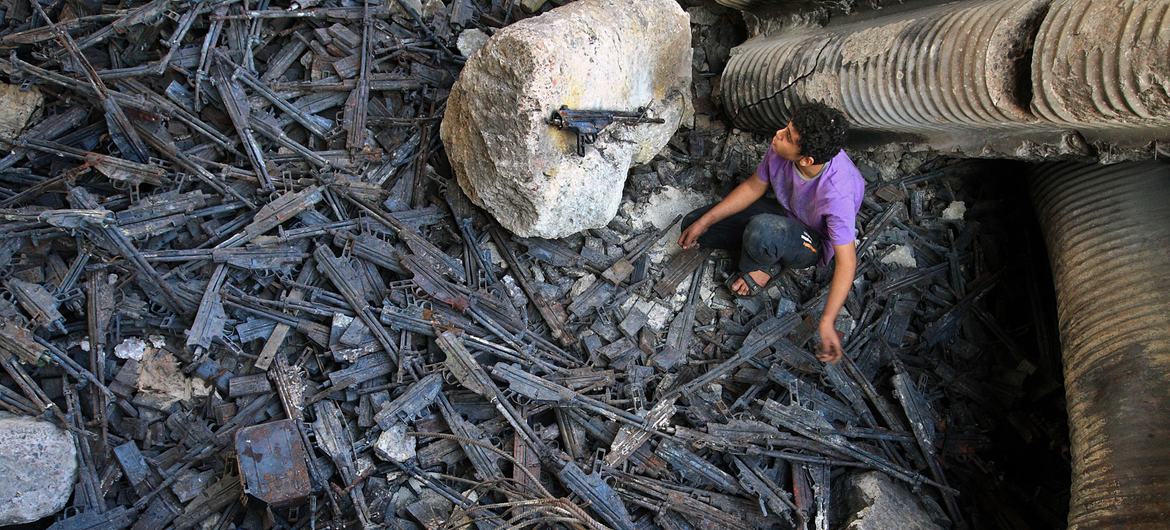
Delivering remarks in New York on behalf of the Secretary-General at a meeting aimed at eradicating the illicit trade in small arms, Izumi Nakamitsu, the head of the UN Office of Disarmament Affairs, warned on Tuesday [] that military expenditures continue to rise across the globe.
New conflicts are placing millions of people in the line of fire, and small arms and light weapons play a major role in these conflicts, she said.
KUALA LUMPUR, Malaysia, Jun 17 2024 (IPS)* –Since 2008, farmland acquisitions have doubled prices worldwide, squeezing family farmers and other poor rural communities. Such land grabs are worsening inequality, poverty, and food insecurity.
Squeezing land and farmers
A new IPES-Food report highlights land grabs (including for ostensibly ‘green’ purposes), the financial means used, and some significant implications.
Jomo Kwame Sundaram
Powerful governments, financiers, speculators, and agribusinesses are opportunistically gaining control of more cultivable land.
The report notes the 2007-08 food price spike and financial crash catalysed more land acquisitions.
Quantitative easing and financialization after the 2008 global financial crisis enabled even more land grabs. Investors, agri-food companies, and even sovereign wealth funds have obtained farmland worldwide.
Agribusinesses and other investors want land to make more profits, urging governments to enable takeovers. Cultivable land is being used for cash crops, natural resource extraction, mining, real property and infrastructure development, and ‘green’ projects, including biofuels.
Rome (IFAD)* -–In celebration of the International Day of Family Remittances (IDFR) on 16 June, the G20’s Global Partnership for Financial Inclusion (GPFI) has on 14 June 2024 unveiled a new report that provides evidence of the transformative impact of digital remittances, as a driver of financial inclusion and poverty reduction worldwide.
Despite persistent gender gaps, the hard-earned money sent back home by migrant workers remains a vital lifeline for over 800 million people, particularly for women and vulnerable populations.
Joanita and her husband live in two different countries to support their family and remittances sent back home have been a lifeline for them. Migrant workers sent US $669 billion back to their families in remittance-reliant countries in 2023. PHOTO:IOM/Maulana Iberahim
(United Nations)* — It is projected that by 2030 more than US$ 5 trillion will have been sent home by migrants to low- and middle-income countries (LMICs), with much of this money going directly to rural areas where 80 percent of the world’s poor live, facing food shortages and the impacts of climate change.




 HUMAN WRONGS WATCH