(Washington, DC) – The Trump administration’s omission of key sections and manipulation of certain countries’ rights abuses degrade and politicize the 2025 US State Department human rights report, Human Rights Watch on 12 August 2025 said.
FREIBURG, Germany, Aug 15 2025 (IPS)** –– The EU likes to think of itself as a normative power — a community of values, committed to upholding international law, promoting peace, protecting civilians and building a rules-based global order.
These are not just lofty ideals; they are enshrined in EU treaties, declarations and Council conclusions.
Credit: alliance/Anadolu/Moiz Salhi
But when it comes to the brutal, drawn-out destruction of Gaza and the continued illegal occupation of Palestine, these principles seem to have become hollow rhetoric.
Worse, they are being actively undermined by the craven inaction of the EU’s institutions and the blockage of governments like Germany, Italy, Hungary and the Czech Republic.
The European Commission has been shamefully absent as well.
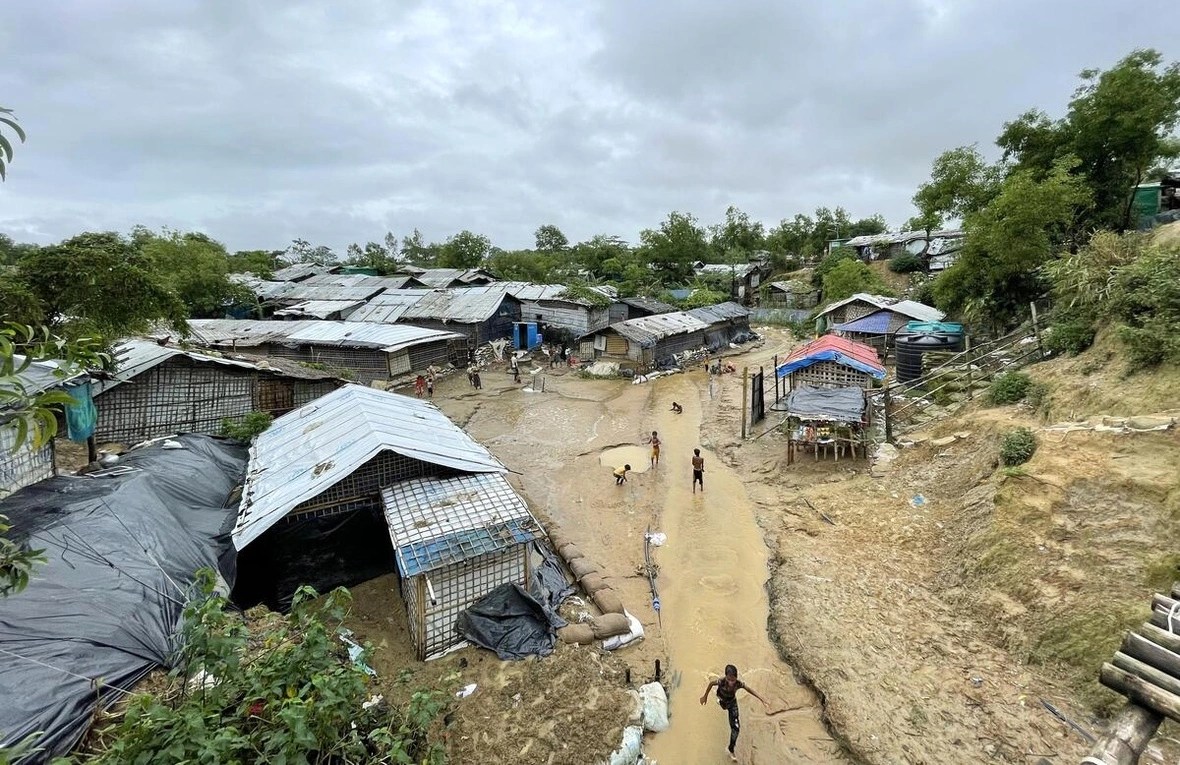
Cuts to a programme that maintained communal facilities for refugees in Cox’s Bazar have meant lost income for families and a more precarious environment in the camps.
(UN Refugee Agency (UNHCR)* — In the hilly terrain of Cox’s Bazar, life for over 1 million Rohingya refugees in the world’s largest and most densely populated refugee camp is always a struggle, but monsoon season brings fresh challenges.
UNITED NATIONS, Aug 12 2025 (IPS)* —The food crisis in Sudan is starving more day by day, yet it is affecting women and girls at double the rate compared to men in the same areas.
.
In Sudan, women-led households are three times more likely to deal with serious food insecurity compared to male-led households. Credit: UN Women Sudan
New findings from UN-Women reveal that female-headed households (FHHs) are three times more likely to be food insecure than ones led by men.
At 22 pages, the current draft text contains 32 draft articles which will be discussed in fine detail, according to the UN. The text is designed to shape the future instrument and will serve as a starting point for negotiations. For 10 days from 5-14 August, delegations from 179 countries will pore over the text as they meet at UN Geneva, alongside more than 1,900 other participants from 618 observer organizations including scientists, environmentalists and industry representatives.
Plastic garbage is offloaded from a fishing boat on the east coast of China. Credit: UNEP/Justin Jin
GENEVA, Aug 12 2025 (IPS)** –– The future plastics treatyis being sold as potentially an environmental breakthrough. But in its current form during this week’s negotiations, it contains adangerous flawthat must be addressed before the final text is agreed — or it could undercut the world’s most widely ratified health treaty, the WHO Framework Convention on Tobacco Control (FCTC), and hand the tobacco industry the tools to expand its market under the banner of environmental action.
Land degradation and drought are fueling a hidden health crisis – but we still have time to act. When we speak of desertification or drought, we often think of dry rivers, cracked soil and failed harvests.
But there is another, less visible toll – one that strikes deep into the lungs, hearts and daily lives of the world’s most vulnerable people.
A new policy brief from the UNCCD reveals the far-reaching health impacts of land degradation and drought — and it delivers a stark message: the health of the planet and the health of people are inseparable.
Around the world, land is deteriorating at an alarming pace.
Between 2015 and 2019, more than 100 million hectares of productive land were lost each year. That’s an area roughly the size of Egypt — gone annually.
KUALA LUMPUR, Malaysia, Aug 12 2025 (IPS)* –– The accumulation of still growing greenhouse gas emissions (GHG) in an increasingly unequal world is accelerating planetary heating. It is also worsening disparities, especially between the rich and others, both nationally and internationally.
Jomo Kwame Sundaram
Unequal emissions In our grossly unequal world, international disparities account for two-thirds of overall income inequalities.
National income aggregates and averages can mislead by obscuring significant disparities within countries.
Meanwhile, GHG emissions continue to grow as their accumulation accelerates planetary heating.
Emissions disparities within nations now account for almost two-thirds of worldwide emissions inequality, nearly doubling from slightly over a third in 1990.
The bottom halves of rich country populations are already at – or close to – the 2030 per capita carbon dioxide equivalent emission targets set by their governments. Yet North America’s wealthiest 10% or decile are the world’s biggest GHG emitters.
The sheer, unrelenting horror unfolding in Gaza is not unique in its scale of human suffering. Sudan has endured catastrophic famine for over a year, reaching the same “fifth stage of starvation” Gaza now tragically enters.
Every second of august, under the GENOCOST celebration , the Congolese community and its allies around the world come together to honor the memory of the victims of the Congolese genocide.
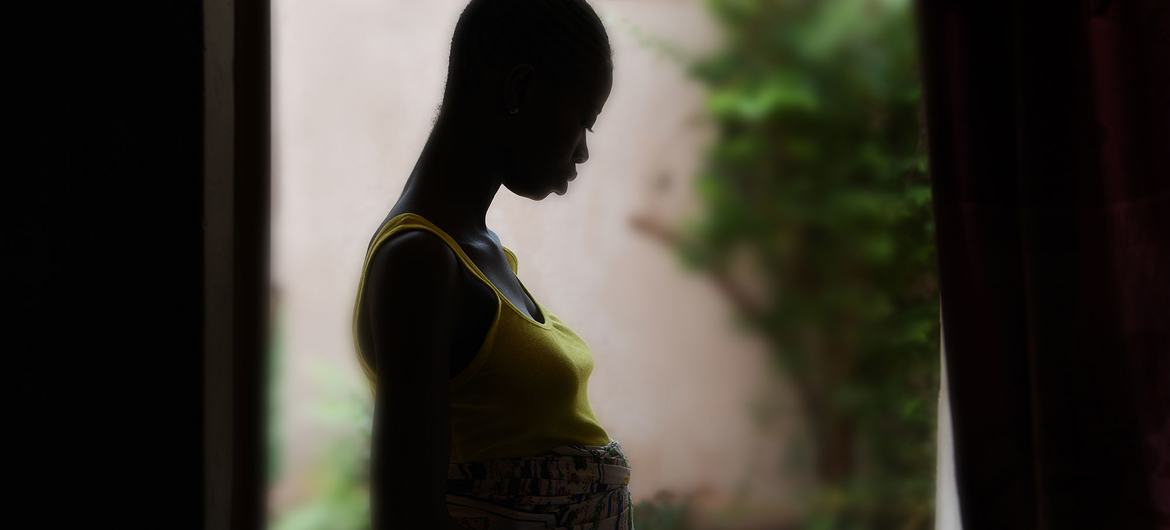
(UN News)* — In Africa’s Sahel region, deepening violence and poverty – driven by displacement, hunger and terrorism – are stripping women and girls of their right to safety, education and a viable future.
Risks to women and girls across this vast region are severe and systemic, as political instability, environmental collapse and a declining international presence take their toll.
.
From abductions and child marriage to exclusion from schools and public life, their lives and opportunities are being steadily stripped away, Sima Bahous, Executive Director of UN Women, told ambassadors in the Security Council on Thursday [].
“In the Sahel, where the world’s gravest concerns converge, women and girls bear the brunt,” she said.
Paulo Benedito built his life around the sea. Born and raised in Quissanga, a small coastal town in northern Mozambique’s Cabo Delgado province, Paulo came from a long line of fishermen.
The ocean was more than a livelihood—it was a way of life passed down through generations.
Each morning, he would set out before sunrise in his wooden boat, returning hours later with enough fish to feed his family—and, if the catch was good, to sell at the market.
 US Secretary of State Marco Rubio speaks after being sworn in by Vice President JD Vance near the White House in Washington, DC, January 21, 2025. © 2025 AP Photo/Evan Vucci



 HUMAN WRONGS WATCH