AWAZA, Turkmenistan, Aug 6 2025 (IPS)* ––Agriculture is a critical sector in landlocked developing countries, as more than half (55 percent) of the population is employed in the agriculture sector – significantly higher than the global average of 25 per cent.
As such, the deterioration of food security in landlocked developing countries (LLDCs) is an unfolding catastrophe.
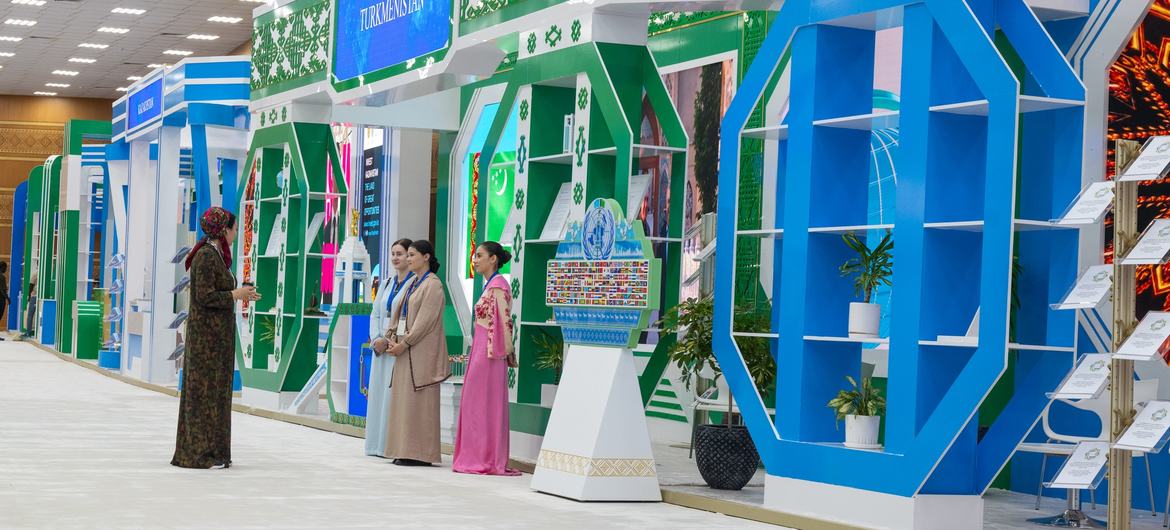
A high-level event focused on agriculture at the ongoing Third United Nations Conference on Landlocked Developing Countries. Credit: Joyce Chimbi/IPS
There are 32 LLDCs, with a combined population of nearly 600 million people.
The prevalence of moderate or severe food insecurity rose from an estimated 43 percent in 2015 to 51 percent in 2023, and the rate of undernourishment from approximately 15 percent to 19 percent in the same period.
(UN News)* —At a major UN forum opening in Awaza, Turkmenistan, this week, parliamentarians from around the world are being urged to take decisive action to improve the lives of more than 600 million people living in landlocked developing countries (LLDCs).
UN Photo/Eskinder Debebe | Final preparations being made at the venue of the LLDC3 conference in Awaza, Turkmenistan.
Speaking at the Parliamentary Forum of the Third UN Conference on LLDCs, senior UN leaders stressed that political will, matched with national legislative action, is essential if a new decade-long development plan is to make a real difference.
There are 32 such countries globally, home to over half a billion people. Many are also among the world’s least developed, hindered by high transport costs, limited access to global markets, and heightened vulnerability to climate impacts.
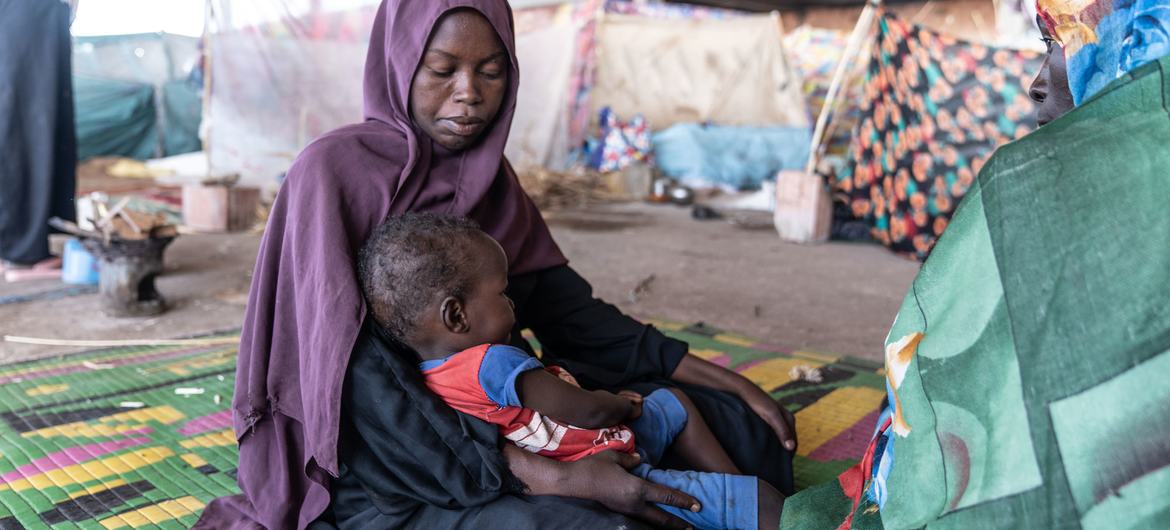
(UN News)* — Famine was declared in the Zamzam camp in North Darfur one year ago. And since then, little has changed – no aid trucks have reached the region, the nearby city of El Fasher is still under siege and food prices are four times higher than other parts of the country.
NAIROBI, Kenya / PARIS, France, Aug 5 2025 (IPS)** – One would expect that this year’s wetter than average rainy season in parts of Africa would be viewed with relief, not fear.
Credit: World Organisation for Animal Health
Yet many areas in the region sits at a knife’s edge—still recovering from years of drought and a historic famine, too much rain leads to flooding and water-borne diseases.
LONDON, Aug 4 2025 (IPS)** ––Rice queues – something once unthinkable – began appearing around May. As the country’s staple food hit record prices, frustrated shoppers found themselves breaking a cultural taboo by switching to rice from South Korea.
It was a symbol of how far Japan’s economic certainties had crumbled, creating fertile ground for a political shift.
Credit: Kim Kyung-Hoon/Reuters via Gallo Images
That came on 20 July, when Japan joined the ranks of countries where far-right parties are gaining ground.
The Sanseitō party took 15.7 per cent of the vote in the election for parliament’s upper house, while the ruling two-party coalition of the Liberal Democratic Party (LDP) and Kōmeitō lost its majority.
The result spells trouble for Japan’s civil society.
The Trump administration proposed on July 29 to revoke the 2009 finding by the Environmental Protection Agency that greenhouse gases endanger public health, a move that would gut the government’s ability to regulate fossil fuels and reject decades of scientific evidence.
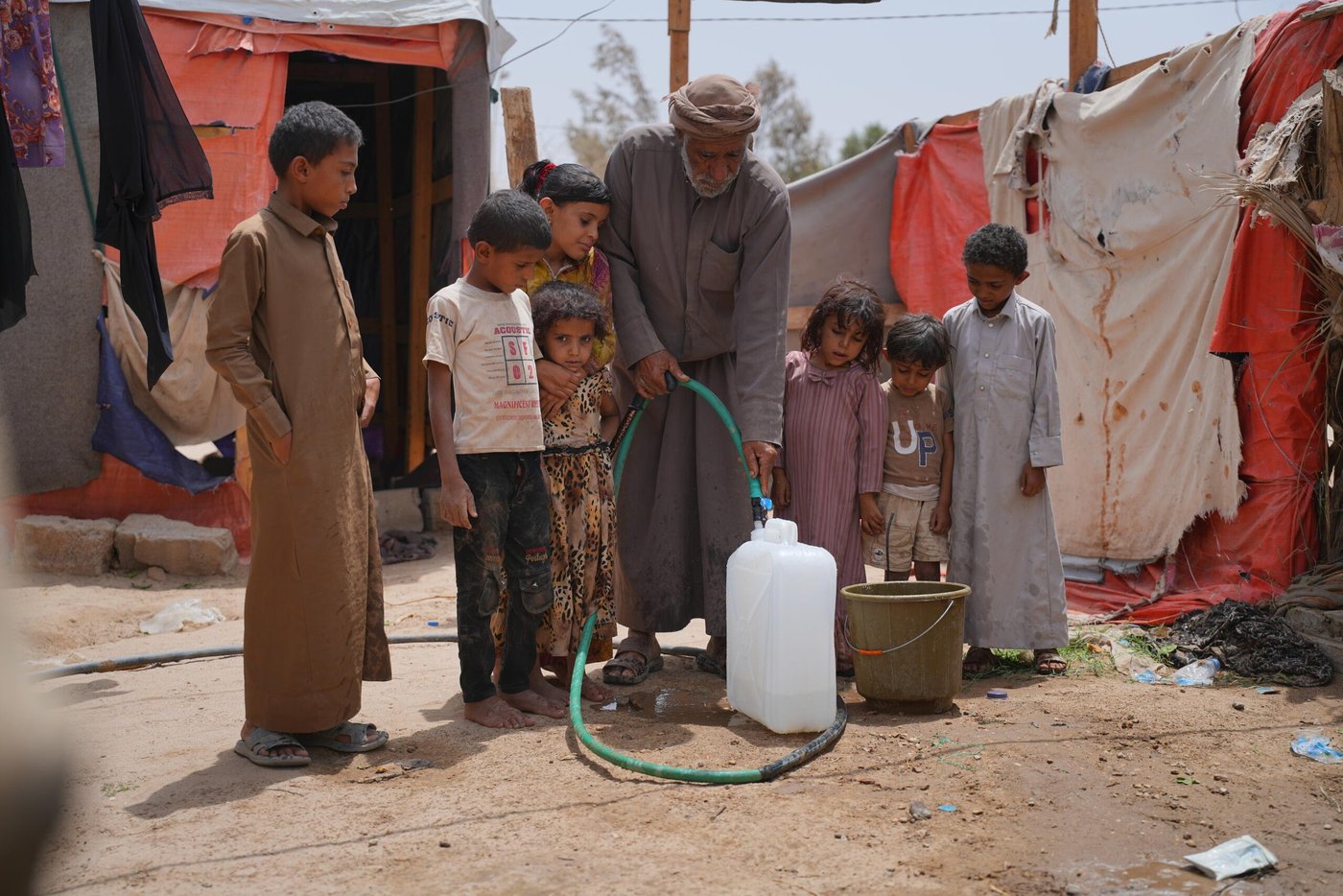
29 July 2025 – While summer rains typically offer some relief, this year’s cumulative rainfall is expected to drop by 40 per cent in some regions, leaving 15 million people who are water insecure in a precarious state without safe drinking water or reliable sanitation.
Mureshed, 75, surrounded by his grandchildren in Hajjibah camp, Yemen. Suleiman Al-Shara’abi/NRC
Low seasonal rainfall in Yemen has severely exacerbated an already dire situation, with Yemenis in both rural areas and cities struggling to access clean water, warns the Norwegian Refugee Council (NRC).
“With every year that passes, Yemenis see their ability to access water shrink,” said Angelita Caredda, NRC’s Middle East and North Africa Regional Director.
MOGADISHU, Somalia –“I didn’t know if she would make it.” When Faduma Mohamed gave birth to her daughter at Banadir Hospital in Mogadishu, the silence that followed was terrifying. Her premature daughter was tiny, underweight and barely breathing.
Just months earlier, she might not have; the hospital’s newborn intensive care unit was severely under-resourced, lacking essentials such as incubators and oxygen support machines.
SRINAGAR, India & KINSHASA, DRC, Jul 29 2025 (IPS)* —The Democratic Republic of Congo (DRC) stands on the precipice of a profound environmental and social crisis, as the government prepares to auction 55 new oil blocks that cover more than half the country’s landmass.
Activists march in the street of Goma, in the Democratic Republic of Congo to demand climate justice and an end to oil exploration in the Virunga National Park. Credit: MNKF Creatives
Touted as a pathway to economic growth, the move has triggered fierce backlash from scientists, civil society groups, Indigenous leaders, and international conservationists, who warn that the proposed fossil fuel expansion threatens some of the most ecologically and culturally significant landscapes on Earth.
Aid cuts and humanitarian deadlock are fuelling a full-blown public health disaster.
In Sake and Minova, 500 people are sharing a single water tap.
Francoise lost six children in the conflict in DRC. She has been displaced to a camp in Bunia with her five remaining children after their village was attacked. Photo: John Wessels/Oxfam
Six months since the renewed war in the Democratic Republic of Congo (DRC), a full-blown public health emergency is accelerating, Oxfam warned on 24 July 2025
Since January, more than 35,000 suspected cholera cases and at least 852 related deaths have been reported – an average of more than four deaths every day and a 62 percent increase compared to 2024.







 HUMAN WRONGS WATCH