By Ashfaq Khalfan, Climate Justice Director, Oxfam America*
Mega rich oil, gas and coal companies, described as the ‘Godfathers of climate chaos’, are driving humanity to the edge of destruction and earning billions in doing so. For decades, they’ve spread lies and disinformation about the climate crisis and lobbied to create fossil-fuel driven economies.
They’ve received billions in government subsidies and as energy prices soared, instead of investing in renewable energy, enriched their shareholders to the tune of $403 billion in 2024 alone.
Nairobi –Despite its critical role in sustaining billions of lives, the global food system fails to deliver for health, rights, and particularly, nature.
A report published on 1 July 2025 by the UN Environment Programme (UNEP) and Chatham House highlights three system barriers – the cheaper food paradigm, market consolidation and investment path dependencies – that must be addressed to meet sustainable development goals.
Droughts displace young and poor pastoralists, while wildfires displace older urban residents with higher socio-economic status.
.
.
.
.
.
.
.
A new study by the International Organization for Migration (IOM) shows the wide range of demographic and socio-economic profiles affected by weather-related displacement worldwide.
This publication provides first-of-its-kind global insights into the demographic and socio-economic characteristics of communities facing weather-related displacement.
With an estimated 218.6 million internal displacements caused by weather-related disasters over the past decade, the analysis fills a critical data gap by revealing detailed profiles of these populations, including their age, income, education, and livelihoods.
But the United Nations Population Fund (UNFPA)’s State of World Population report shows the real issue is a lack of reproductive agency—many people, especially youth, are unable to have the children they want.
The World Population Day 2025 [11 July] highlights this challenge, focusing on the largest-ever generation of young people.
The theme, “Empowering young people to create the families they want in a fair and hopeful world,” calls for ensuring youth have the rights, tools, and opportunities to shape their futures.
Young people are already driving change, but face major obstacles: economic insecurity, gender inequality, limited healthcare and education, climate disruption, and conflict.
NAIROBI & BHUBANESWAR, Jul 10 2025 (IPS)* –The global population is aging at a time when heat exposure is rising due to climate change. Extreme heat can be deadly for older populations given their reduced ability to regulate body temperature.
Facing frequent climate hazards, resultantly offsprings having migrated out, this South Sikkimese elder in India battles depression, anxiety and early onset of dementia. Credit: Manipadma Jena/IPS
Already there has been an 85 percent increase since 1990 in annual heat-related deaths of adults aged above 65, driven by both warming trends and fast-growing older populations.
If this were not heartbreakingly disastrous enough, heat-related deaths in older populations are projected to increase by 370 percent annually if global temperatures rise by 2˚ Centigrade mid-century.
PORTLAND, USA, Jun 30 2025 (IPS)* – Approximately 1.3 billion people, or 16% of the world’s population, wish to leave their country permanently, while over a billion people believe that fewer or no immigrants should be allowed into their countries.
The number of people desiring to emigrate permanently exceeds the number of immigrants countries are willing to admit, leading many individuals to migrate without authorization. Credit: Shutterstock.
This demographic struggle between the two sides over international migration is causing significant social, economic, and political repercussions for nations and their citizens.
The 1.3 billion individuals desiring to emigrate to another country is over four times the size of the estimated total number of immigrants worldwide in 2025, which is around 305 million.
UNITED NATIONS, New York – “Do you want kids?” Every day, people around the world ask themselves, and others, this question. But it also begs another: “Do you feel able to have children?”
With over 8 billion people in the world, it’s a question that has become arguably more loaded.
For some, this number is unsustainable, unequally distributed and will cause the planet’s demise. Others worry we’re in a “population collapse” – that societies cannot sustain their ageing, slowing demographics.
(UN News)* — On the eve of the fourteenth anniversary of its independence, South Sudan – the world’s youngest country – is experiencing its worst and longest cholera outbreak.
WHO/South Sudan | The World Health Organization (WHO) is working with health authorities in South Sudan and partners to scale up cholera prevention efforts, including a vaccination campaign.
The outbreak – which started in September 2024 and was confirmed a month later – comes amidst a protracted humanitarian crisis exacerbated by rising intercommunal violence, climate shocks such as flooding and catastrophic hunger.
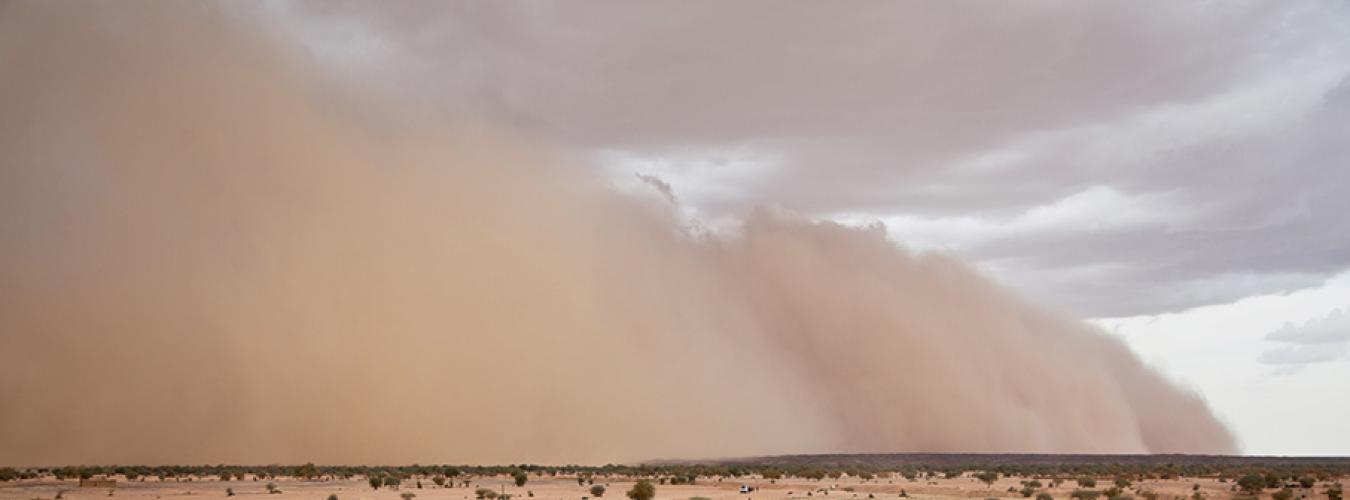
(United Nations)* —Some of the most intimidating sights in nature are rolling dark clouds of sand and dust that engulf everything in their path, a phenomenon that turns day into night and wreaks havoc everywhere from Northern China to sub-Saharan Africa.
The southern part of South America is counting the societal and economic cost of an extreme cold spell which brought frost and freezing morning temperatures intensified from Patagonia to central regions of Chile and Argentina.
Date: 01/07/2025 Location: Atacama Desert
European Union, Copernicus Sentinel-2 imagery
On 30 June, both Chile and Argentina ranked among the coldest places on Earth, excluding the polar regions.
It was due to the persistence of a powerful polar-origin anticyclone which extended into parts of Paraguay and Uruguay, causing unusually low temperatures for the season.




 HUMAN WRONGS WATCH