3 July 2025 — US headlines have been dominated by coverage of the many ways President Trump’s budget bill will gut healthcare programs and deepen economic inequality in the United States if it is passed into law.
Somewhat lost amidst all that noise is the story of how the Trump administration also weaponized the bill to benefit the wealthiest US corporations by undermining global efforts to tax businesses fairly.
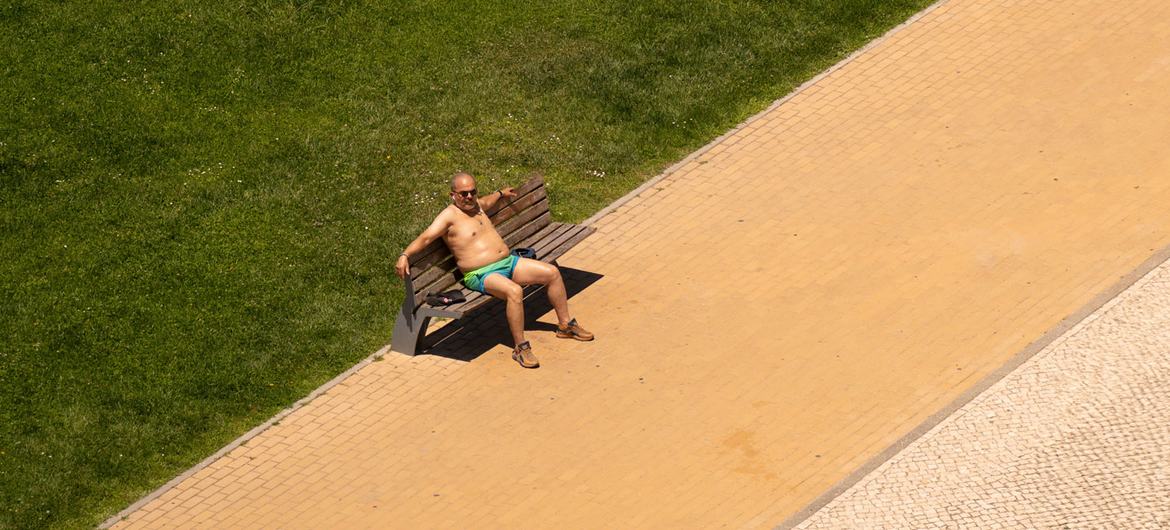
(UN News)* —The blistering early-summer heatwave that’s brought life-threatening temperatures across much of the northern hemisphere is a worrying sign of things to come, UN weather experts said on Tuesday .
Three days after Spain’s national weather service confirmed a record 46°C reading in the southern town of El Granado, there’s been little let-up in stifling day and night temperatures across the continent and beyond.
SEVILLE & BHUBANESWAR, Jul 2 2025 (IPS)* –While droughts creep in stealthily, their impacts are often more devastating and far-reaching than any other disaster.
In Nairobi’s Kibera, the largest urban informal settlement in Africa, girls and women wait their turn for the scarce water supply. Credit: Manipadma Jena/IPS
Inter-community conflict, extremist violence, and violence and injustice against vulnerable girls and women happen at the intersection of climate-induced droughts and drought-impoverished communities.
Five consecutive years of failed rain in Ethiopia, Somalia, and Kenya brought the worst drought in seventy years to the Horn of Africa by 2023.
How conflict and extreme weather have displaced millions and fuelled severe food insecurity in the Horn of Africa country
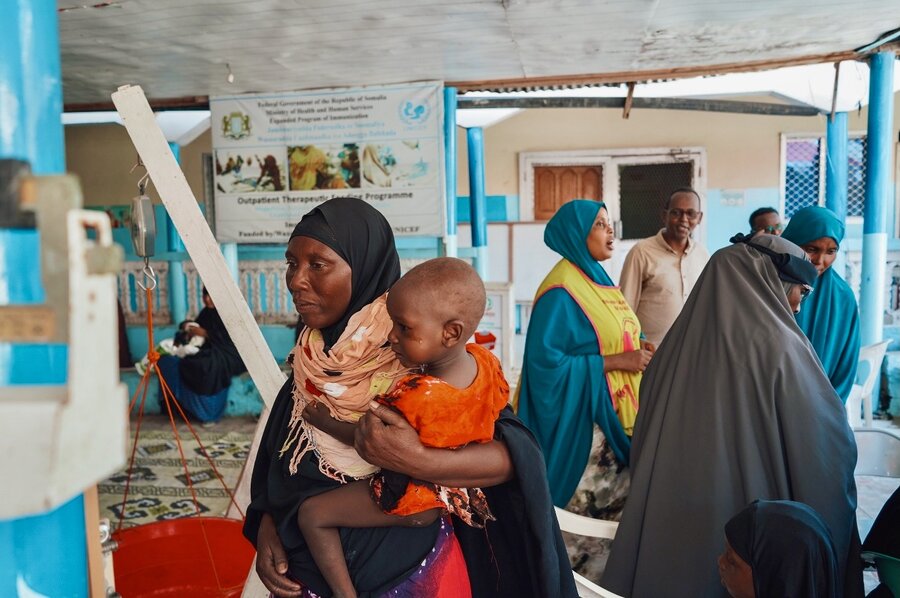
Farhia Ali and her daughter Ruqiya at a health clinic in Mogadishu. The family counts among the many displaced people sheltering in Somalia’s capital and other urban areas. Photo: WFP/Sara Cuevas Gallardo
—The cramped streets of Mogadishu buzz with cars, donkey-drawn carts and three-wheeled vehicles known as tuk-tuks – all competing to navigate the slippery, muddy channels carved out by unexpectedly heavy rains.
Somalia’s unpredictable weather has struck again. The rainy season, marked by a massive and deadly downpour hitting the capital in May, has destroyed homes and infrastructure. But the upcoming dry season risks wreaking even more devastation.
The world’s richest 1% increased their wealth by more than $33.9 trillion in real terms since 2015, reveals new Oxfam analysis ahead of the world’s largest development financing talks in a decade, in Seville, Spain.
Almost a billion of us go to bed hungry every night. Not because there isn’t enough food for everyone, but because of the deep injustice in the way food is produced and accessed. | OXFAM.
This is more than enough to eliminate annual poverty 22 times over at the World Bank’s highest poverty line of $8.30 a day.
The wealth of just 3,000 billionaires has surged $6.5 trillion in real terms since 2015, and now comprises the equivalent of 14.6% of global GDP.
(UN News)* — A decade after the adoption of the Sustainable Development Goals (SDGs), development is facing serious headwinds – including what UN officials describe as a “silent crisis” of surging debt service payments in low-income countries.
—Helping those with less isn’t charity – it’s a shared investment in a better future. Yet global development financing is under strain. An upcoming UN conference in Sevilla, Spain, aims to change that by mobilizing large-scale investment for a more just and sustainable world.
(UN News)* — According to the United Nations, the world needs an extra $4 trillion every year to tackle some of the world’s biggest challenges – ending poverty and hunger, fighting climate change, and reducing inequality.
23 June 2025 — Asia is currently warming nearly twice as fast as the global average, fuelling more extreme weather and wreaking a heavy toll on the region’s economies, ecosystems and societies, according to the World Meteorological Organization (WMO).
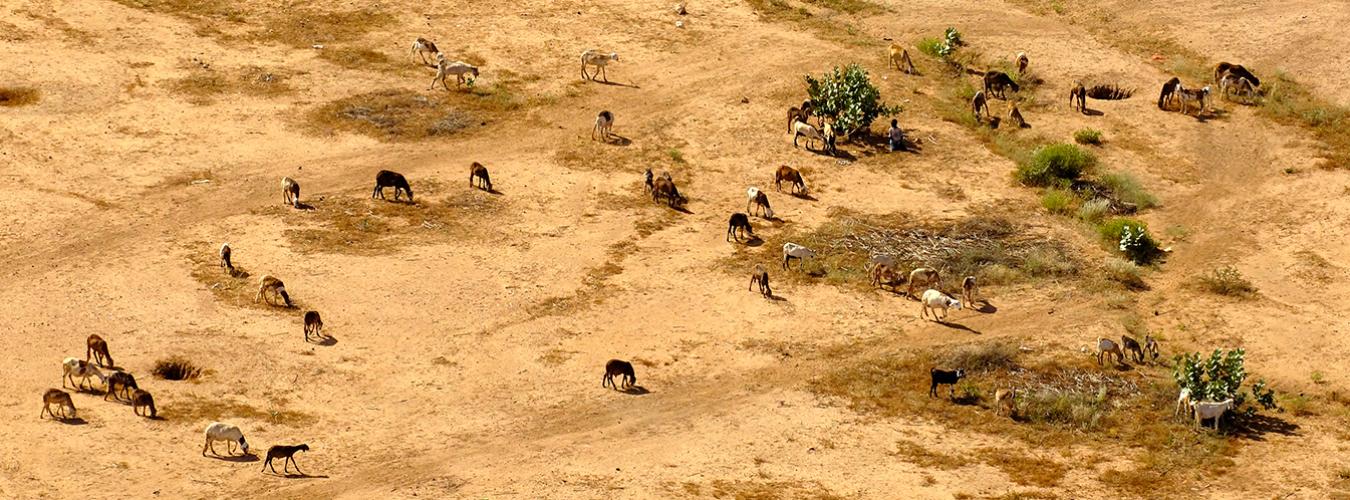
Up to 40% of all land area worldwide already considered degraded.
Healthy land underpins thriving economies, with over half of global GDP dependent on nature. Yet we are depleting this natural capital at an alarming rate: every minute, the equivalent of four football fields is lost due to land degradation.
.
A young boy herds his families cattle in the dry and desolate lanscape of the city of Tawaila in Northern Darfur. UN Photo/Fred Noy.
.
This drives biodiversity loss, increasing drought risk and displacing communities. The ripple effects are global—from rising food prices to instability and migration.




 HUMAN WRONGS WATCH