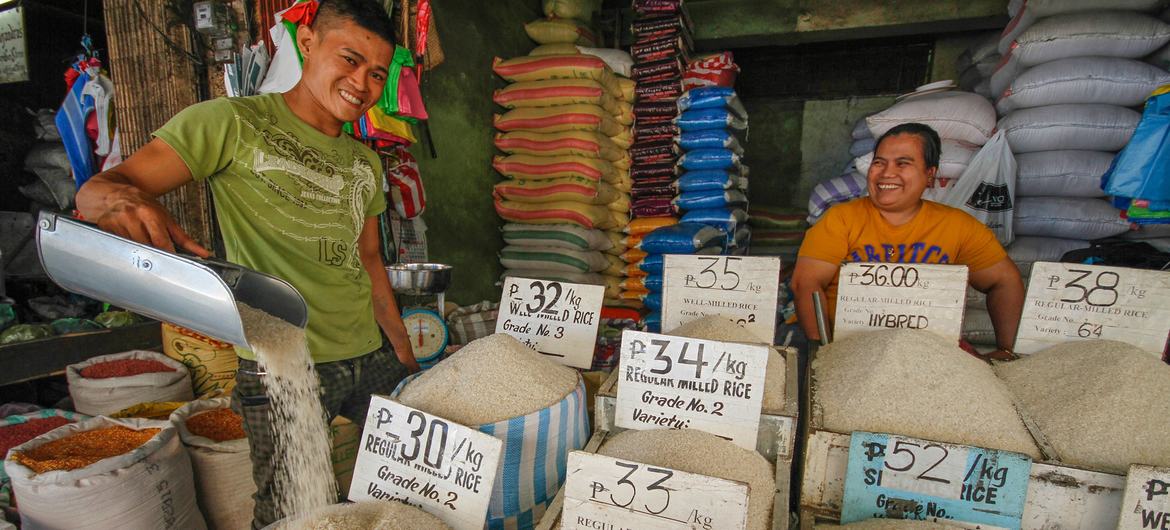
(UN News)* — Faced with mounting debt and economic stagnation, middle-income countries have issued a call for financial reform, sustainable investment, and a roadmap to escape the so-called “middle-income trap,” at a UN-backed international conference held in Manila, Philippines, which concluded on Tuesday [].
The High-Level Conference of Middle-Income Countries (MICs), held on 28 and 29 April, was attended by senior representatives from 24 MICs, many of which are highly indebted, leaving them little room for spending on developing their economies.
(UN News)* — With humanitarian aid in decline, the international community must shift its focus from short-term relief efforts to inclusive policies that support both refugees and host communities.
PAHO/Karen González Abril | Venezuelan refugees make their way to the Colombian border town of La Guajira.
In 2024, 122 million people were forcibly displaced — a number expected to rise in the coming years, according to Bob Rae, President of the UN Economic and Social Council (ECOSOC), addressing a meeting on the pressing issue in New York on .
As population movements become much more complex due to wars disproportionately impacting civilians, climate disasters, hunger and poverty, 70 per cent of refugees live in low to middle-income countries.
People across Latin America fleeing violence face movement restrictions, exploitation, and asylum barriers, according to a new report by Norwegian Refugee Council (NRC), the Danish Refugee Council (DRC), and partners through the ProLAC initiative.
Refugees and migrants from all over the world reach Necocli in Colombia on their journey in search of protection and a better life. Photo: Jess Wanless/NRC
One in four families interviewed for the report said that their lives would be at risk if they returned to their place of origin.
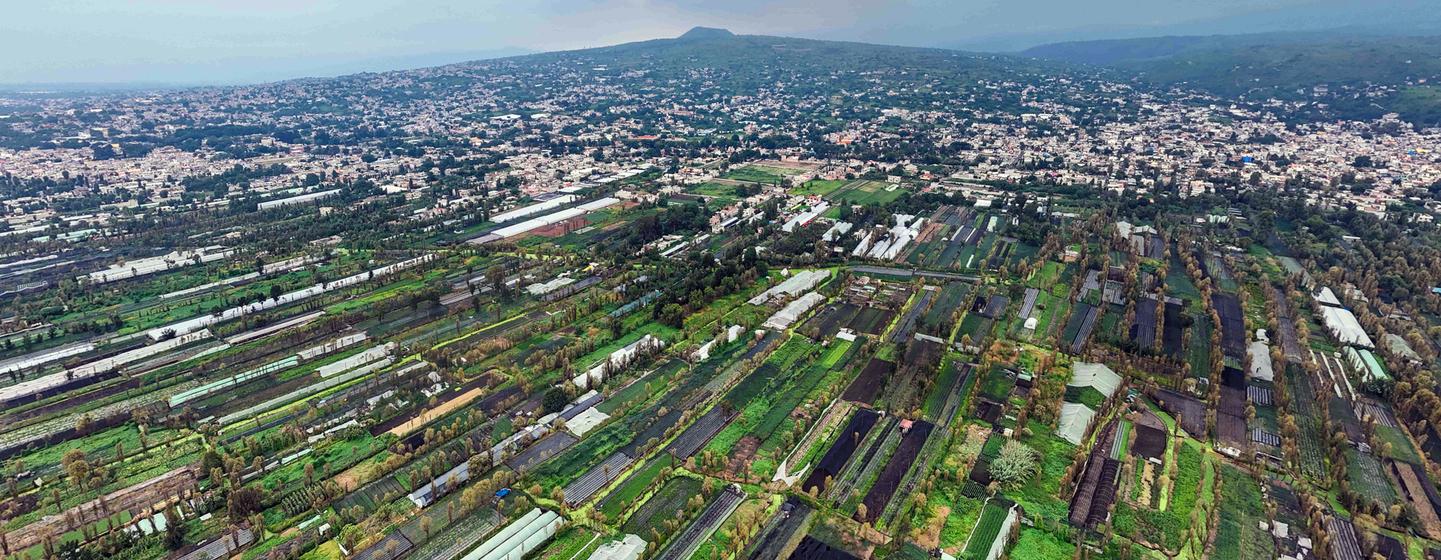
(UN News)* —Xochimilco, nestled in the heart of Mexico City, is home to the ‘chinamperos,’ farmers who have used indigenous techniques to grow food for centuries. Today, their way of life is under threat from environmental degradation, urban expansion and climate change.
The chinamperos get their name from ‘chinampas,’ the human-made islands of floating gardens on which they farm. It was the Aztecs who discovered that, by layering mud, plants and branches on shallow lake beds, they could create highly fertile plots of land.
(UN News)* — As the planet heats up and the push to decarbonise gathers pace, Indigenous Peoples – long among the world’s most effective environmental stewards – are once again being left behind, a new UN report reveals.
Launched on , The State of the World’s Indigenous Peoples exposes a stark imbalance: while Indigenous Peoples make up just six per cent of the global population, they safeguard 80 per cent of the planet’s remaining biodiversity – yet receive less than one per cent of international climate funding.
UNITED NATIONS, Apr 25 2025 (IPS)* – The US State Department, in a wide-ranging political re-structuring of its policies, will eliminate 132 domestic offices, lay-off about 700 federal workers and reduce diplomatic missions overseas.
(UN News)* —A lack of funding and dwindling supplies are forcing the UN World Food Programme to suspend lifesaving treatment for 650,000 malnourished women and children in Ethiopia by the end of the month. “We are at the breaking point,” the agency warned.
In total, 3.6 million of the “most vulnerable” people in Ethiopia stand to lose WFP food and nutrition assistance unless funding arrives urgently, warned Zlatan Milisic, the UN agency’s Country Director.
Asia’s sprawling megacities – which are driving economic growth – face an uncertain future as rising temperatures, aging populations and unplanned urban development tests their resilience.
UN-Habitat/Julius Mwelu | Home to nearly 30 million people, Shanghai is one of the world’s largest cities.
Seven of the ten most populous cities in the world are in Asia, with Tokyo, Delhi, Shanghai and Dhaka topping the list.
KUALA LUMPUR, Malaysia, Apr 22 2025 (IPS)* – Donald Trump’s top economic advisor claims the President has weaponised tariffs to ‘persuade’ other nations to pay the US to maintain its supposedly mutually beneficial global empire.
Jomo Kwame Sundaram
Geopolitical economist Ben Norton was among the first to highlight the significance of Trump’s Council of Economic Advisers chairman Stephen Miran’s briefing at the Hudson Institute.
The Institute is funded by financiers such as media czar Rupert Murdoch, who controls Fox News, The Wall Street Journal, and other conservative media.
Miran made his case just after Trump’s electoral victory in A User’s Guide to Restructuring the Global Trading System. Miran attempts to rationalise Trump’s economic policies, which are widely seen as at odds with conventional wisdom and reason.




 .
.

 HUMAN WRONGS WATCH