West Coast, Yemen. 31 May 2024 (IOM)*– In her coastal home in Mokha, Zahara diligently tends to the cooking. As the head of the household, her days are bustling with chores. Dressed in vibrant traditional attire, she checks on the food and ensures the children are cared for. Given her serene demeanour, it’s easy to overlook the challenges she faces.
.
.
.
.
Zahara, the head of her household, stands proudly in front of her shelter, surrounded by her family. Photo: IOM/Monica Chiriac. Photo: IOM/Monica Chiriac
She cares for her husband whose health is frail and ensures that every member of her extended family is well-fed and content. She feels that she owes them for the support they provided seven years ago when her family was forced to flee the turmoil of conflict in her home district of At Tuhayta.
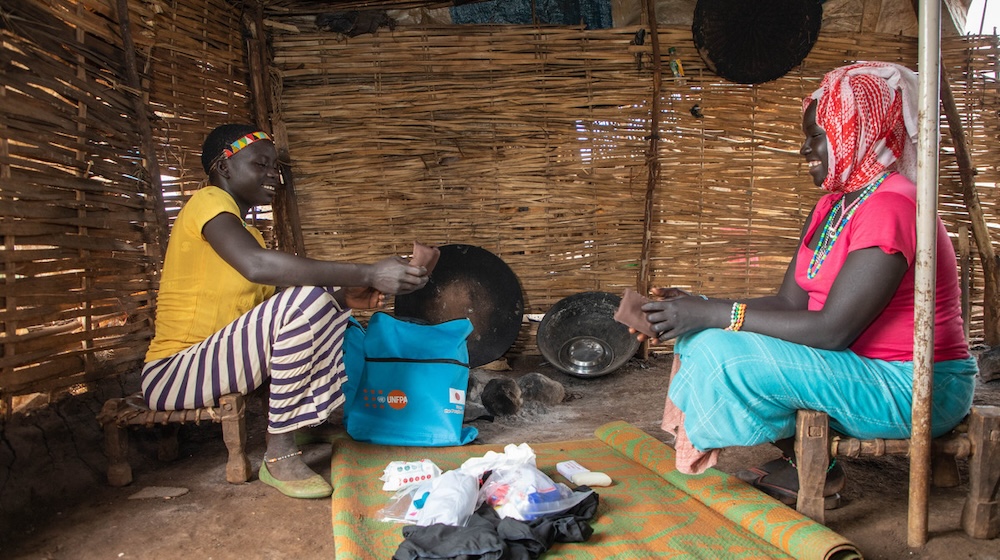
UNITED NATIONS, New York, 28 May 2024 (UNFPA)* – Every month, nearly 2 billion people menstruate, but gender inequality, poverty and other forms of marginalization mean the world has still not adapted to become period-friendly. In a humanitarian crisis, these inequities are greatly exacerbated.
When forced to flee their homes because of violence, conflict or climate disasters, people leave most of their possessions behind – including, usually, sanitary items.
KUALA LUMPUR, Malaysia, May 30 2024 (IPS)* –The World Bank expects the international economic slowdown to be at its worst in over four decades in 2024. This is mainly due to powerful Western nations’ contractionary macroeconomic and geopolitical policies.
Dismal outlook According to the Bank’s last Global Economic Prospects report, world economic growth will be weakest by the end of 2024. Only the US economy’s strength will statistically prevent a world recession.
Jomo Kwame Sundaram
World economic growth was expected to slow to 2.4 per cent in 2024. But even the US-controlled World Bank acknowledges growing geopolitical tensions are the main threat.
Medium-term prospects for most developing economies have worsened due to slower growth in most major economies. This has been exacerbated by tighter monetary policy and credit, sluggish trade and investment growth.
UNITED NATIONS, May 30 2024 (IPS)* – Scattered over the vast area of our oceans, Small Island Developing States (SIDS) are often pictured as blue, serene and beautiful paradises. However, we are risk losing the beauty of these islands, due to the triple threats of climate change, loss of biodiversity, and pollution, especially marine plastic debris.
If not stopped, the annual flow of plastic into the ocean will nearly triple by 2040, to 29 million metric tonnes per year, 50 kilgrammes of plastic for every metre of coastline worldwide. Credit: UN Development Programme (UNDP)
If business continues as usual, the annual flow of plastic into the ocean will nearly triple by 2040, to 29 million metric tonnes per year, equivalent to 50 kilogrammes of plastic for every metre of coastline worldwide. Soon, the ocean will turn into plastic soup, and islands will be covered in, and surrounded by, plastic waste.
29 May 2024 — Starting in April, flash floods have wreaked havoc across Afghanistan, leaving at least 300 dead, hundreds injured, and nearly 9,000 homes destroyed. Thousands are now homeless. Roads, bridges, schools, and health facilities in Baghlan, Badakshan, Takhar, Faryab and Ghor are in ruins.
Once again, Afghanistan is heavily affected by a climate catastrophe after last year’s earthquakes in Herat, and frequent sandstorms and drought hitting the most vulnerable, particularly women and children, the hardest.
But why are these sudden deluges so deadly, and what makes this disaster particularly devastating?
Geneva/ Addis Ababa, 29 May – Over 3 million people were internally displaced in Ethiopia by the end of last year according to the latest National Displacement Report by the International Organization for Migration’s (IOM) Displacement Tracking Matrix (DTM).
Displaced families in Dubuluk IDP Camp. Photo:: IOM/ Ethiopia.
The Report shows that the majority – 69 per cent – of those displaced were a direct result of conflict, whereas drought and other climate induced events such as floods, landslides and fires on the other hand contributed to 17 per cent, and 9 per cent respectively.
(UN News)* — International financing is the fuel for sustainable development, but small island States are “running on empty” – drowning in debt and rising sea levels due to climate change and through no fault of their own.
Play video
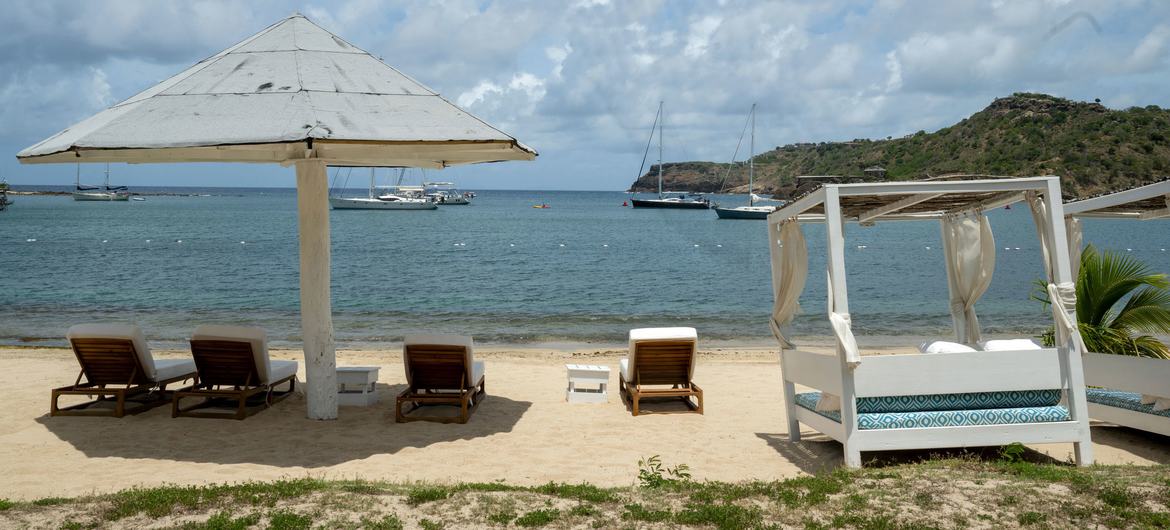
UN Photo/Eskinder Debebe | A view of Antigua and Barbuda, the host of the fourth International Conference on Small Island Developing States (SIDS4).
That’s the warning from UN Secretary-General António Guterres on Day Two of the pivotal Fourth International Conference on Small Island Developing States (SIDS4) taking place in the Caribbean twin island nation of Antigua and Barbuda this week.
The 39 States known collectively as SIDS have been uniquely vulnerable to the trifecta of COVID – which crippled the tourism many rely on – the Russian invasion of Ukraine; and “battered by a climate catastrophe they did not create”, said Mr. Guterres.
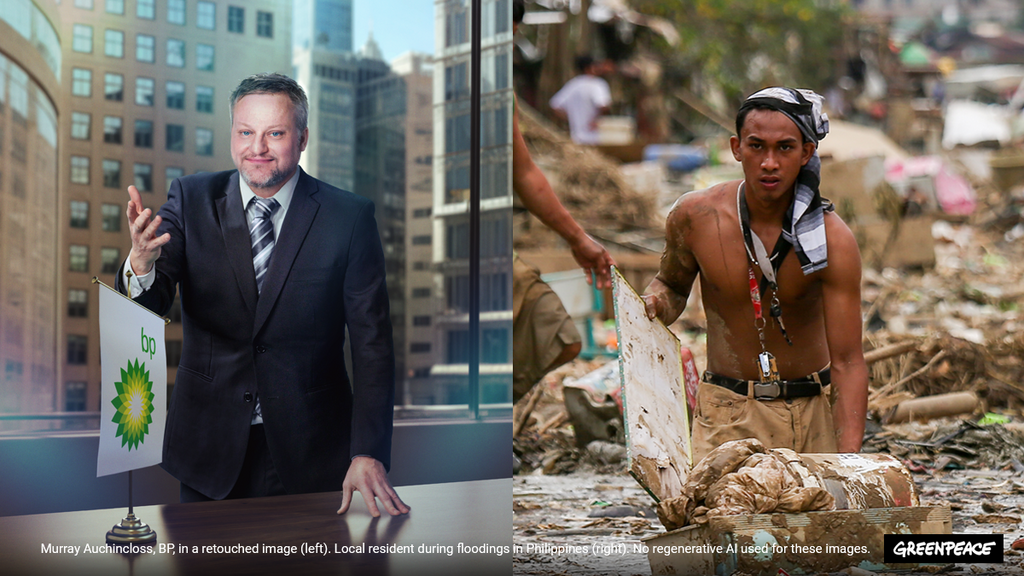
— Every time they are in the spotlight for the disastrous effects of their business, fossil fuel companies serve up the same old fraudulent arguments. Tired of their bogus excuses? So are we. Here are their most common lies and the facts to counter them.
Murray Auchincloss, BP, in a retouched image (left). Local resident during floods in Philippines (right). Disclaimer: Images of CEOs used in this campaign are staged and doctored for illustrative purposes. Illustrations are created without the use of generative AI.
False Excuse #1: “We’re only responding to consumer demand”
This is one of the classic arguments for climate inaction from fossil fuel companies: deflecting their responsibilities onto consumers rather than engaging in a real energy transition. No altruistic desire to meet the needs of the population here.
(UN News)* — The UN World Meteorological Organization (WMO) has issued a warning for an “above average” hurricane season in the North Atlantic in 2024. Based on data from the US National Oceanic and Atmospheric Administration (NOAA), this would mark the ninth consecutive year of anomalies.
.
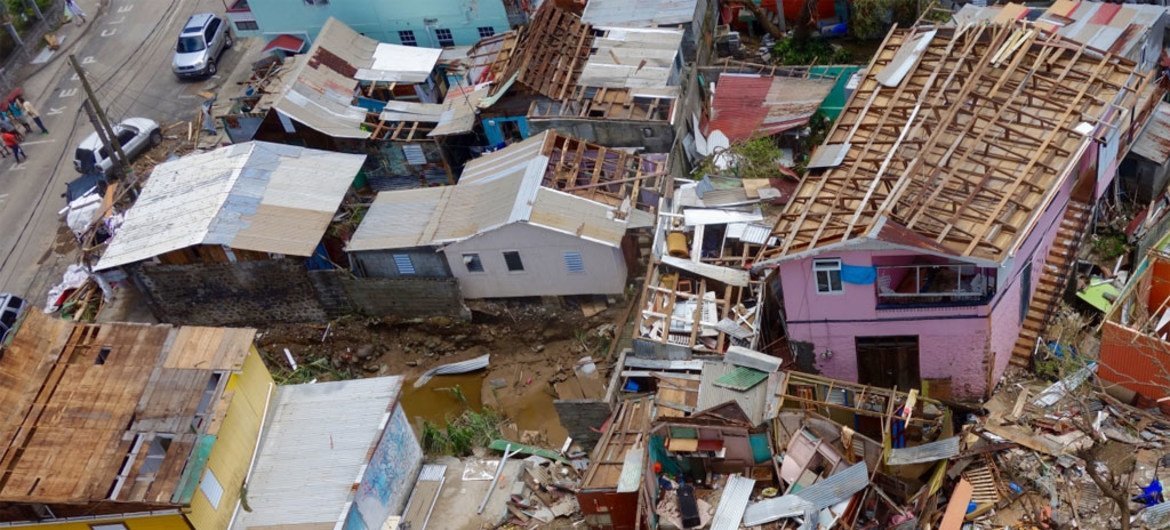
IRIN/Ben Parker | Destruction left behind in the aftermath of Hurricane Maria on the island of Dominica. (file)
Typically, an average year sees 14 named storms with wind speeds exceeding 65 kilometres (40 miles) per hour. However, this year, 17 to 25 storms are expected, with four to seven of them potentially becoming major hurricanes, characterized by winds of at least 178 kilometres (111 miles) per hour. The usual average is three major hurricanes per year.
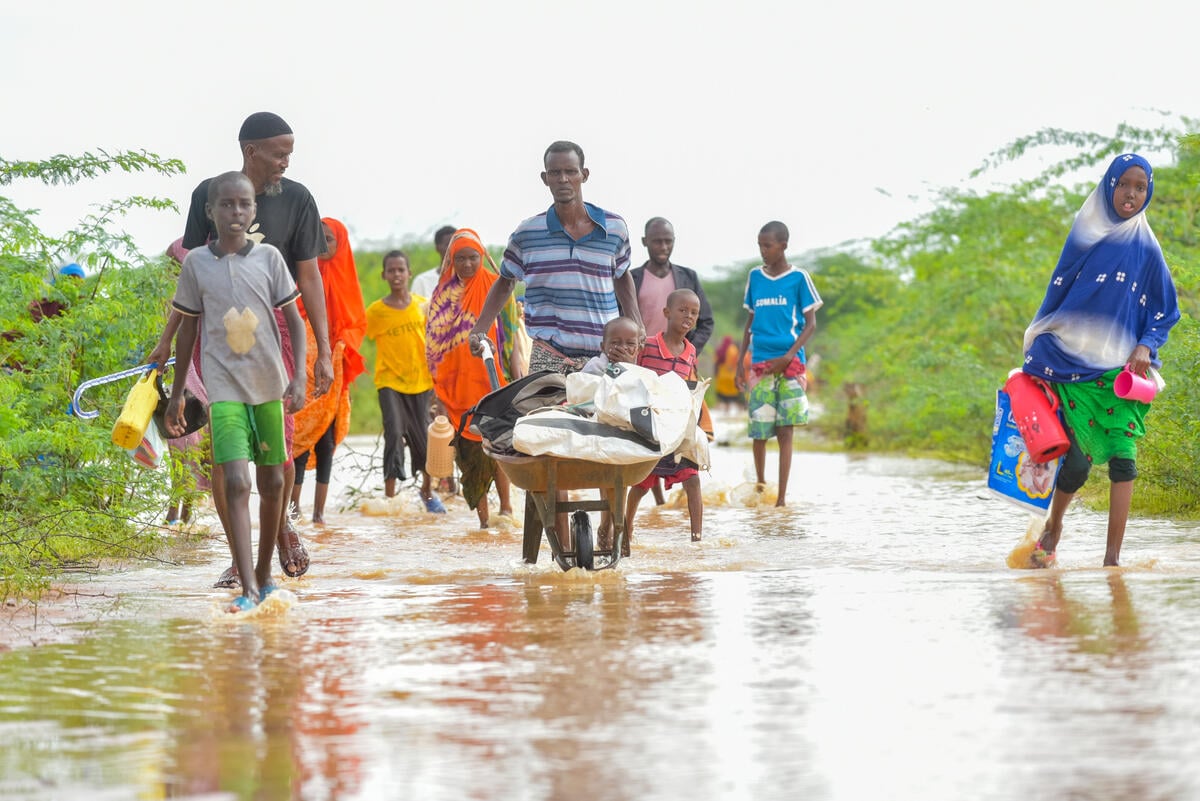
20 May 2024 — Severe flooding has hit countries in the East and Horn of Africa as heavy El Niño-rains continue to afflict a refugee-hosting region at the front line of the climate crisis, where deep droughts followed by intense rains have in recent years become the new normal.



 HUMAN WRONGS WATCH