Annalena Baerbock In her address as President of the UN General Assembly
Credit: UN Photo/Loey Felipe September 2025
UNITED NATIONS, Dec 4 2025 (IPS)* – For seventy-eight years, the question of Palestine has been on the agenda of this General Assembly, almost as long as the institution itself.
Resolution 181 (II) was adopted by the General Assembly on November 29 1947 – laying the foundation for the Two State Solution and calling for the establishment of both an Arab State and a Jewish State in Palestine.
But while the Jewish State, the State of Israel, is a recognized Member State of the United Nations, the Arab State, the State of Palestine, is not.
Seventy-eight years later, Palestine has still not been admitted to the UN as a full Member.
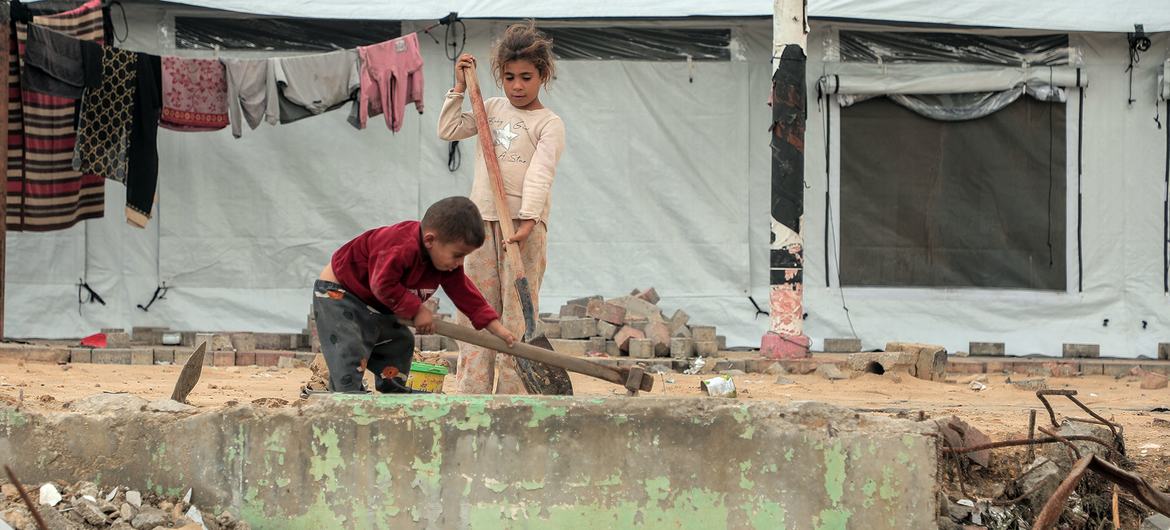
(UN News)* — The UN has called for an investigation into the recent “horrific” killing by Israeli forces of two young brothers in Gaza who were reportedly targeted by a drone while collecting firewood.
This comes as humanitarians continue to receive reports that air strikes, shelling, gunfire and other continuing Israeli military operations in the enclave are causing more civilian casualties, displacement and destruction.
In recent days, hundreds of families were reportedly displaced in two neighbourhoods in eastern Gaza City following strikes and movement of military equipment, UN Spokesperson Stéphane Dujarrictold journalists in New York on Wednesday.
(UN News)* — The UN human rights office, OHCHR, has condemned an Israeli raid on the Union of Agricultural Work Committees in the occupied West Bank, warning that pressure on Palestinian civil society has reached alarming levels.
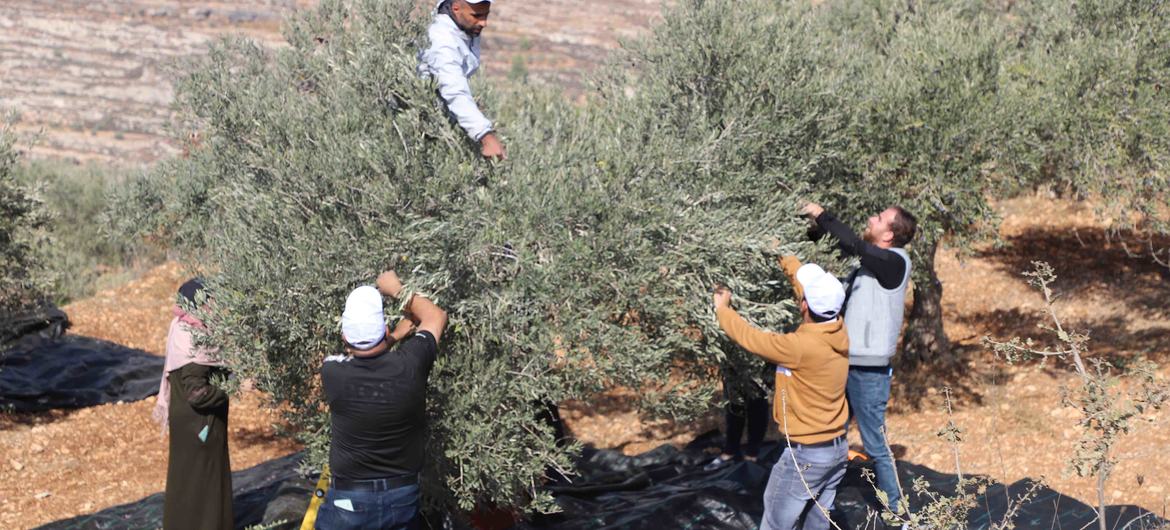
Olive harvest season in the Occupied West Bank in Palestine, October 2025.
Israeli security forces raided the organisation’s offices in Ramallah and Hebron on 1 December, vandalising property and detaining staff.
According to OHCHR, people present in the buildings were blindfolded, handcuffed and made to kneel or lie on the floor for several hours. Eight men were detained.
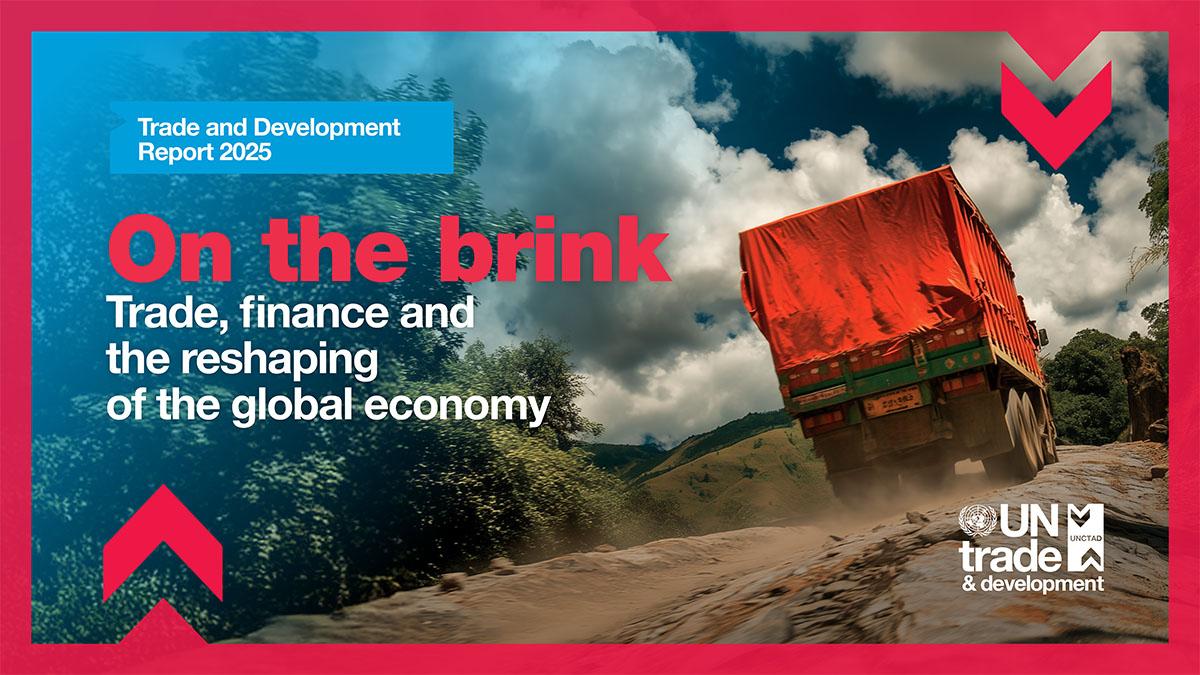
The report shows that shifts in financial markets move global trade almost as strongly as real economic activity, influencing development prospects worldwide.
(UN News)* —Across southeast Asia, record-breaking rains and flooding caused by back-to-back tropical storms have claimed hundreds of lives and brought devastation and displacement upon entire communities, UN agencies said on Tuesday [].
WMO/Daniel Pavlinovic | Across the world, more incidents of extreme weather events are being recorded.
World Meteorological Organization (WMO) spokesperson Clare Nullis told reporters in Geneva that Indonesia, the Philippines, Sri Lanka, Thailand and Viet Nam are among the countries most affected by what she described as “a combination of monsoon-related rainfall and tropical cyclone activity”.
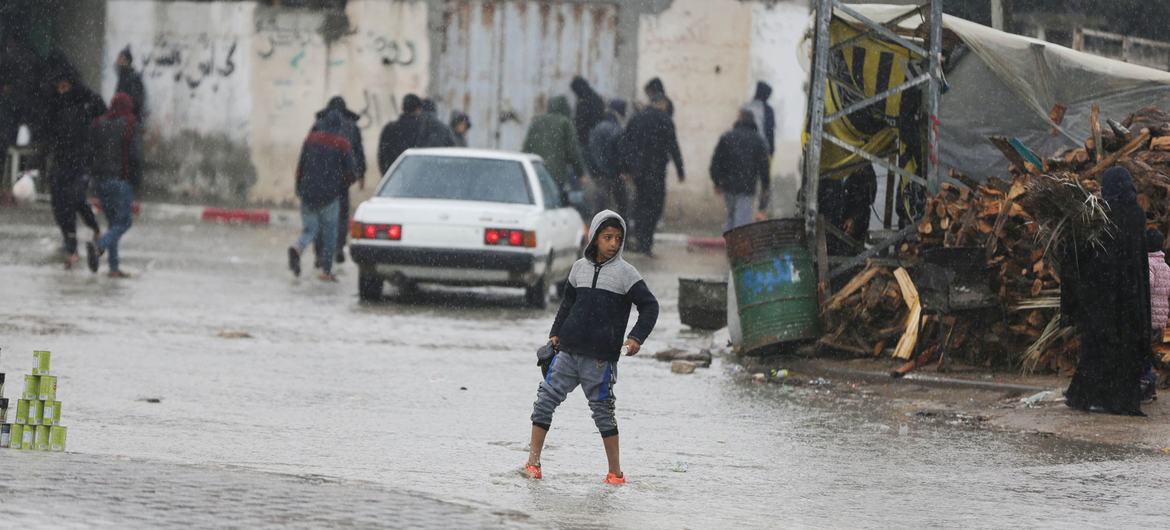
(UN News)* —The UN says humanitarian partners in Gaza are scaling up winterisation efforts as cold weather and heavy rain continue to impact displaced Palestinians.
More than 230,000 families – that’s around 1.15 million people – received monthly food parcels between 1 and 27 November, through 59 distribution points, including 21 in northern Gaza.
(UN News)* — With nearly $1.6 billion in unpaid dues, the UN Secretary-General warned on Monday [] that chronic late payments are hampering the world body’s ability to function, even as sweeping cuts move forward through the General Assembly’s main budget committee.
António Guterres told the Fifth Committee the UN is facing its most fragile cash position in years, despite sharp reductions already built into next year’s budget plans.
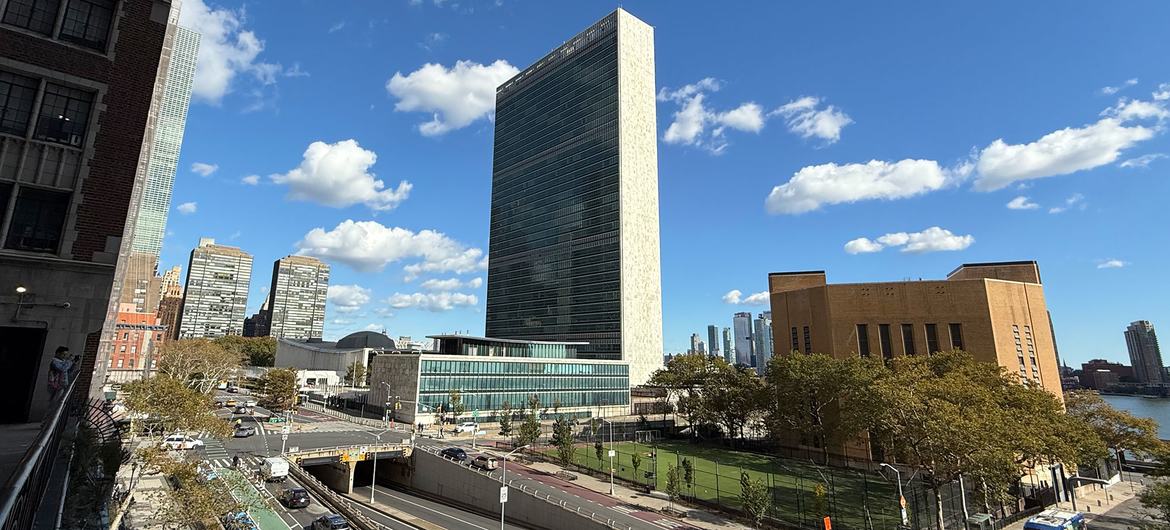
UN News/Vibhu Mishra | The United Nations Headquarters as seen from First Avenue in New York City.
MANILA, Philippines, Nov 11 2025 (IPS)* –US President Trump’s economic strategy for his second term aims to get the rest of the world, especially its wealthy allies with greater means, to pay more to help strengthen the US economy.
Jomo Kwame Sundaram
Recent US initiatives have undoubtedly accelerated de-dollarisation but these have largely been unavoidable consequences of its own actions rather than due to any conspiracy by others to that end.
De-dollarisation distraction
Harvard economist Kenneth Rogoff recently observed, “We are absolutely at the biggest inflection point in the global currency system since the Nixon shock to end the last vestige of the gold standard.”
After the Bretton Woods Conference in 1944, the gold price was set at $35 per ounce. In August 1971, US President Richard Nixon ended this gold-dollar parity.
A young visitor signs a panel at Geneva’s Palais des Nations to support the “50 for Freedom” campaign, which urges global ratification of the ILO’s Protocol on Forced Labour to help end modern slavery affecting 21 million people worldwide.PHOTO:UN Photo/Jean Marc Ferré
Latest estimates by the International Labour Organisation(ILO) show that forced labour and forced marriage have increased significantly in the last five years.
10 million more people were in modern slavery in 2021 compared to 2016 global estimates, bringing the total to 50 million worldwide. Women and children remain disproportionately vulnerable.
(Bangkok) – The Cambodian government is failing to provide support to hundreds of thousands of migrant workers with microfinance debts who returned from Thailandbecause of hostilities in mid-2025,Human Rights Watch on 25 November 2025 said.




 HUMAN WRONGS WATCH