(UN News)* — Soaring inflation, fragile job markets and shrinking access to healthcare and education are pushing millions of people in South and South-East Asia onto risky migration paths, the UN human rights office said on Thursday [], as regional migration reaches historic highs.
.
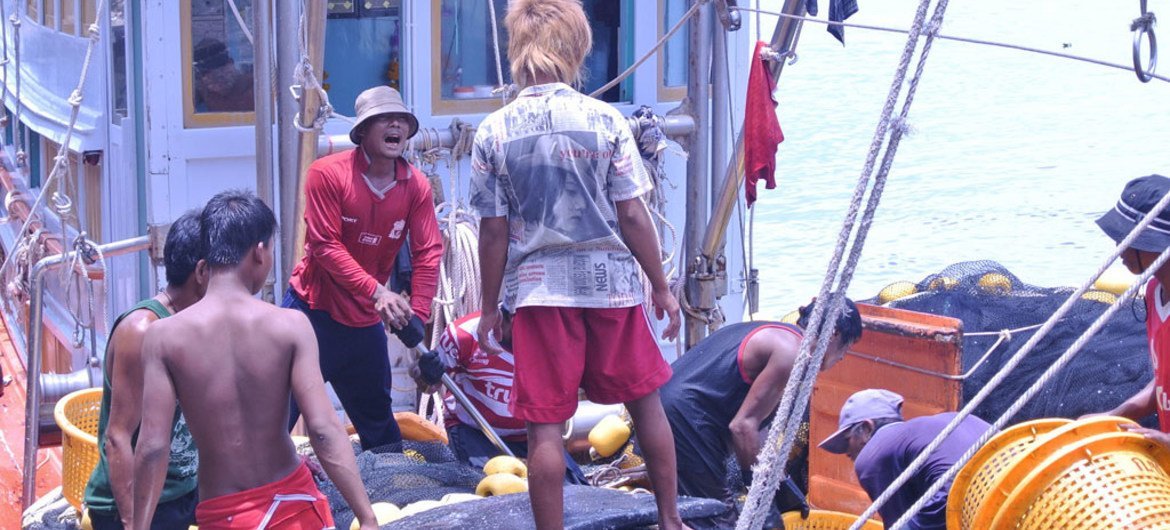
Photo: ILO | Migrant workers onboard a fishing vessel. While they make an enormous development contribution to both their countries of origin and destination, many migrant workers suffer human and labour rights violations. (file photo)
The office said people across the region are migrating “not by choice, but out of necessity,” driven by the systemic deprivation of economic, social and cultural rights at home.
.
Poverty, unemployment, weak public services and climate stress are eroding livelihoods and leaving millions with few alternatives but to leave.
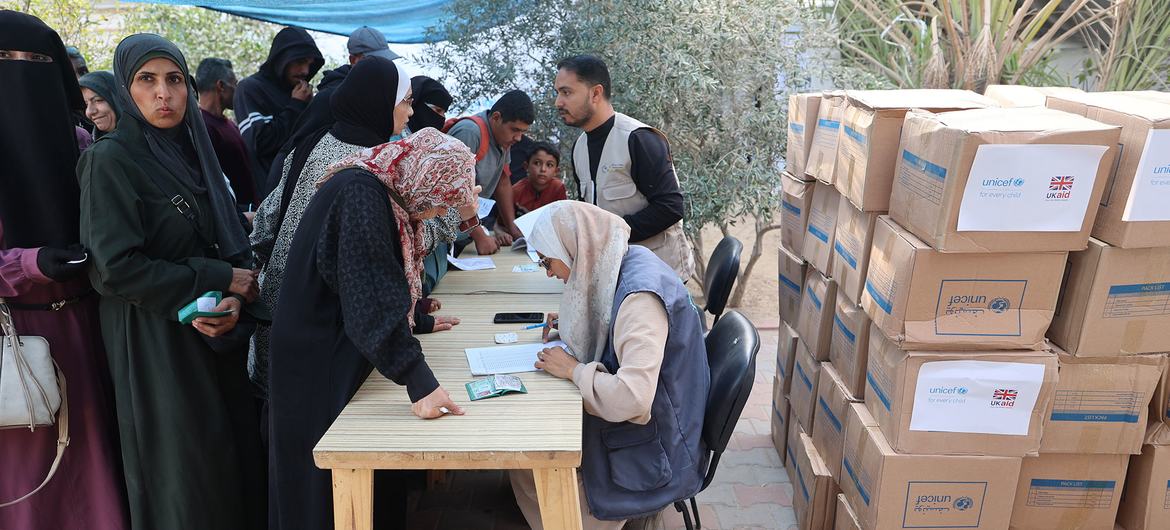
(UN News)* — Aid deliveries into Gaza continue to face difficulties as fighting continues across the territory, with the UN warning that most hospitals are only partially functioning and more than 16,500 patients still require urgent medical evacuation.
Briefing reporters in New York on Wednesday [], UN Spokesperson Stéphane Dujarricsaidhostilities in parts of the Gaza Strip are still resulting in casualties and repeated disruptions to humanitarian operations.
(UN News)* — For over two years, tens of thousands of people have been killed in Gaza. The enclave faces its most severe economic collapse in history, and even amid a fragile ceasefire, children continue to die.
.
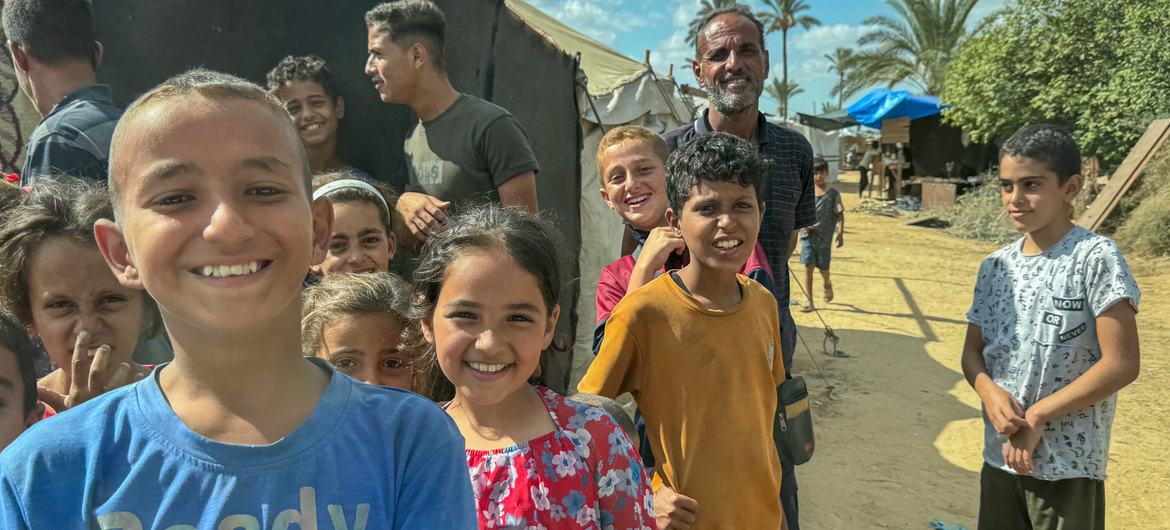
UNOCHA/ Olga Cherevko | Children queue for food at a community kitchen in Deir al Balah, Gaza, prior to the ceasefire agreement.
(UN News)* — The Occupied Palestinian Territory is now in its deepest economic crisis ever recorded, with Gaza suffering an “unprecedented and catastrophic” collapse, according to a new report from the UN Conference on Trade and Development (UNCTAD) presented in Geneva on Tuesday [].
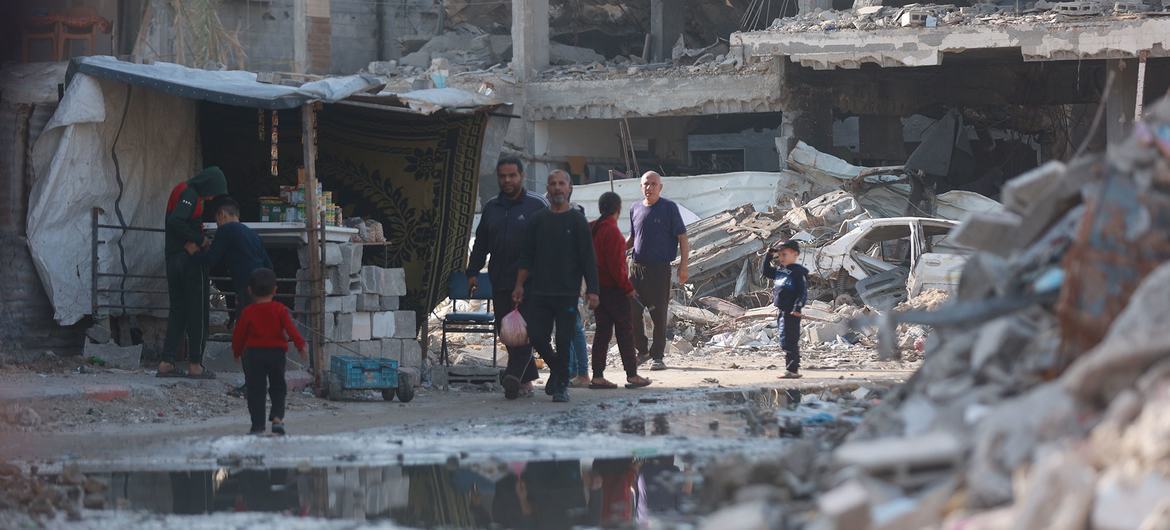
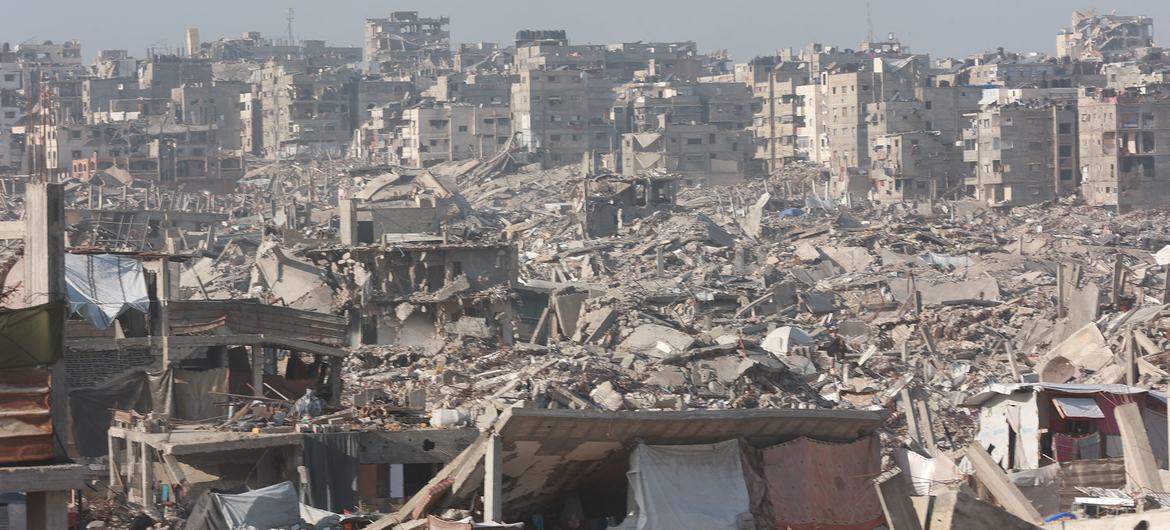
UN News | People walk through a destroyed neighbourhood of Gaza City.
Speaking at the launch of UNCTAD’s 2025 Report on the Economy of the Occupied Palestinian Territory, the agency’s Deputy Secretary-General Pedro Manuel Moreno said decades of movement restrictions, combined with the latest military operations, had “wiped out decades of progress” and left both Gaza and the West Bank facing long-term devastation.
(UN News)* — Women in Gaza are ensuring their families’ survival “with nothing but courage and exhausted hands” while violence continues and essentials remain in short supply, the UN’s gender equality agency warned on Tuesday [].
UN Women’s Chief of Humanitarian Action Sofia Calltorp, who just returned from a visit to the enclave last week, said that women there repeatedly told her “there may be a cease-fire, but the war is not over”.
.
“The attacks are fewer, but the killings continue,” she said.
–In Belem, Brazil, as the United Nations climate summit (COP30) convened, I marched alongside thousands of activists and Indigenous peoples calling on governments to urgently address climate change and protect human rights.
The Group of Twenty (G20) comprises 19 countries (Argentina, Australia, Brazil, Canada, China, France, Germany, India, Indonesia, Italy, Japan, Republic of Korea, Mexico, Russia, Saudi Arabia, South Africa, Türkiye, United Kingdom and United States) and two regional bodies: the European Union and the African Union (as of 2023).
.
UN Secretary-General Antonio Guterres. Credit: UN Photo/Gustavo Stephan
The G20 members represent around 85% of the global GDP, over 75% of the global trade, and about two-thirds of the world population. South Africa assumed the G20 presidency on December 1 2024 and will step down on November 30 2025. The next G20 summit will be hosted by the US in 2026.
YAOUNDE, Cameroon / BARCELONA, Spain, Nov 24 2025 (IPS)** –– When South Africa assumed the Presidency of the G20, debt sustainability was placed front and centre, with the promise to launch a Cost of Capital Commission.
Rome –Disasters have inflicted an estimated $3.26 trillion in agricultural losses worldwide over the past 33 years – an average of $99 billion annually, roughly 4 percent of global agricultural GDP – according toa new reportby the Food and Agriculture Organization of the United Nations (FAO).
20 November 2025 —Extreme heat poses multiple risks for agrifood systems – damaging crops, stressing livestock and depleting fisheries – and threatens the livelihoods of an estimated 1.23 billion people.
.
There is an urgent need for science-informed solutions to strengthen resilience and sustainability, according to a new report from the Food and Agriculture Organization and WMO on “Extreme Heat and Agriculture.”
(UN News)* — Ongoing attacks and airstrikes attributed to Israeli forces in Gaza continue to kill and maim people of all ages in the shattered enclave despite an agreed ceasefire, UN agencies said on Friday [].
UN News | Destruction extends across Gaza where UN agencies continue to seek out the enclave’s most vulnerable communities who have often been displaced multiple times since war erupted following Hamas-led terror attacks in Israel.
“Yesterday morning, a baby girl was reportedly killed in Khan Younis by an airstrike, while the day before, seven children were killed in Gaza City and the south,” said Ricardo Pires, spokesperson for the UN Children’s Fund, UNICEF.



 HUMAN WRONGS WATCH