9 October 2020 (UN News)* — The UN World Food Programme (WFP), which provides lifesaving food assistance to millions across the world – often in extremely dangerous and hard-to-access conditions – has been awarded the 2020 Nobel Peace Prize.
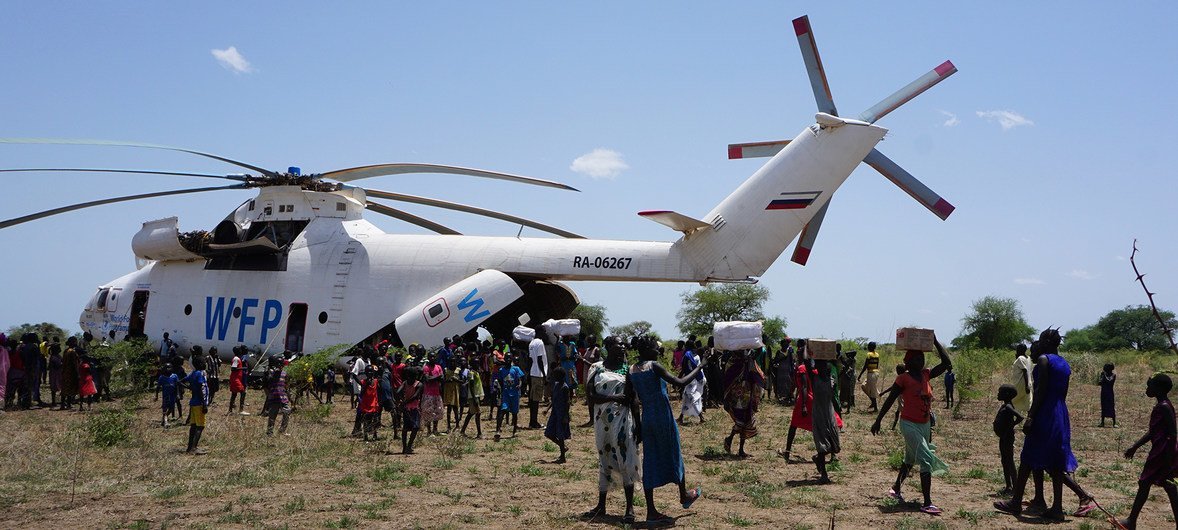
UNICEF/Peter Martell | A UN World Food Programme (WFP) helicopter delivers much-needed supplies to people in Udier, South Sudan.
The agency was recognized “for its efforts to combat hunger, for its contribution to bettering conditions for peace in conflict-affected areas and for acting as a driving force to prevent the use of hunger as a weapon of war and conflict”, said Berit Reiss-Andersen, chair of the Norwegian Nobel Committee.
UNEP’s novel ‘World Environment Situation Room’ provides real-time data on PM2.5 levels across the planet, informing scientists, policy-makers and citizens alike.
Skeeze / Pixabay / 08 Oct 2020
8 October 2020 (UN Environment)* — Last month, as wildfires continued to rage across the American West, Pascal Peduzzi, a climate scientist with the United Nations Environment Programme (UNEP) in Geneva, followed the situation with air quality in Mammoth Lakes, a town high in California’s Sierra Nevada mountains.
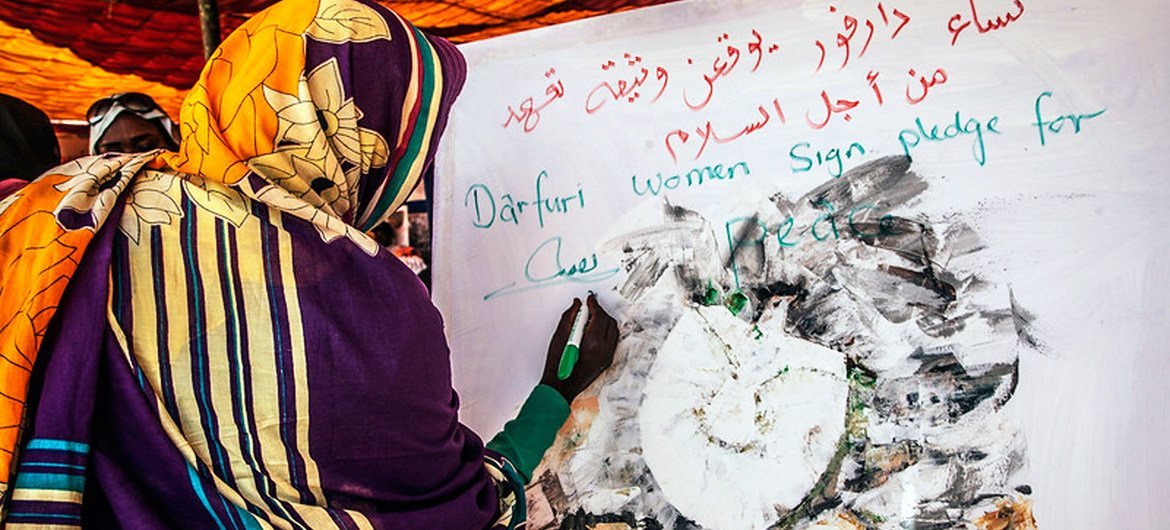
(UN News)* — Armed conflict has a disproportionate impact on women and girls – a key reason why women’s “full, equal and meaningful participation” in UN peacekeeping is such a priority, the Secretary-General said on Thursday [8 October 2020].
UNAMID/Mohamad Almahady | Women played a prominent role in the political transition process in Sudan, which resulted in women holding key government leadership positions, including the country’s first-ever woman Foreign Minister and Chief Justice.
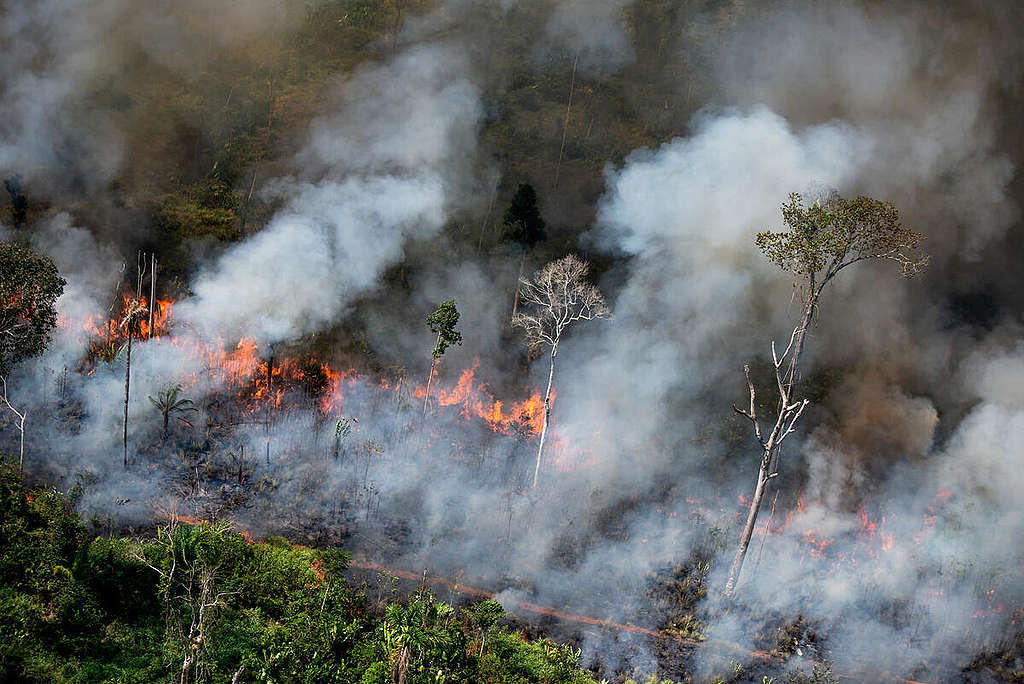
(Greenpeace International)* — It is no accident that there are fires all across Brazil, and it is no accident that the fires this year are worse than last. In fact, the fires in 2020 are the worst in the last decade.
The world is looking in horror for the second straight year as historic blazesravage the world’s largest tropical forest. All the while, instead of fighting the fires, the Brazilian government fans the flames by emboldening those who are setting the fires to expand their agribusiness.
7 October 2020 (UN Environment)* — In 1933, U.S. President Franklin D. Roosevelt signed an executive order allocating US$ 10 million for emergency conservation efforts under the New Deal, putting unemployed Americans to work. When South Korea was struggling with famine and a refugee crisis in the 1950s, the government restored forests and farmland, creating hundreds of thousands of rural jobs.
5 October 2020 (Wall Street International)* — The central problem which the world faces in its attempts to avoid catastrophic climate change is a contrast of time scales. In order to save human civilization and the biosphere from the most catastrophic effects of climate change we need to act immediately. Fossil fuels must be left in the ground. Forests must be saved from destruction by beef or palm oil production.
The dangerous greenhouse gas methane is bubbling up from melting permafrost in the Arctic and from the shallow seas north of Siberia | Image fromWall Street International.
6 October 2020 (WMO)* — The annually occurring ozone hole over the Antarctic is one of the largest and deepest in recent years. Analyses show that the hole has reached its maximum size.
The 2020 ozone hole grew rapidly from mid-August and peaked at around 24 million square kilometres in early October. It now covers 23 million km2, above average for the last decade and spreading over most of the Antarctic continent.
5 October 2020 (Wall Street International)* — We humans, having populated every part of Earth’s surface and visited the Moon, now are perched atop the planet’s food chain. We are learning from this perilous position but hastening the extinction of all other species in our shared, life-supporting biosphere.
The planet is now teaching us directly how our lifestyles are causing climate disasters: fires, floods, droughts, super-storms, rising seas and pandemics.
Bihac, 2 October 2020 (IOM)* – “This is what the start of a humanitarian crisis looks like”, warned IOM’s representative in Bosnia and Herzegovina today [2 October 2020], as hundreds of migrants were forcibly removed from the IOM-run accommodation which has been sheltering migrants and refugees for almost two years.
IOM is warning of a humanitarian crisis as 350 migrants and refugees were forcibly removed from the IOM-run accommodation in Bira, Bosnia.
“Beyond the inhumanity of it all, it is difficult to see how last night’s action addresses the legitimate concerns of local citizens”, said Peter Van der Auweraert, IOM’s sub-regional coordinator for the Western Balkans.
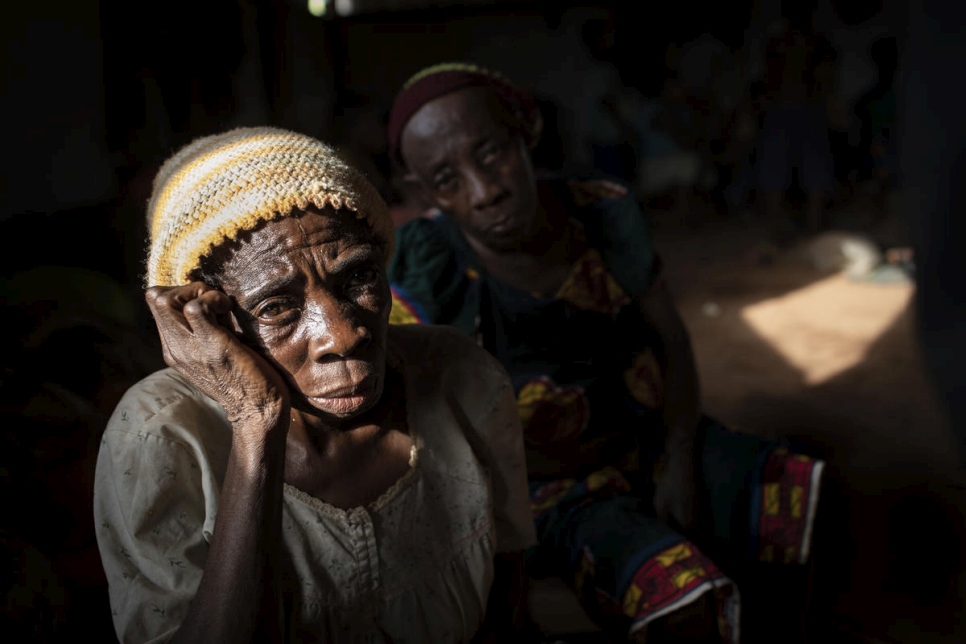
Physical decline, deepening economic hardship and isolation make life tougher for older people, who comprise four per cent of the forcibly displaced population worldwide. | Español | Français | عربي
SAN JOSE, Costa Rica – Despite suffering knee problems and hypertension, 69-year-old Nicaraguan asylum-seeker Esperanza* used to get up at dawn every day to pick coffee to support her family in Costa Rica.



 HUMAN WRONGS WATCH