Immediate and drastic action is needed to prevent irreversible climate change. However, the worst effects of climate change lie in the distant future, perhaps as much as a thousand years from today. It is part of our human nature to see what is near to us.
We accept the comfort and convenience provided by fossil fuels. It is therefore difficult to mobilize the political will needed for drastic and immediate action.
Some of Antonio Guterres’ Remarks at COP27
Here are a few extracts from the Secretary General’s speech:
“Dear friends, in just days, our planet’s population will cross a new threshold. The 8 billionth member of our human family will be born. This milestone puts into perspective what this climate conference is all about. How will we answer when “Baby 8 Billion” is old enough to ask: What did you do for our world – and for our planet — when you had the chance?
MADRID, Dec 1 2022 (IPS)* – Drought is one of the ‘most destructive’ natural disasters in terms of the loss of life, arising from impacts, such as wide-scale crop failure, wildfires and water stress.
By 2050, droughts may affect an estimated three-quarters of the world’s population. Credit: Miriet Abrego / IPS
In other words, droughts are one of the “most feared natural phenomena in the world;” they devastate farmland, destroy livelihoods and cause untold suffering, as reported by the world’s top specialised bodies: the UN Convention to Combat Desertification (UNCCD).
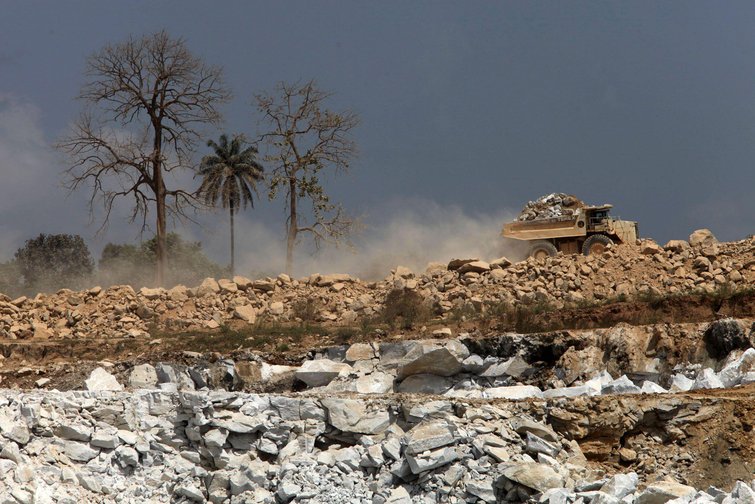
Revealed: Records show the FCDO’s British International Investment fund has continued to back major polluters.
British International Investment has promised to fight climate change. | REUTERS / Alamy Stock Photo
24 November 2022 (openDemocracy)* — A fund set up using British overseas aid cash still holds at least 20 investments in fossil fuel companies, two years after it pledged to stop backing dirty energy.
Records analysed by openDemocracy reveal the investments by British International Investment (BII) – which is wholly owned by the UK’s Foreign, Commonwealth and Development Office – are worth tens of millions of pounds.
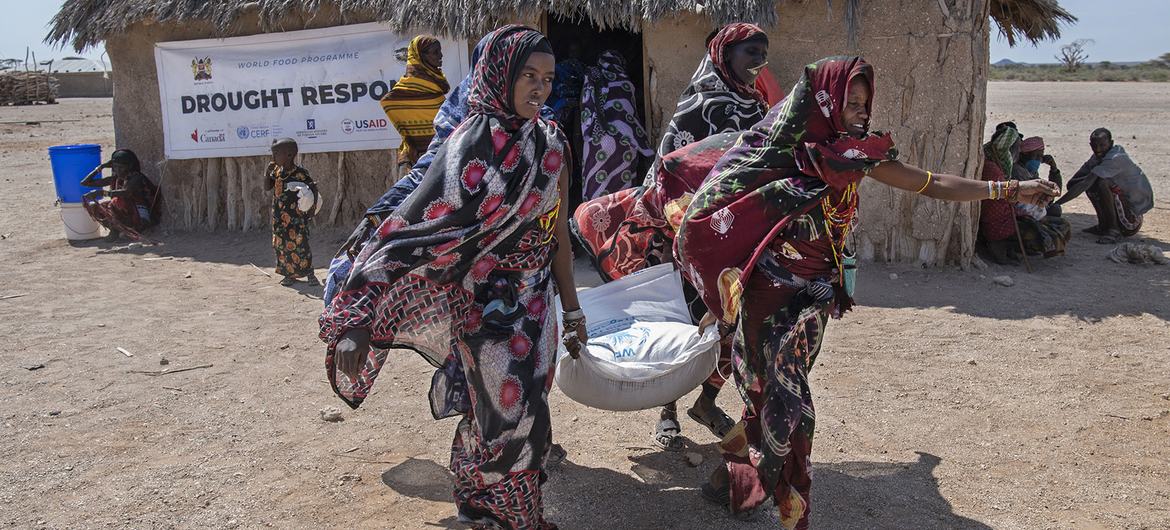
(UN News)* — Millions of people in the Horn of Africa – a region at the intersection of some of the worst impacts of climate change, recurring humanitarian crises and insecurity – are facing the driest conditions in four decades along with extreme food shortages.
The top UN World Food Programme (WFP) official in the region, Michael Dunford, is warning that the situation there is likely to get worse before it improves.
In an interview with UN News, Mr. Dunford said: “Unfortunately, we have not yet seen the worst of this crisis. If you think 2022 is bad, beware of what is coming in 2023. What that means, is that we need to continue to engage. We cannot give up on the needs of the population in the Horn.”
MADRID, Nov 25 2022 (IPS)* – Please take a quick look at this short report before rushing to shop on a Black Friday, Christmas sales and all those long chains of big discounts and wholesales, most of them are fake, as often denounced by consumers organisations that report that the business usually inflates prices before launching such deals.
Around 7,500 litres of water are used to make a single pair of jeans, equivalent to the amount of water the average person drinks over seven years. Credit: pexels
Just a couple of figures to start with: the fashion industry is responsible for more than all international flights and maritime shipping combined.
Consequently, it is widely believed that this business is the second major producer of greenhouse gases, just after the other industries using fossil fuels.
And it is a big business, which is estimated as valued at upward of 3 trillion dollars.
DAKAR and KUALA LUMPUR, Nov 22 2022 (IPS)* – The ongoing plunder of Africa’s natural resources drained by capital flight is holding it back yet again. More African nations face protracted recessions amid mounting debt distress, rubbing salt into deep wounds from the past.
With much less foreign exchange, tax revenue, and policy space to face external shocks, many African governments believe they have little choice but to spend less, or borrow more in foreign currencies.
Ndongo Samba Sylla
Most Africans are struggling to cope with food and energy crises, inflation, higher interest rates, adverse climate events, less health and social provisioning. Unrest is mounting due to deteriorating conditions despite some commodity price increases.
Economic haemorrhage
After ‘lost decades’ from the late 1970s, Africa became one of the world’s fastest growing regions early in the 21st century. Debt relief, a commodity boom and other factors seemed to support the deceptive ‘Africa rising’ narrative.
MADRID, Nov 21 2022 (IPS)* – An indisputable truth is that no child has ever chosen where to be born, which colour of skin to have, which ethnic community to belong to, what religion to practice and language to speak, or how safe or dangerous the context to grow up in. A child is the most innocent and defenceless human being.
.
Children from marginalised ethnic, language and religious groups, from 22 low and middle-income countries which were analysed, lag far behind their peers in reading skills. Credit: Brian Moonga/IPS
Nevertheless, children fall easy prey to all kinds of brutalities, everywhere and every single day. See how
Sharm El Sheikh, Nov 17 2022 (IPS)* – The Middle East and North Africa are the world’s most water-scarce regions – with 11 of the 17 water-stressed countries on the globe.
.
.
Water scarcity in the Middle East is impacting on lives and causing diplomatic tensions in between countries. The Turkish dam project, which includes the large Ataturk and Ilisu dams, has reduced water flow to the Tigris River’s natural channel impacting Syria and Iraq. Pictured here is Koctepe – a village covered by water in the Ilisu dam project. Credit: Mustafa Bilge Satkın/Climate Visuals Countdown
According to UNICEF, nine out of 10 children live in areas with high or very high-water stress, resulting in significant consequences for their health, cognitive development, and future livelihoods.
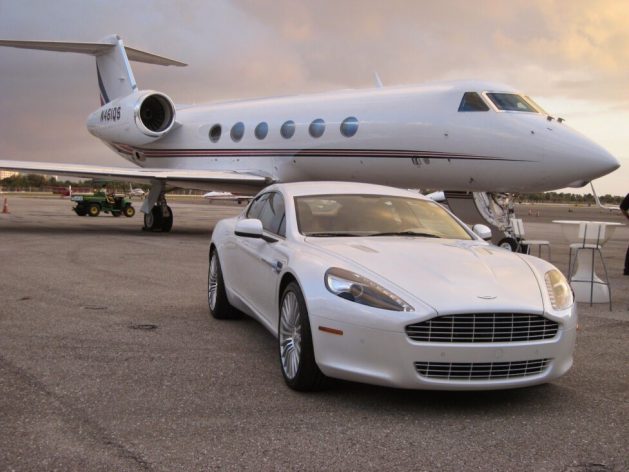
MADRID, Nov 17 2022 (IPS)* – As much as wars –or even more–, climate disaster represents a great business opportunity, so don’t bother those who pour their fortunes into fueling them with talks about stopping it.
See what happens.
A new analysis of the “investments of 125 of the world’s richest billionaires shows that on average they are emitting 3 million tonnes a year, more than a million times the average for someone in the bottom 90% of humanity.” Credit: WA
Investing in wars
A couple of dozens of companies involved in manufacturing the most inhuman weapons of mass destruction– the nuclear warheads, have been supported by over 150 big banks by lending them money or underwriting bonds, according to the Nobel Peace Laureate International Campaign to Abolish Nuclear Weapons (ICAN).
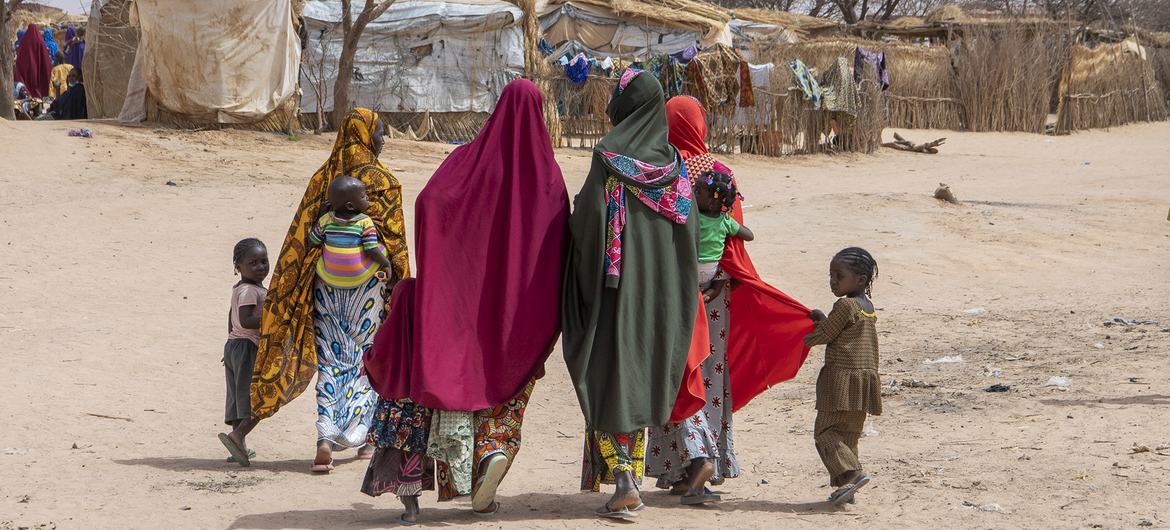
(UN News)* — Without urgent investment in climate mitigation and adaptation, countries in the Sahel risk decades of armed conflict and displacement, exacerbated by rising temperatures, scarcity of resources and food insecurity, the UN has warned in a report published on Wednesday [].
UN Photo/Eskinder Debebe | A displaced family walks through Ouallam camp in Niger.
Moving from Reaction to Action: Anticipating Vulnerability Hotspots in the Sahel, says that, left unchecked, the climate emergency will further imperil Sahelian communities as devastating floods, droughts and heatwaves decimate access to water, food and livelihoods, and amplify the risk of conflict.
This will ultimately force more people to flee their homes.




 HUMAN WRONGS WATCH