While the global food systems we depend on come under increasing strain, there’s a solution to the growing crisis that most North Americans can find in their own backyards–or front lawns.
A confluence of crises—lockdowns and business closures, mandates and worker shortages, supply chain disruptions and inflation, sanctions and war—have compounded to trigger food shortages; and we have been warned that they may last longer than the food stored in our pantries. What to do?
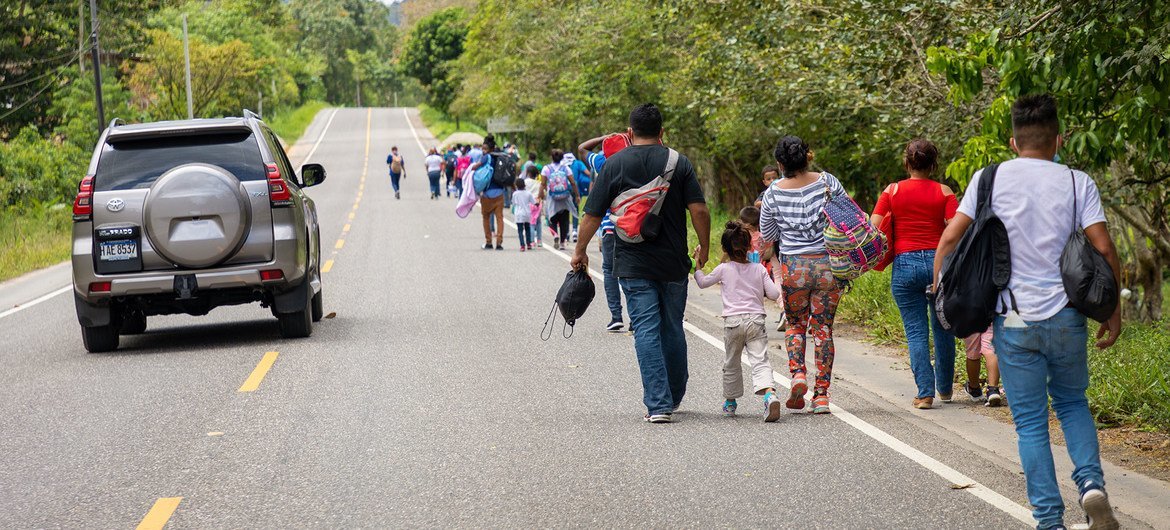
(UN News)* — Ever greater numbers of vulnerable people are risking their lives on dangerous migration routes in Latin America, forced to move by the global food security crisis that’s been made worse by spiralling inflation linked to the war in Ukraine, the UN World Food Programme (WFP) said on Tuesday [14 June 2022].
“We are having countries like Haiti with 26 per cent food inflation and we have other countries that really are off the charts even with food inflation,” said Lola Castro, WFP Regional Director in Latin America and the Caribbean (LAC).
Latest data indicates that 9.7 million people in the 13 LAC countries where WFP works are already extremely food insecure, up from 8.3 million in late 2021.
“We are looking at around 14 million people as forecast if the crisis continues,” said Ms. Castro.
9 JUNE 2022 (UNEP)* — A prolonged and deadly heatwave has hit large swaths of India and Pakistan affecting hundreds of millions of people and sparking food and energy shortages. Experts say the extreme heat is a grim preview of what the climate crisis has in store for a region home to over 1 billion people.
Reuters/Ajay Verma
Temperatures in India’s capital and parts of Pakistan have at times reached close to 50°C, killing dozens of people in both countries and upending the daily lives and livelihoods of students, labourers, and farmers.
9 June 2022 (UNEP)* — The harmful chemicals released from plastic products throughout their entire life cycle can pose a serious risk to humans and the environment, particularly when waste is not properly managed, finding its way to air, water and soils.
Photo: Unsplash
Global cumulative plastic production is predicted to reach 34,000 million tonnes between 1950 and 2050.
MADRID, Jun 7 2022 (IPS)* – Imagine a patient connected to a vital oxygen device to keep him or her breathing, thus alive. Then, imagine what would happen if this patient unplugged it. This is exactly what humans have been doing with the source of at least 50% of the whole Planet’s oxygen: the oceans.
The ocean produces 50% of the planet’s oxygen, absorbs 30% of carbon dioxide produced by humans, buffering the impacts of global warming, and is the main source of protein for a billion people around the world. Credit: IPS
But oceans do not only provide half of all the oxygen needed. They also absorb about 30% of carbon dioxide produced by humans, buffering the impacts of global warming while alleviating its consequences on human health and that of all natural resources.
The “high seas”. For the uninitiated, a mere mention of the phrase throws up images of a vast never-ending expanse of pristine blue waters. But in reality, we know this vast expanse is far from pristine – threatened as it is by a toxic cocktail of climate change, plastic pollution, and the potential threat of deep-sea mining.
MADRID, Jun 6 2022 (IPS)* – Now it comes to another ‘crime’ being stealthy committed as a consequence of the unrelenting business obsession for making more and more money.
.
Illegal, unreported and unregulated fishing takes advantage of corrupt administrations and exploits weak management regimes, in particular those of developing countries lacking the capacity and resources for effective monitoring, control, and surveillance. Credit: Desmond Brown/IPS
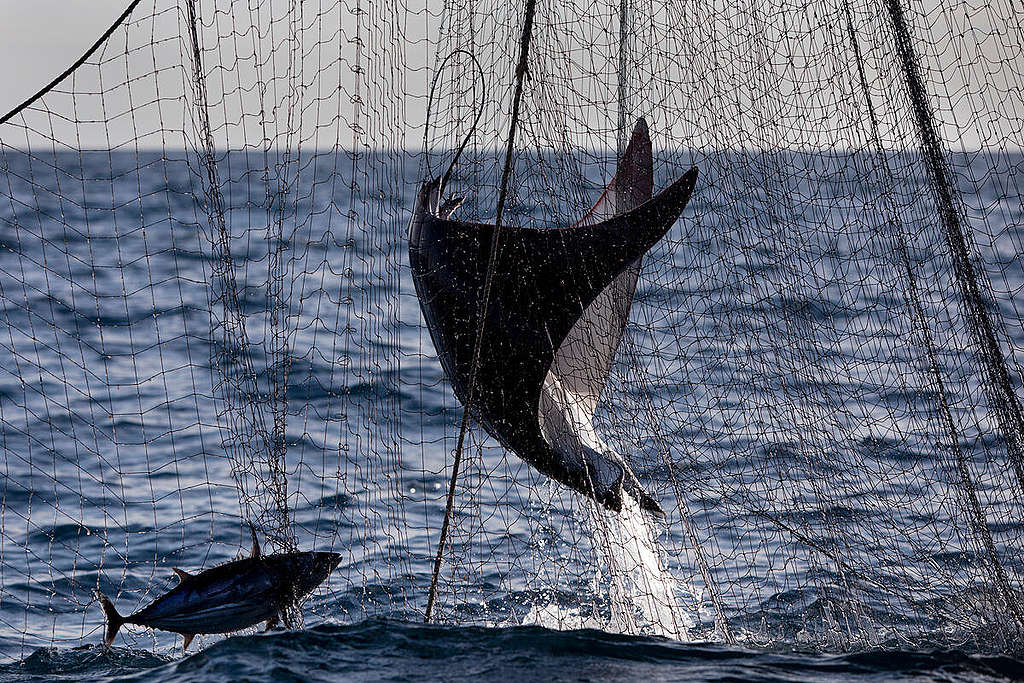
It is about the illegal, unreported and unregulated (IUU) fishing, a practice that threatens marine biodiversity, livelihoods, exacerbates poverty, and augments food insecurity.
MADRID, Jun 3 2022 (IPS)* – In a previous article, IPS reported on some of UNICEF’s key findings about the harsh impacts on the world’s children –and the whole Planet Earth– of the excessive consumption by mostly rich countries.
If everyone were to consume resources at the rate at which people in the United States, Canada and Luxembourg do, at least five Earths would be needed. Credit: Emilio Godoy / IPS
One of these is that if everyone were to consume resources at the rate at which people in the United States, Canada and Luxembourg do, at least five Earths would be needed.
MADRID, Jun 2 2022 (IPS)* – As an introduction to this year’s World Environment Day on 5 June, this report deals with how the excesses of the world’s population, mostly in the wealthiest countries, are causing so much harm to Planet Earth.
The world population is already using the equivalent of 1.6 Earths to maintain the current way of life. Credit: Mario Osava/IPS
For this purpose, the following account of some of the major facts and figures that the world’s largest multinational body–the United Nations Organisation– has been successively providing, should be enough to complete the picture.
(Greenpeace International)* — We know that oil companies hid knowledge of global heating for decades, but the captains of petroleum also schemed to turn the ecological crisis into a profit centre. The industry devised a plan to swindle money from the public purse by pretending to address the climate issue while using subsidies to increase oil production. If one had no moral compass, one might say their scam was a stroke of genius.






 HUMAN WRONGS WATCH