Millions of people in Afghanistan are experiencing misery and hunger amid decades of conflict, the collapse of the country’s economy, years of drought, and freezing wintertime temperatures.
.
Afghanistan, which has endured repeated humanitarian crises, faces its darkest time.
UNHCR and its partners have launched joint response plans to deliver vital humanitarian relief. There are 24 million people inside Afghanistan and 5.7 million Afghans and host communities in five neighbouring countries who need support.
(FAO)* — The economic fallout of the COVID-19 pandemic, climate variability and extremes, conflict, and the persistence of hunger and malnutrition have shown us that now is the time for us to build more resilient agrifood systems.
If we don’t, agrifood systems will not be able to ensure food availability to all as well as physical and economic access to nutritious foods that make up healthy diets.
So, how can we protect our agrifood systems from shocks and stresses and better ensure nutritious food is available to all? In other words, how can we make our agrifood systems resilient?
— “Human-induced climate change and the war on Ukraine have the same roots: fossil fuels and our dependence on them” said Ukrainian climate scientist Svitlana Krakovska as Russia, one of the world’s biggest oil and gas producers, was invading her country.
(UN News)* — “Arboviruses” might not be something most of us are familiar with, but for almost four billion people, they’re a deadly threat – which is why the UN health agency on Thursday [31 March 2022], launched a plan to prevent them from causing a new pandemic.
The most common arboviruses are in fact some of the world’s most dangerous mosquito-borne illnesses, such as Dengue, Yellow fever, Chikungunya and Zika.
They represent an ever-present and massive health threat in tropical and sub-tropical parts of the planet, although there are in fact a growing number of arboviral outbreaks worldwide, according to the World Health Organization (WHO).
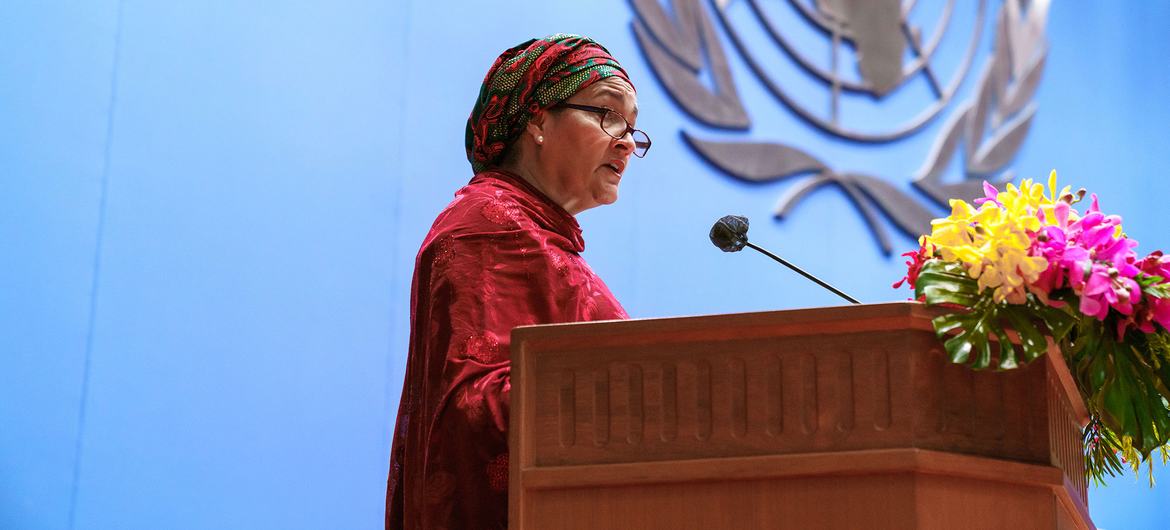
(UN News)* — The United Nations Deputy Secretary-General on Monday [28 March 2022 ] called on countries in Asia and the Pacific to speed up the shift from fossil fuels to new, low-carbon development models, in a just and inclusive way.
ESCAP/Suwat Chancharoensuk | UN Deputy Secretary-General Amina Mohammed delivers special remarks to the opening of the ninth Asia-Pacific Forum on Sustainable Development (APFSD).
“Moving away from coal and fossil fuels in a region that accounts for 75 per cent of global coal-fired generation capacity will not be easy. But it is essential for our common future, and it is financially and technologically possible,” Amina Mohammed said.
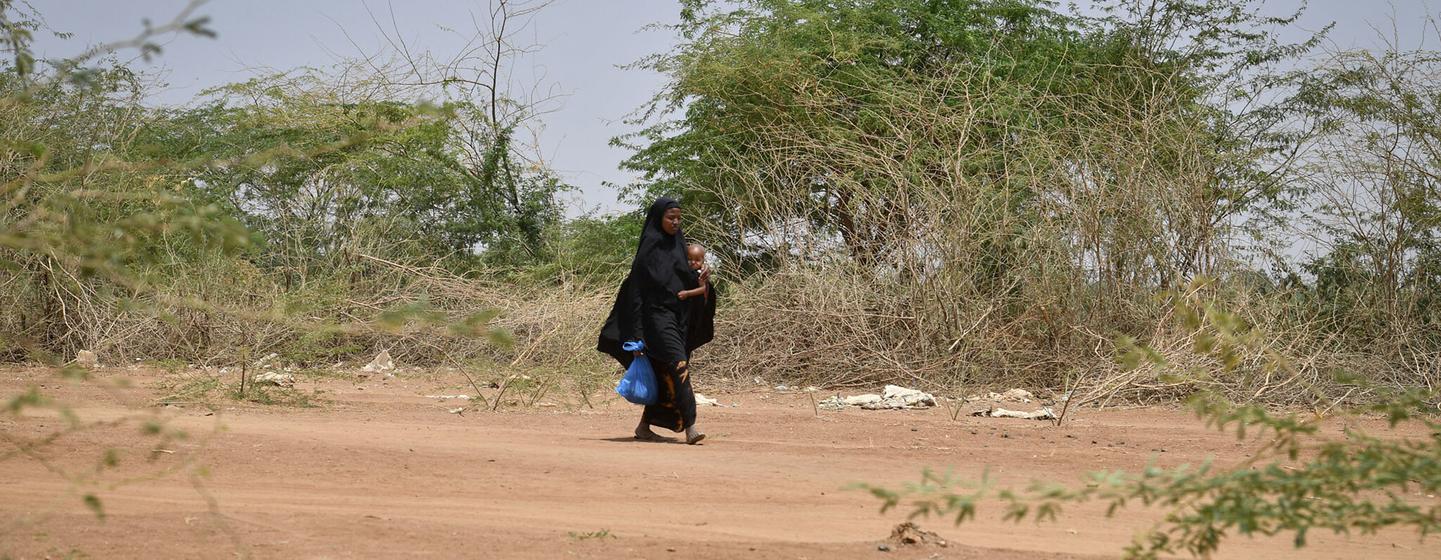
28 March 2022 (UN News)* — The Horn of Africa is experiencing the worst drought since 1981, and a shortfall in aid funding is putting the lives of millions of Somalis in danger.
.
UN Photo/Fardosa Hussein | A mother and her child pass by carcasses of goats and sheep in Luuq, Somalia on 21 March 2022.
Standing in front of his makeshift home in a camp for internally displaced people (IDP) in southern Somalia’s Luuq district, Ahmad Hassan Yarrow looks out towards what remains of the Juba River and shakes his head forlornly.
“Of all the droughts I have experienced in my 70 years, I have not seen anything as severe as this,” he says as he contemplates the scenery before him.
Nuclear power is often hailed as a magic bullet solution for the rapid and large-scale decarbonisation of our societies which we all know needs to happen if we have any hope of mitigating the worst effects of the unfolding climate emergency.
Geneva, Switzerland, 22 March 2022(UNEP)* – UN Environment Programme (UNEP) Mountain Advocate Malcolm Wood features in a unique new documentary released today, shining a spotlight on how the world’s water towers are being lost due to climate change.
(UN News)* — While groundwater accounts for 99 per cent of all running freshwater on Earth, it is often undervalued, mismanaged, and overexploited, according to a report published on Monday [21 March 2022] by the UN scientific organization, UNESCO.
“Groundwater is a critical natural resource, invisible but indispensable for life on our planet”, UNESCO chief Audrey Azoulay said in the Foreword of Making the invisible visible, the latest edition of the UN World Water Development Report (WWDR).
Farmers and fishing communities have had to let go of their folk knowledge on weather and seasonal patterns that used to guide them for the best times to carry out the various steps in their trade—planting, harvesting, setting out to sea, preservative drying of goods, etc.





 HUMAN WRONGS WATCH