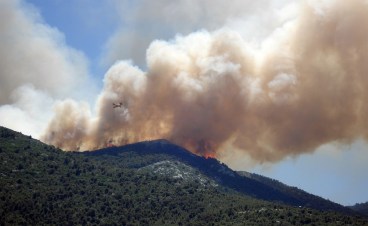
Nairobi, 17 February 2022 (UNEP)* – Wildfires are burning more severely and more often, urban noise pollution is growing into a global public health menace, and phenological mismatches – disruptions in the timing of life-cycle stages in natural systems – are causing ecological consequences.
These critical environmental issues, requiring greater attention, are highlighted in the new Frontiers Report published today by the UN Environment Programme (UNEP).
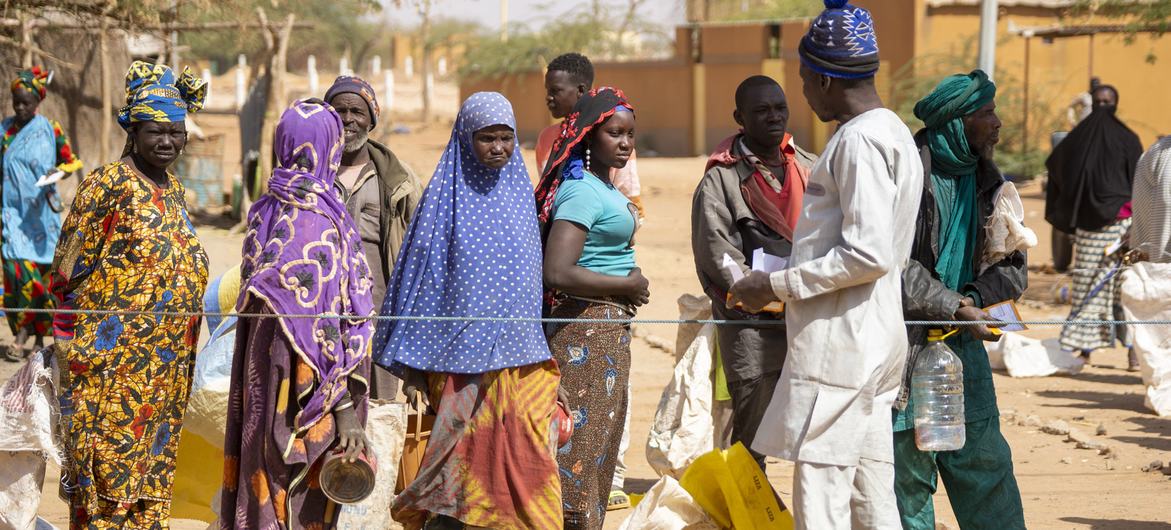
(UN News)* — As the Sahel region “stares down a horrendous food crisis”, the UN emergency food relief chief warned on Wednesday [16 February 2022] that the number of people on the brink of starvation has “increased almost tenfold” over the past three years and “displacement by nearly 400 per cent”.
Feb 14 2022 (IPS)* – Inequality is deadly… It contributes to the deaths of at least 21,300 people each day—or one person every four seconds. This is a “highly conservative estimate” for deaths resulting from hunger, lack of access to healthcare and climate breakdown in poor countries…
10 February 2022 (UNEP)* — Yacouba Sawadogo, 76, has been a farmer for much of his life, tending a plot of land in a semi-arid stretch of central Burkina Faso. But in the 1980s, that way of life almost came to an end.
Photo: Reuters Connect / 10 Feb 2022
Severe droughts triggered soil erosion and land degradation, crippling farms across Burkina Faso and much of Western Africa.
“People were leaving, and the animals and trees were dying,” Sawadogo recalled. “We had to look at a new way to farm.”
MADRID, Feb 9 2022 (IPS)* – Pulses and meat are both needed as part of your diet, however…
While the total emissions of greenhouse gases from global livestock amount to 7.1 Gigatonnes of Co2-equivalent per year, representing 14.5% of all anthropogenic emissions, pulses have root nodules that absorb inert nitrogen from soil air and convert it into biologically useful ammonia, a process referred to as biological nitrogen fixation.
Pulses provide nutrients and energy and they help prevent diseases like diabetes and coronary conditions. The United Nations declared 10 February World Pulses Day.
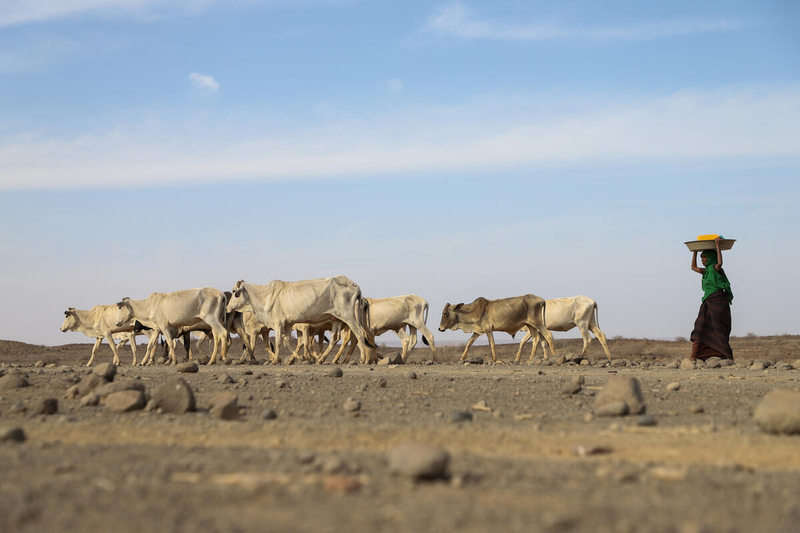
Nairobi (WFP)* – The Horn of Africa is experiencing the driest conditions recorded since 1981, with severe drought leaving an estimated 13 million people across Ethiopia, Kenya, and Somalia facing severe hunger in the first quarter of this year, the United Nations World Food Programme (WFP) on warned.
.
WFP/Michael Tewelde, Drought affected livestocks walking to a river side in Adadle district, Biyolow Kebele in Somali
Three consecutive failed rainy seasons have decimated crops and caused abnormally high livestock deaths. Shortages of water and pasture are forcing families from their homes and leading to increased conflict between communities.region of Ethiopia.
MEXICO CITY, Feb 7 2022 (IPS)* – The Mexican government is prioritizing the construction and modernization of mega water projects, without considering their impacts and long-term viability, according to a number of experts and activists. | En español
With a storage capacity of 580 million cubic meters and an irrigation target of 22,500 hectares, the Picachos dam in the state of Sinaloa, in northwestern Mexico, will also generate 15 megawatts of electricity. CREDIT: Conagua
(Washington, DC) 4 February 2022 – The United States and Mexican governments have subjected more than 20,000 children to the risk of serious harm under the Migrant Protection Protocols (MPP), commonly known as the “Remain in Mexico” program, Human Rights Watch said today based on analysis of new data.
The Inter Press Service co-founder is part of a vanishing breed
.
Dr. Roberto Savio is somewhat unique as an eyewitness to history and builder of institutions, a man who turns his visions into reality | Image from Wall Street International.
5 February 2022 (Wall Street International)* — We are sitting in the heart of Rome, Via Panisperna, where Dr. Roberto Savio has had his office for the last 58 years. His energy and activity, both mental and physical, belies his age.
At 87, he walks the 7 kilometres from his house to his office building and climbs two flights of stairs to reach his office.
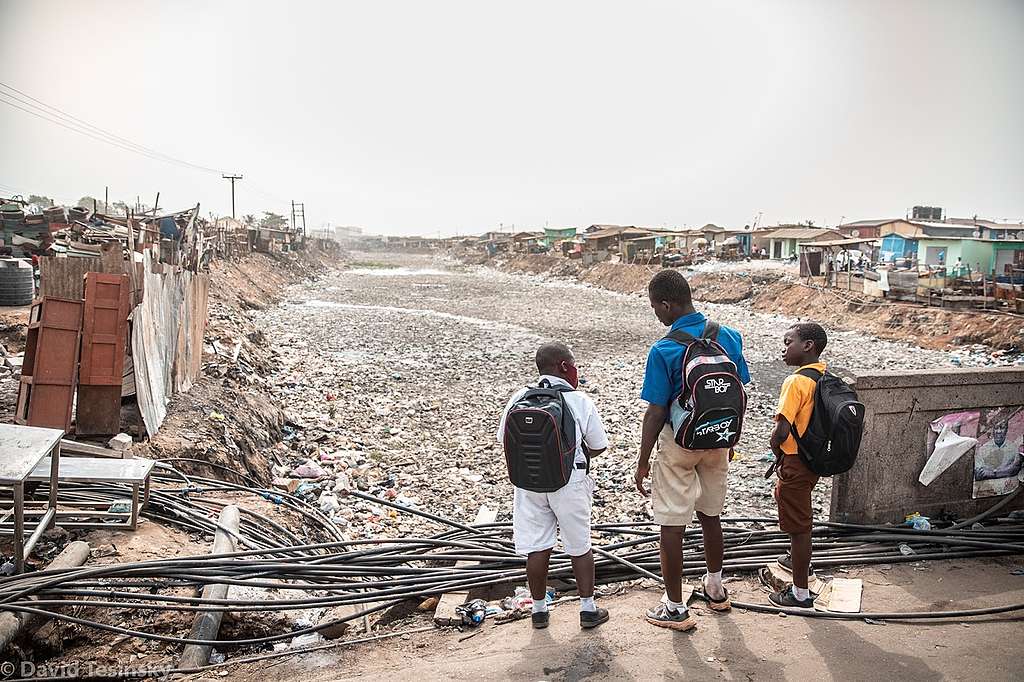
(Greenpeace International)* — When Namibia declared its independence in 1990, it officially marked the end of colonialism on the African continent. But, while most African nations have been free of European rule for a number of decades now, it seems that the power dynamics have only really changed in principle.




 HUMAN WRONGS WATCH