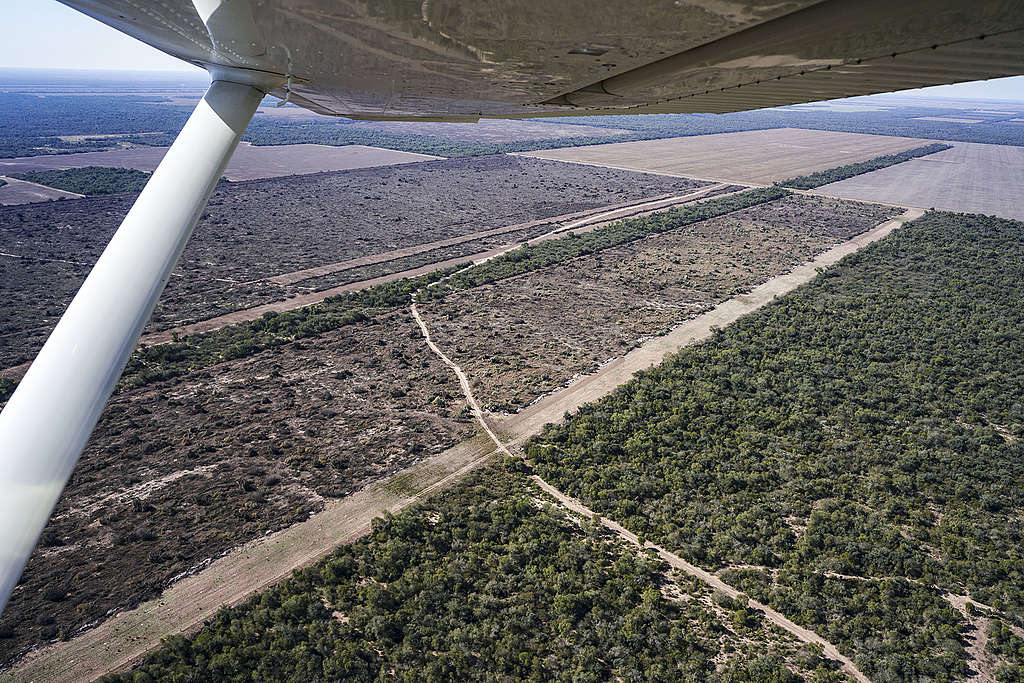
The deforestation of 10,329 hectares was detected by comparing satellite images from November 2020 to July 2021. Greenpeace aerial images from July also show bulldozers in operation, with forest destruction recorded in at least 10 places in the province.
(Greenpeace International)* — Kylian, seven years old, has always refused to cut his lovely long hair. Visiting Aigrettes Island (Mauritius) he is fascinated by the wildlife. Hearing that oil was spilling from the sinking Wakashio, he cuts off his hair to protect the lagoon. His story will inspire others to protect the ocean too.
MEXICO CITY, Aug 4 2021 (IPS)* – In southeast Mexico, work on the Yucatan Solar Park, owned by the Chinese company Jinko Solar, has been halted since 2020 for lack of proper consultation with indigenous communities, after affected local residents filed an injunction against the project.
.
For the construction of the suspended Yucatán Solar Park on the Yucatán peninsula in southeastern Mexico, the site was only partially cleared. Like most infrastructure projects involving Chinese companies and banks in Latin America, the plant lacks socio-environmental standards. CREDIT: Courtesy of Asamblea Múuch’ Xíinbal
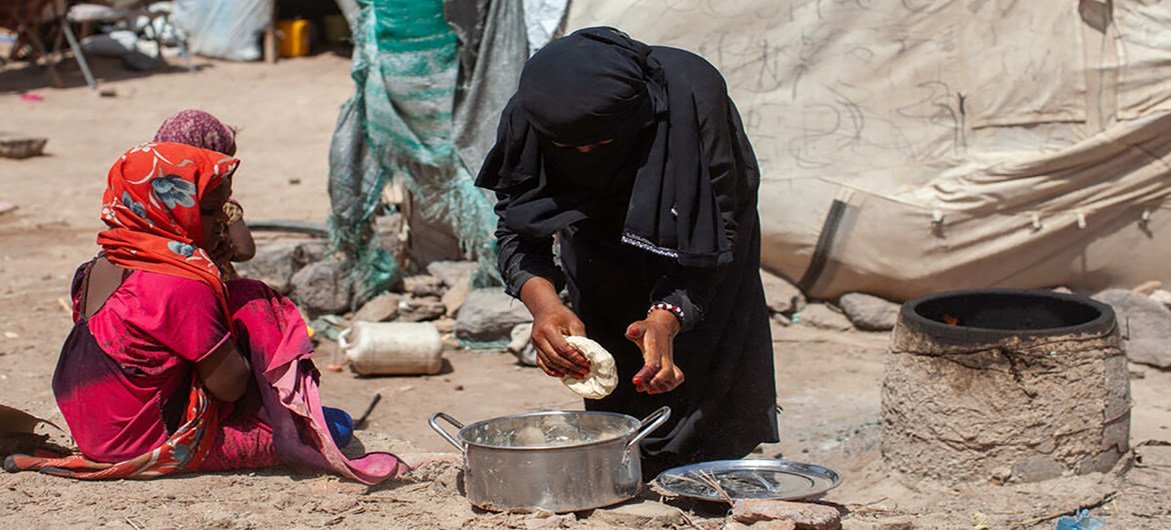
(UN News)* — Heavy rains and flooding in Yemen have affected at least 28,000 people, according to initial estimates released by the UN Office for the Coordination of Humanitarian Affairs (OCHA) on Wednesday [4 August 2021].
In its daily noon briefing, OCHA said that humanitarian partners on the ground are conducting assessments and providing assistance, which included food, shelter and healthcare.
Meanwhile, more than half of Yemenis are facing crisis levels of food insecurity, and five million people are just one step away from famine.
Manama, 02 August 2021 (UNEP)* – Improved awareness, appropriate policies and a strong regulatory framework are needed to reduce food waste in West Asia, according to a new report, The State of Food Waste in West Asia, released by the UN Environment Programme’s Regional Office for West Asia.
The report, conducted in 12 countries in the region, sets out a comprehensive view of the current situation across the region, in which around 34% of the food served is wasted, with an estimation ranging from 100 to 150kg/cap of food waste occurring at the household stage, similar to levels in Western Europe and North America.
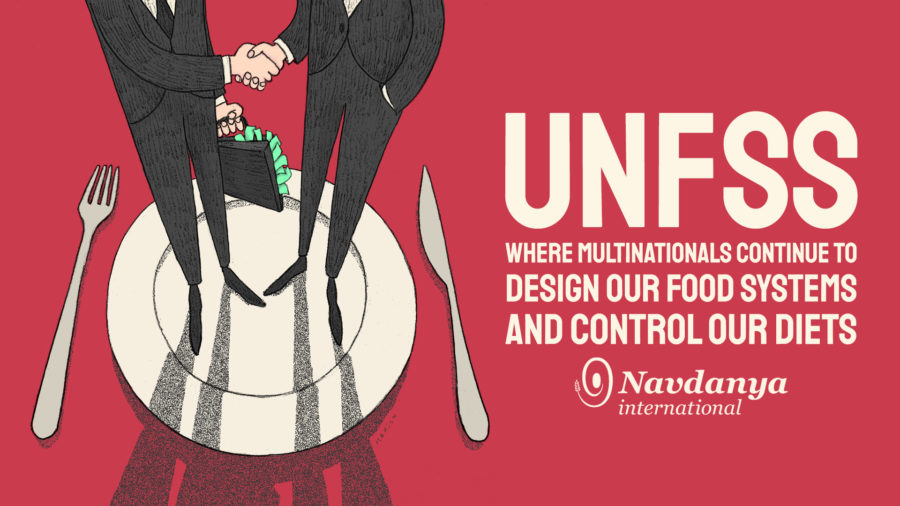
The Pre-Summit of the United Nations Food Systems Summit (UNFSS) taking place in Rome, as a preparative stage to the New York September Summit, is, as expected, going in the wrong direction.
As many civil society members, as well as past and current Rapporteurs on the Right to Food, have denounced, this summit is yet another instrument to reinforce corporate control over food and agriculture, while attempting to restrain civil society’s role in global food governance.
UNITED NATIONS, Aug 2 2021 (IPS)* – Ed Koch, a sharp-tongued Mayor of New York city (1978-89), once stopped short of using a four-letter word to denounce the United Nations.
Credit: UN Photo/Evan Schneider
Instead, he opted for a five-letter word dismissing the UN as a “sewer” relegating it to the lower depths of degradation.
Coral reefs are one of the most striking maritime populations. Large underwater forums or structures consisting in principle of skeletal structures of colonial marine invertebrates.
But certain types of corals are flexible organisms that create some of the world’s most diversified ecosystems.
Intelligently resemble or mimic plants and trees and include species such as sea fans and the sea, but are vulnerable to environmental changes.
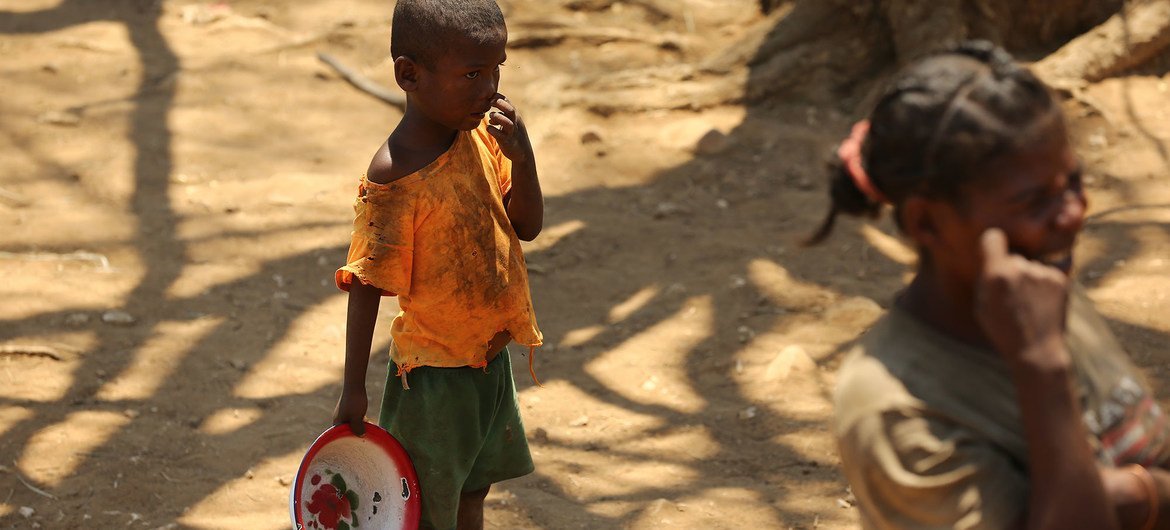
Conflict, COVID-19, climate crisis likely to drive higher levels of acute food insecurity in 23 hunger hotspots – new report
.
WFP/Tsiory Andriantsoarana
.
ROME (WFP)* – Efforts to fight a global surge in acute food insecurity are being stymied in several countries by fighting and blockades that cut off life-saving aid to families on the brink of famine, warn the UN’s Food and Agriculture Organization (FAO) and World Food Programme (WFP) in a new report issued on .
Bureaucratic obstacles as well as a lack of funding also hamper the two UN agencies’ efforts to provide emergency food assistance and enable farmers to plant at scale and at the right time.
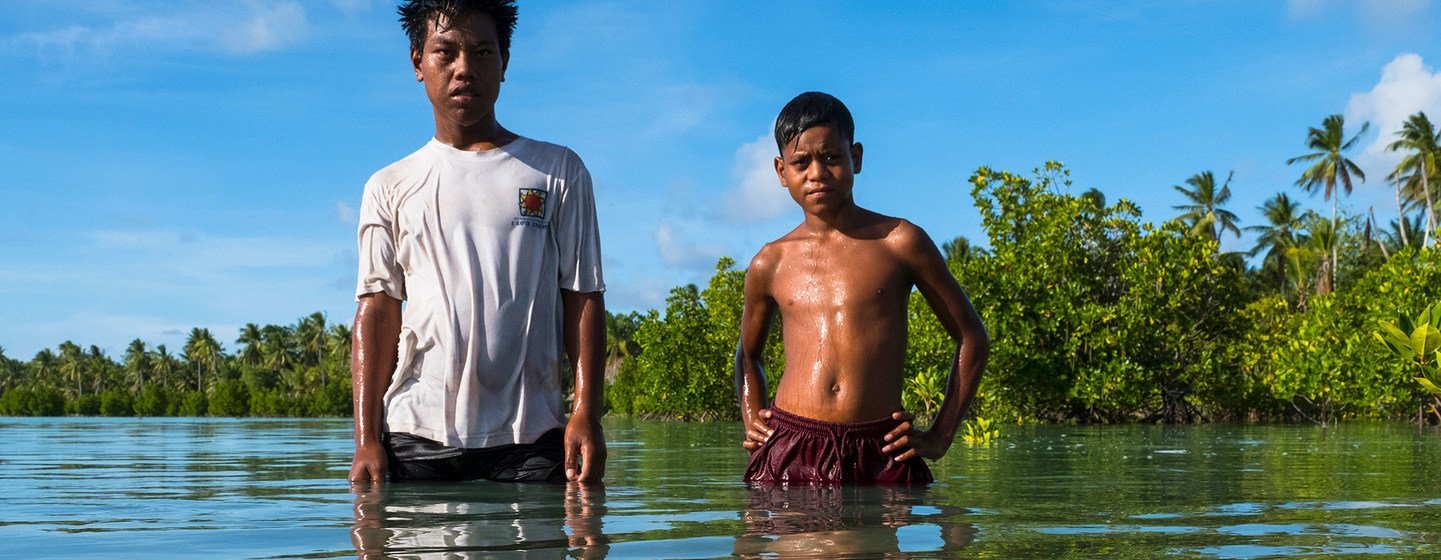
31 July 2021 (UN News)* — Small island nations across the world are bearing the brunt of the climate crisis, and their problems have been accentuated by the COVID-19 pandemic, which has severely affected their economies, and their capacity to protect themselves from possible extinction. We take a look at some of the many challenges they face, and how they could be overcome.
The 38 member states and 22 associate members that the UN has designated as Small Island Developing States or SIDS are caught in a cruel paradox: they are collectively responsible for less than one per cent of global carbon emissions, but they are suffering severely from the effects of climate change, to the extent that they could become uninhabitable.





 HUMAN WRONGS WATCH