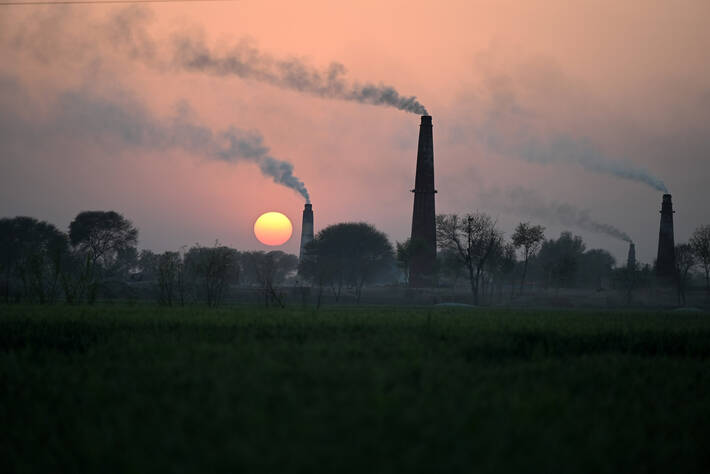
The African Green Stimulus Programme that was agreed by 54 ministers at the eighth special session of the African Ministerial Conference on the Environment (AMCEN) reaffirmed the continent’s commitment to protect and sustainably use natural resources.
Rethinking Food Systems
Worsening Soil Pollution Threatens Future Food Production and Ecosystems
Human Wrongs Watch
Joint report reveals soil pollution as one of the world’s major challenges for ecosystem restoration
ROME (FAO)* – Worsening soil pollution and waste proliferation threaten the future of global food production, human health and the environment, and require an urgent global response, according to a joint report released on 4 June 2021 by the Food and Agriculture Organization of the United Nations (FAO) and the United Nations Environment Programme.
Becoming #GenerationRestoration – Key Messages
KEY MESSAGE 1
Countries need to deliver on their existing commitments to restore 1 billion hectares of degraded land and make similar commitments for marine and coastal areas.
The fulfilment of these commitments is not simply something that is ‘nice to have’.
Restoration is essential for keeping global temperature rise below 2°C, ensuring food security for a growing population and slowing the rate of species extinctions.
Becoming #GenerationRestoration: Ecosystem Restoration for People, Nature and Climate
4 June 2021 (UNEP)* — To launch the UN Decade on Ecosystem Restoration, UNEP has released this synthesis report as a call to action for anyone and everyone to join the #GenerationRestoration movement to prevent, halt and reverse the degradation of ecosystems worldwide.
UN’s Battle Against Climate Hazards Undermined by a Devastating Pandemic
Human Wrongs Watch
– The United Nations has been in the forefront of an ongoing battle against the growing hazards of climate change, including the destruction of different species of plants and animals, the danger of rising sea-levels threatening the very existence of small island developing states (SIDS), and the risks of oceans reaching record temperatures endangering aquatic resources.

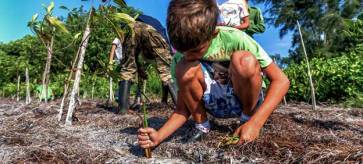
Restoring natural habitats as pictured here in Cuba will help to slow down climate change. A new UN-backed study released May 27 says annual investments in nature-based solutions will have to triple by 2030, and increase four-fold by 2050, if the world is to successfully tackle the triple threat of climate, biodiversity and land degradation crises. Credit: UNDP
The African Green Stimulus Programme: Restoring Ecosystems, Central to Green Recovery
Pakistan’s Ten Billion Tree Tsunami
The ambitious project- which is supported by the United Nations Environment Programme (UNEP) – sets out to plant ten billion trees by 2023. Launched in 2019, the project has just reached a new milestone – planting of the billionth tree.
This year also sees the launch of the UN Decade on Ecosystem Restoration 2021-2030 and projects such as the Ten Billion Tree Tsunami are key to preventing, halting and reversing the degradation of ecosystems on every continent and in every ocean.
World Environment Day 2021 Launches Global Drive to Restore Nature
Resetting humanity’s relationship with nature will be the focus of World Environment Day on June 5, which also marks the launch of the UN Decade on Ecosystem Restoration, a ten-year global push to prevent, halt and reverse ecosystem degradation.
Global Food Prices Rose in May at Their Fastest Monthly Rate in over Ten Years
Human Wrongs Watch
ROME (FAO)* – Global food prices rose in May at their fastest monthly rate in more than a decade, even as world cereal production is on course to reach a new record high, the Food and Agriculture Organization of the United Nations (FAO) on 3 June 2021 reported.
The FAO Food Price Index averaged 127.1 points in May, 4.8 percent higher than in April and 39.7 percent higher than in May 2020.
Climate Change Fans Spread of Pests and Threats Plants and Crops
Human Wrongs Watch
Pests destroy up to 40 percent of global crops and cost $220 billion of losses
Rome (FAO)* – Due to the impact of climate change, plant pests that ravage economically important crops are becoming more destructive and posing an increasing threat to food security and the environment, finds a scientific review released on 2 June 2021.