23/05/2021
Thousands of plant species and varieties that fed our ancestors are already extinct, and we are losing more every day. Diversity is our food’s life insurance. ©FAO/Luis Tato
But what if climate change, invasive species, pollution, city sprawl or overuse of land cause these species to weaken, lowering their ability to produce or survive into the future?
read more »
Posted in Africa, Asia, Climate Crisis, Latin America & Caribbean, Market Lords, Middle East, Migrants and Refugees, Mother Earth, Others-USA-Europe-etc., The Peoples |
Leave a Comment »
23/05/2021
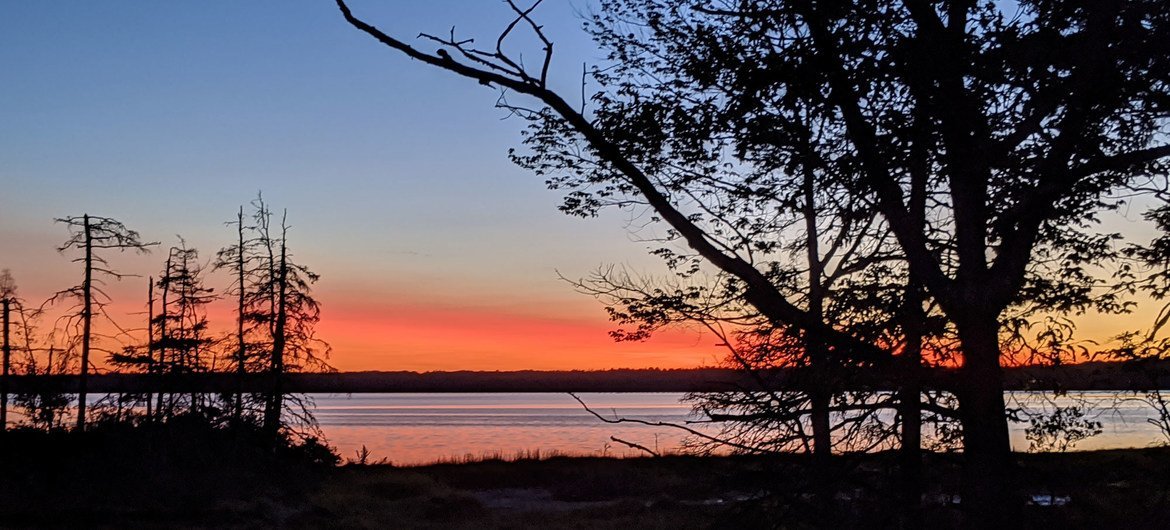
Everyone will lose unless humanity makes ‘peace with the planet’ – UN Chief.
UN News/Elizabeth Scaffidi | The sun sets in Acadia National Park, Maine, United States.
Posted in Africa, Asia, Climate Crisis, Latin America & Caribbean, Market Lords, Middle East, Migrants and Refugees, Mother Earth, Others-USA-Europe-etc., The Peoples |
Leave a Comment »
23/05/2021
.
Photo by UNEP / Lisa Murray
.
22 May 2021 (United Nations)* — As the global community is called to re-examine our relationship to the natural world, one thing is certain: despite all our technological advances we are completely dependent on healthy and vibrant ecosystems for our water, food, medicines, clothes, fuel, shelter and energy, just to name a few.
Posted in Africa, Asia, Climate Crisis, Latin America & Caribbean, Market Lords, Middle East, Migrants and Refugees, Mother Earth, Others-USA-Europe-etc., The Peoples |
Leave a Comment »
23/05/2021
New international expert panel to address the emergence and spread of zoonotic diseases

Geneva/Paris/Rome/Nairobi, 20 May 2021 (UNEP)* – International organizations have come together to launch a new One Health High-Level Expert Panel to improve understanding of how diseases with the potential to trigger pandemics, emerge and spread.
read more »
Posted in Africa, Asia, Climate Crisis, Latin America & Caribbean, Market Lords, Middle East, Migrants and Refugees, Mother Earth, Others-USA-Europe-etc., The Peoples |
Leave a Comment »
23/05/2021
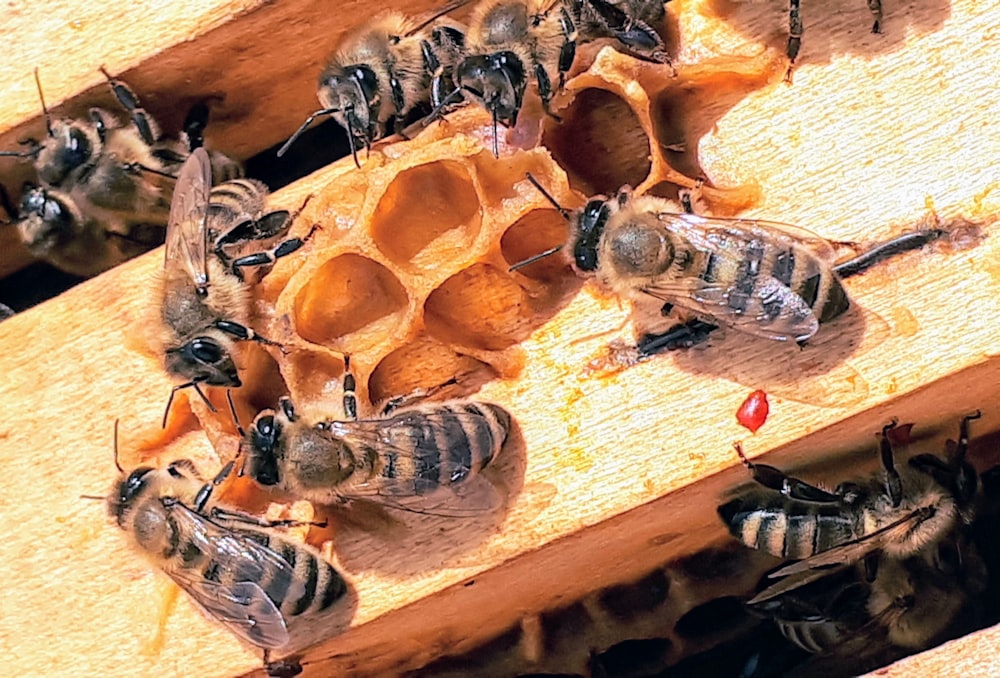
(UNEP)* — Bees and other pollinators are increasingly under threat from human activities. To raise awareness of the importance of pollinators and their contribution to sustainable development, the UN marks May 20 as
World Bee Day.
This year, the United Nations Environment Programme (UNEP) examines how a decades-old legacy of DDT use has imperilled Tajikistan’s bees and the actions being taken to reverse this trend.
read more »
Posted in Africa, Asia, Climate Crisis, Latin America & Caribbean, Market Lords, Middle East, Migrants and Refugees, Others-USA-Europe-etc., The Peoples |
Leave a Comment »
20/05/2021
Tea is currently grown in very localized areas, and supports over 13 million people, including smallholder farmers and their households, who depend on the tea sector for their livelihoods.
International Tea Day [21 May] is an opportunity to celebrate the cultural heritage, health benefits and economic importance of tea, while working to make its production sustainable “from field to cup” ensuring its benefits for people, cultures and the environment continue for generations.
read more »
Posted in Africa, Asia, Climate Crisis, Latin America & Caribbean, Market Lords, Middle East, Mother Earth, Others-USA-Europe-etc., The Peoples |
Leave a Comment »
18/05/2021
KUALA LUMPUR, Malaysia, May 18 2021 (IPS)* – Millions of people are expected to die due to delayed and unaffordable access to COVID-19 tests, treatment, personal protective equipment and vaccines. Urgent cooperation is desperately needed to save lives and livelihoods for all.

Jomo Kwame Sundaram
Vaccine apartheid
Thus far, rich countries have bought up most available vaccine supplies.
By mid-April, rich countries had received more than 87 percent of the more than 700 million vaccine doses dispensed worldwide, while poor countries had received only 0.2 percent.
A quarter of the former’s population had been vaccinated compared to one in 500 of the latter’s!
By mid-May, less than a twelfth of the world’s population had been vaccinated, with ten rich countries getting four-fifths of all vaccines.
The Pfizer vaccine is mainly reaching the world’s rich.
read more »
Posted in Africa, Asia, Climate Crisis, Latin America & Caribbean, Market Lords, Middle East, Migrants and Refugees, Mother Earth, Others-USA-Europe-etc., The Peoples, War Lords |
Leave a Comment »
18/05/2021

Three out of four crops across the globe producing fruits, or seeds for use as human food depend, at least in part, on bees and other pollinators. Photo FAO/Greg Beals
18 May 2021 (United Nations)* — Bees and other pollinators, such as butterflies, bats and hummingbirds, are increasingly under threat from human activities.
Pollination is, however, a fundamental process for the survival of our ecosystems.
Nearly 90% of the world’s wild flowering plant species depend, entirely, or at least in part, on animal pollination, along with more than 75% of the world’s food crops and 35% of global agricultural land.
Not only do pollinators contribute directly to food security, but they are key to conserving biodiversity.
read more »
Posted in Africa, Asia, Climate Crisis, Latin America & Caribbean, Market Lords, Middle East, Migrants and Refugees, Mother Earth, Others-USA-Europe-etc., The Peoples |
Leave a Comment »
14/05/2021
Pakistan restores mangroves for economy and ecosystem benefits

Dan Maisey/Unsplash / 14 May 2021
14 May 2021 (UNEP)* — As Pakistan prepares to host World Environment Day on June 5, ecosystem restoration, which includes critical ecosystems like mangrove forests, will be the focus.
Mr Quershi, who sadly passed away in December 2020, played a key role in the development of mangrove restoration in Pakistan and will be fondly remembered at the event.“He was a magnificent man.
read more »
Posted in Africa, Asia, Climate Crisis, Latin America & Caribbean, Market Lords, Middle East, Migrants and Refugees, Mother Earth, Others-USA-Europe-etc., The Peoples |
Leave a Comment »



 HUMAN WRONGS WATCH