New fund leverages nature to adapt to climate change
UNEP / Duncan Moore / 25 Mar 2021
(UNEP)*— Did you know nature is one of humanity’s best defences for adapting to climate change? A new funding opportunity is scaling up ecosystem-based adaptation across the world. The call for proposals is now open.
The UN Decade on Ecosystem Restoration is launching in June this year. The goal is ambitious – to trigger a global movement for restoring the world’s ecosystems. This is not merely for nature’s sake, say experts. Mounting evidence shows that a global re-greening could help humanity adapt to climate change.
The climate crisis is fueling inequality around the world and in particular racial injustice. For generations, inequality has exacerbated the impacts of the climate emergency for racial communities, and here is why:
Colonialism
“The excessive exploitation of natural resources would not have been possible without slavery, which allowed Western countries to accumulate significant wealth … This grabbing of wealth continued with colonisation, in Africa, South America, and Asia.
.
Indigenous rights and environmental justice activist Chihiro Geuzebroek looks at what we mean by ‘environmental racism’ and how we can fight against it
1 April 2021 (UNEP)* — For much of the last three weeks, the Flipflopi, a dhow made from recycled plastic, including a helping of old sandals, has been calling into ports across Lake Victoria. The crew of the 10-metre-long vessel is on a mission to raise awareness about a tide of plastic choking Africa’s biggest lake – and to demonstrate that trash can be turned into treasure.
UNEP / Stephanie Foote / 31 Mar 2021
“Flipflopi was built to show the world that it is possible to make valuable materials out of waste plastic,” said Ali Skanda, co-founder of the Flipflopi.
The boat’s voyage, which is supported by the United Nations Environment Programme (UNEP), comes at a critical time for both Lake Victoria and Kenya, says Llorenç Milà I Canals, the head of UNEP’s Life Cycle Initiative.
A recent report by UNEP found that 27 per cent of plastic waste in Kenya is collected and, of that, only 7 per cent is recycled in the country.
HYDERABAD, India, Apr 1 2021 (IPS)* – As the sun sets over the canopy of Albizia amara trees, a thin blanket of fog begins to descend over the forests of the Malai Mahadeshwara Hills Wildlife Sanctuary, which lies roughly 150 km south of the Indian city of Bangalore.
.
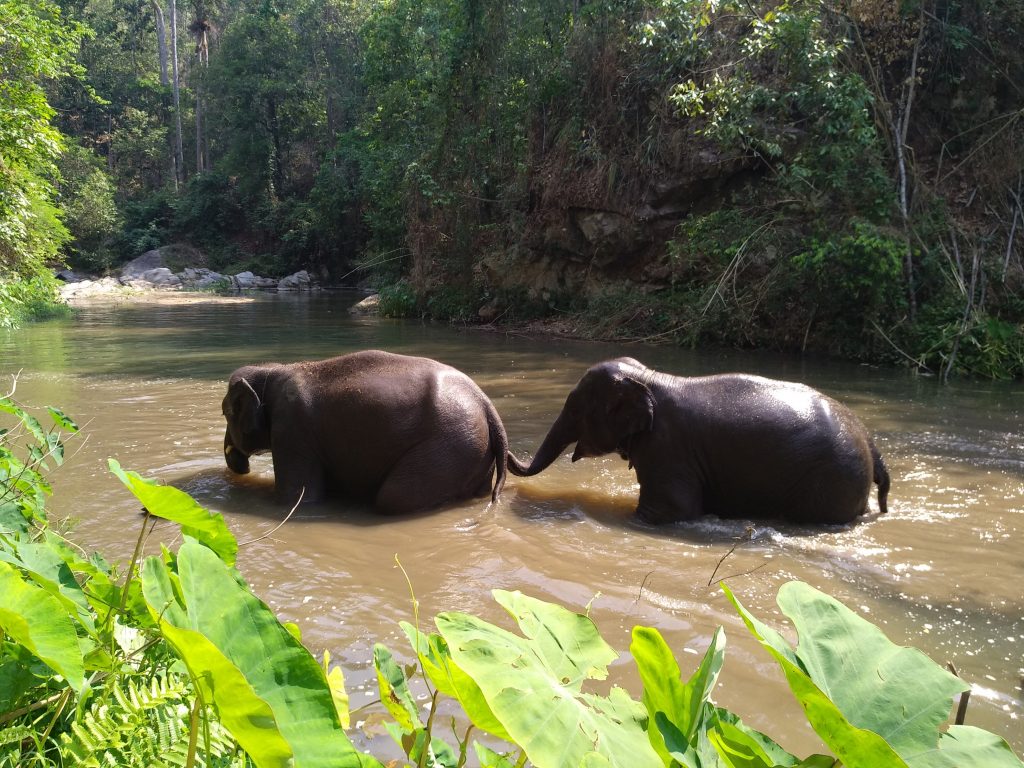
Two elephants cross a stream in Malai Mahadeshwara Hills Wildlife Sanctuary. Thanks to a number of conservation projects run by various government agencies, non-government organisations and the International Union for Conservation of Nature (IUCN), the wildlife population is thriving again. The forest is now home to an estimated 500 elephants and several other big game animals, including bison and tigers. Credit: Stella Paul/IPS
31 March 2021 (UNHCR)* — By the time Kimberly Virguez finally took the wrenching choice to leave her native Venezuela, widespread food shortages there had left her 15 kilos lighter. In Peru, where she sought asylum, she quickly put the weight back on.
But then the COVID-19 pandemic struck. Kimberly lost her job, and she and her husband had to start skipping meals to have enough to feed their growing twin boys. After months of eating just once a day, Kimberly again weighs about what she did when she left Venezuela in 2018.
(UN News)* — Though significant steps have been taken to prevent debt crises across the world sparked by the COVID-19 crisis, they have not been sufficient to restore economic stability in many developing countries, according to a policy brief issued by the UN Secretary-General on Monday 29 March 2021.
.
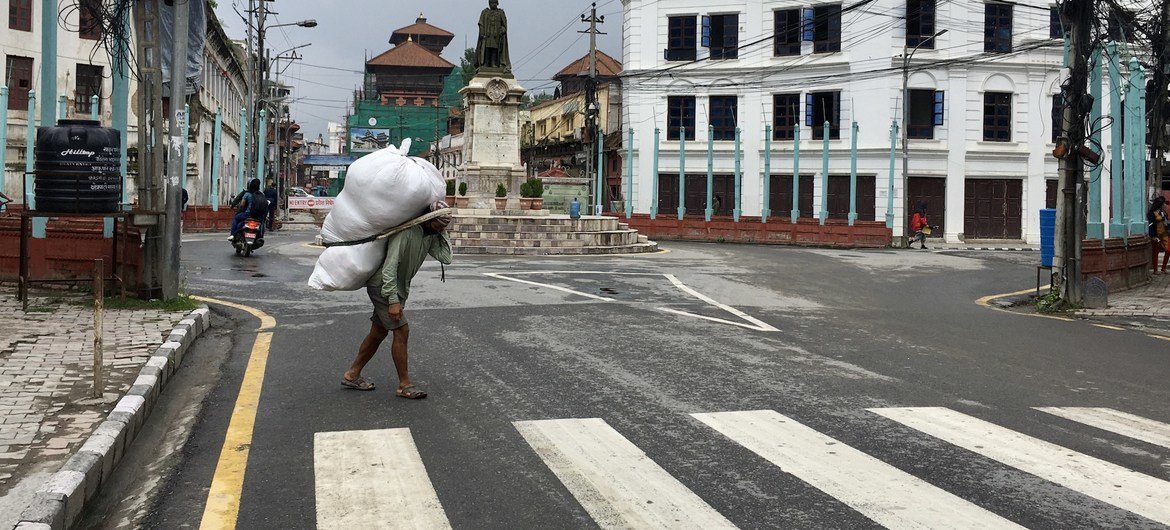
UN News\Vibhu Mishra | Developing countries, in particular, have been hit hard by the impacts of the coronavirus pandemic. Pictured, here a daily wage earner during the COVID-19 lockdown in Kathmandu, Nepal.
SYDNEY and KUALA LUMPUR, Mar 30 2021 (IPS)* – COVID-19 has set back the uneven progress of recent decades, directly causing more than two million deaths. The slowdown, due to the pandemic and policy responses, has pushed hundreds of millions more into poverty, hunger and worse, also deepening many inequalities.
Anis Chowdhury
Development setbacks
The outlook for developing countries is grim, with output losses of 5.7% in 2020. Compared to pre-pandemic trends, the expected 8.1% loss by end-2021 will be much worse than advanced countries dropping 4.7%.
COVID-19 has further set back progress towards the Sustainable Development Goals (SDGs). As progress was largely ‘not on track’ even before the pandemic, developing countries will need much support to mitigate the new setbacks, let alone get back on track.
In late 2020 Robert J. Burrowes and myself were asked by some Melbourne activists protesting against the lockdowns and Covid vaccinations to help them develop more effective strategy.
Anita McKone
Many of the protesters were new to activism, and those with an inclination towards following a nonviolent approach wanted education in this area.
In February, Robert and I ran two Introduction to Nonviolent Action workshops, and one Nonviolent Strategy weekend, and with the inspiration and input of this great group of participants, I have now put the basics of a worldwide nonviolent campaign strategy to defeat the Great Reset on a website. We have named this campaign We Are Human, We Are Free.
The website is designed as a resource that activists anywhere in the world can use to develop effective local nonviolent campaigns.
Shark fin soup is well-known. When we hear that 100 million sharks are killed every year by the fishing industry, some people may assume it’s because of shark fin soup. But these assumptions are just not true. Only focusing on shark fin soup crowds out other reasons sharks are in trouble, including a huge global market for shark products like meat and oil.
27 March 2021 (UN News)* — The UN is scaling up its efforts to help Nepal, which faces numerous natural threats, to become more resilient, minimize human casualties and preserve livelihoods.
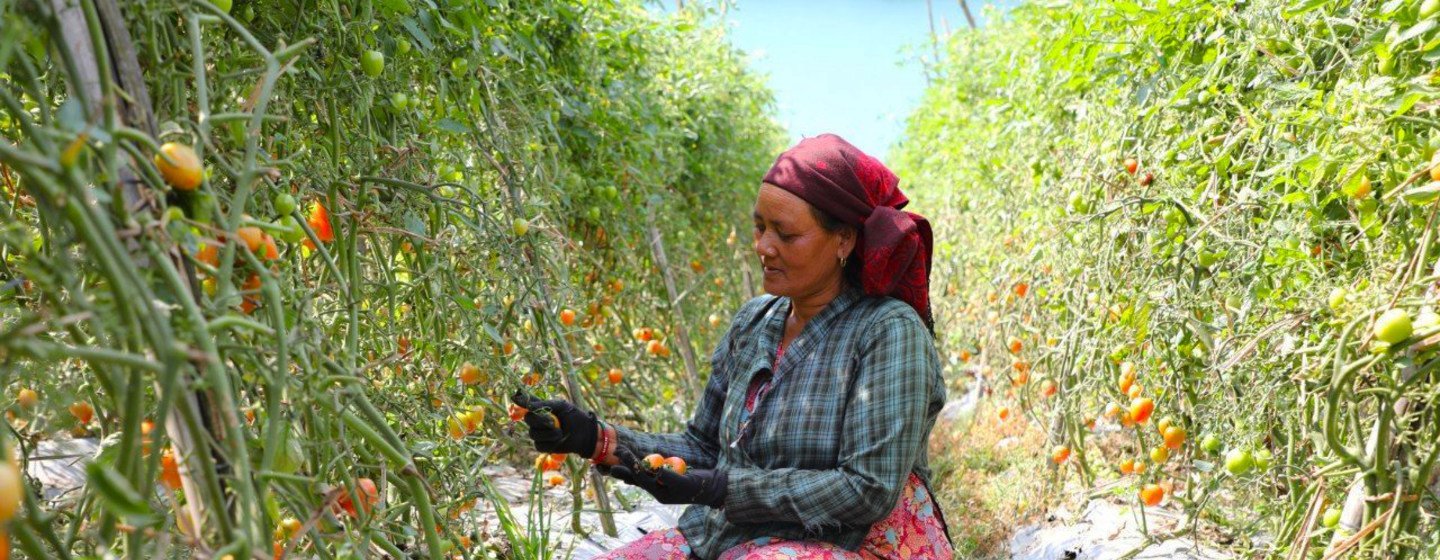
UNDP Nepal | Nepal has promoted farming which helps to reduce the impact of natural disasters.
Floods, landslides and wildfires are regularly occurring threats in Nepal, and the climate crisis is making such extreme weather events more frequent, and unpredictable.
.
Working closely with the UN Development Programme (UNDP), the Nepalese Government is ensuring that the voices of marginalized groups, such as women, people with disabilities, and indigenous communities, are heard and taken into consideration in their plans, which include early warning systems, off-grids clean energy solutions, and reforestation.
 UNEP / Duncan Moore / 25 Mar 2021



 HUMAN WRONGS WATCH