28/03/2021
Improving tenure in Amazon basin can lower deforestation rates and biodiversity loss

Indigenous and Tribal Peoples in Latin America and the Caribbean are the best guardians of their forests when compared to those responsible for the region’s other forests.
Santiago, Chile/Rome (FAO)* – Deforestation rates are significantly lower in Indigenous and Tribal territories where governments have formally recognized collective land rights, according to a new report launched on 25 March 2021.
read more »
Posted in Africa, Asia, Climate Crisis, Latin America & Caribbean, Market Lords, Middle East, Migrants and Refugees, Mother Earth, Others-USA-Europe-etc., The Peoples, War Lords |
Leave a Comment »
24/03/2021
ROME (FAO)* – Acute hunger is set to soar in over 20 countries in the coming months without urgent and scaled-up assistance, warn the UN’s Food and Agriculture Organization (FAO) and World Food Programme (WFP) in a new report issued on 23 March 2021.
 Agong and her child in South Sudan, where over 7 million people are projected to fall into crisis or worse levels of acute food insecurity.
Posted in Africa, Asia, Climate Crisis, Latin America & Caribbean, Market Lords, Middle East, Migrants and Refugees, Mother Earth, Others-USA-Europe-etc., The Peoples, War Lords |
Leave a Comment »
23/03/2021
Nairobi/Stockholm, 22 March 2021 (UNEP)* – A book by Stockholm Environment Institute (SEI) and the United Nations Environment Programme (UNEP), launched on World Water Day, reports that the sanitation waste of 50% of the global population is still disposed of without having been treated – posing enormous risks to both public health and the environment.
.
Posted in Africa, Asia, Climate Crisis, Latin America & Caribbean, Market Lords, Middle East, Migrants and Refugees, Mother Earth, Others-USA-Europe-etc. |
Leave a Comment »
23/03/2021
Geneva, 23 March 2021 (WMO)* – The ocean drives the world’s weather and climate and anchors the global economy and food security. Climate change is hitting the ocean hard, but also increasing hazards for hundreds of millions of people.
read more »
Posted in Africa, Asia, Climate Crisis, Latin America & Caribbean, Market Lords, Middle East, Migrants and Refugees, Mother Earth, Others-USA-Europe-etc., The Peoples |
Leave a Comment »
23/03/2021
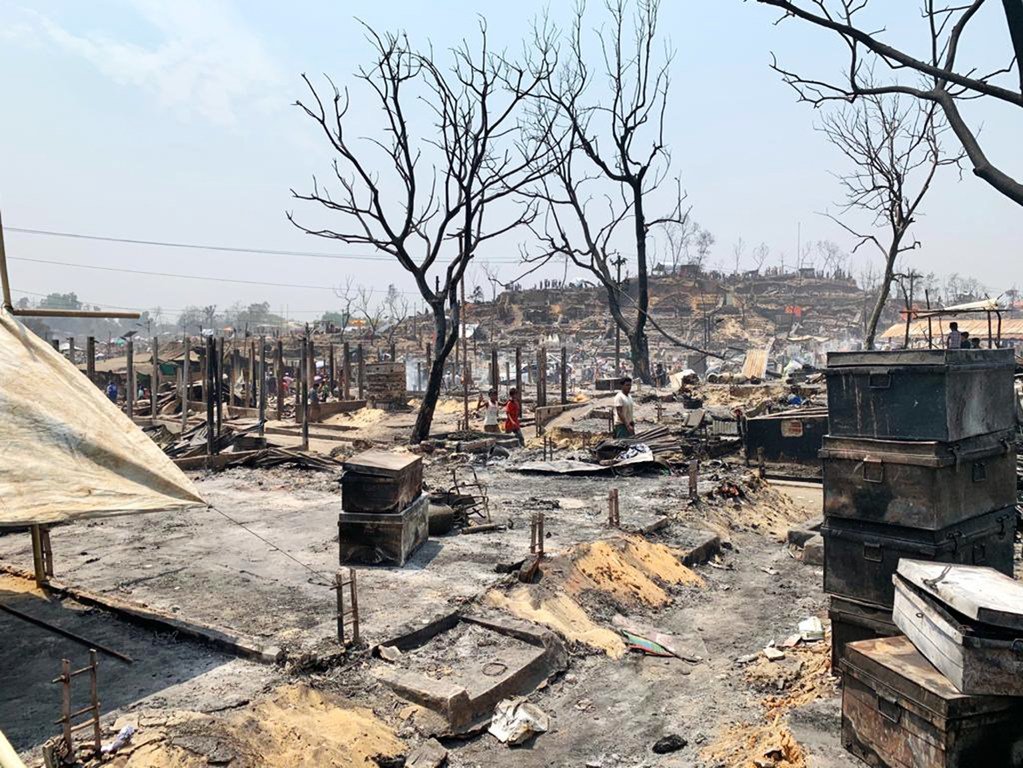
23 March 2021 (UN News)* — United Nations humanitarian personnel are on the ground evacuating and assisting tens of thousands of Rohingya refugees, after a devastating fire tore through their densely populated camp in southern Bangladesh.
UNICEF Bangladesh 2021 | Charred remains of shelters and belongings of Rohingya refugees after a devastating fire tore through the Kutupalong refugee camp on 22 March.
Though exact numbers are yet to be confirmed, initial estimates indicate that more than 87,000 refugees could have been affected in the fire, which started around 3pm on Monday (local time) in Camp 8W of the Kutupalong mega camp.
It is not currently clear exactly how the fire started.
The blaze then rapidly spread to Camps 8E, 9 and 10. In all, about 66 per cent of the four camps’ populations have been impacted, according to the UN International Organization for Migration (IOM).
read more »
Posted in Africa, Asia, Climate Crisis, Latin America & Caribbean, Market Lords, Migrants and Refugees, Mother Earth, Others-USA-Europe-etc., The Peoples, War Lords |
Leave a Comment »
21/03/2021
19 March 2021 (UNEP)* — Globally, over 3 billion people are at risk of disease because the water quality of their rivers, lakes and groundwater is unknown, due to a lack of data.

UNEP / Lisa Murray / 19 Mar 2021
Meanwhile, a fifth of the world’s river basins are experiencing dramatic fluctuations in water availability, and 2.3 billion people are living in countries categorized as “water-stressed,” including 721 million in areas where the water situation is “critical,” according to recent research carried out by the United Nations Environment Programme (UNEP) and partners.
read more »
Posted in Africa, Asia, Climate Crisis, Latin America & Caribbean, Market Lords, Middle East, Migrants and Refugees, Mother Earth, Others-USA-Europe-etc., The Peoples, War Lords |
Leave a Comment »
21/03/2021
The world needs to get water smart. Everyone has a role to play, and we cannot afford to wait.
18 March 2021 (UNICEF)* — Climate change is disrupting weather patterns, leading to extreme weather events, unpredictable water availability, exacerbating water scarcity and contaminating water supplies. Such impacts can drastically affect the quantity and quality of water that children need to survive.
Today, a change in climate is felt primarily through a change in water. Millions of children are at risk.
read more »
Posted in Africa, Asia, Climate Crisis, Latin America & Caribbean, Market Lords, Middle East, Migrants and Refugees, Mother Earth, Others-USA-Europe-etc., The Peoples, War Lords |
Leave a Comment »
21/03/2021
UNICEF launches new initiative, Water Security for All, to mobilize global support and resources to reach children in water vulnerable hotspots
NEW YORK, 18 March 2021 (UNICEF)* – Globally, more than 1.42 billion people, including 450 million children, live in areas of high, or extremely high, water vulnerability, according to a new analysis released by UNICEF.
This means that 1 in 5 children worldwide does not have enough water to meet their everyday needs.
read more »
Posted in Africa, Asia, Climate Crisis, Latin America & Caribbean, Market Lords, Middle East, Migrants and Refugees, Mother Earth, Others-USA-Europe-etc., The Peoples, War Lords |
Leave a Comment »
21/03/2021
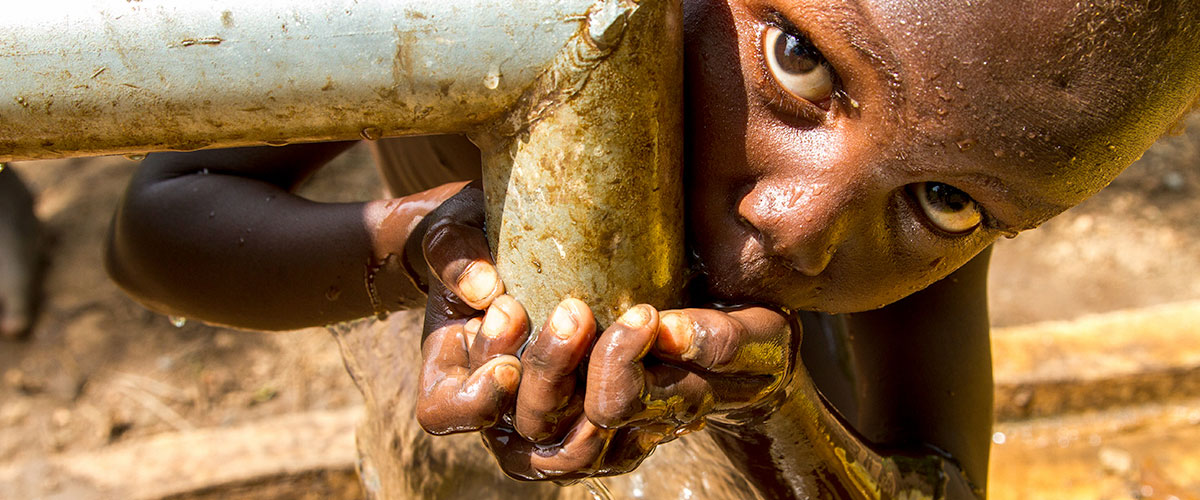
Marakera, an Ethiopian 5-year-old boy, drinks clean piped water. Photo UNICEF Ethiopia/Ayene.
(United Nations)* — Access to water and sanitation is a precondition to life and a declared human right. Water is vitally important to sustainable development – from health and nutrition, to gender equity and economics.
Over the coming years, our water-related challenges will become more urgent.
The increasing demands of a growing population and rapidly developing global economy, combined with the effects of climate change, will exacerbate lack of access to water and sanitation for domestic uses.
read more »
Posted in Africa, Asia, Climate Crisis, Latin America & Caribbean, Market Lords, Middle East, Migrants and Refugees, Mother Earth, Others-USA-Europe-etc., The Peoples, War Lords |
Leave a Comment »
21/03/2021
World Water Day, 22 March 2021
Challenges
Water scarcity will be exacerbated as rapidly growing urban areas place heavy pressure on neighbouring water resources. Climate change and bio-energy demands are also expected to amplify the already complex relationship between world development and water demand.
Posted in Africa, Asia, Climate Crisis, Latin America & Caribbean, Market Lords, Middle East, Migrants and Refugees, Mother Earth, Others-USA-Europe-etc., The Peoples, War Lords |
Leave a Comment »




 HUMAN WRONGS WATCH