24 January 2021 (UN News)* — A young woman scientist in Burkina Faso is researching the role of micro-organisms in fighting desertification in the Sahel Region, as part of a UN programme to restore degraded land in Africa.
30-year-old Barkissa Fofana studies the relationship between acacia trees, and they way they interact with different fungi and bacteria, in the hope that it will help to explain how they resist drought. This kind of research is an important way to build resilience against climate change, and make land in the Sahel green and productive.
.
Ms. Fofana’s work is part of Action Against Desertification (AAD), a programme of the Food and Agriculture Organization (FAO), which has restored over 7,000 hectares in Burkina Faso. You can find out more about her projects, the impact of AAD, and the Great Green Wall initiative, here.
22 January 2021 (WMO)* — Tropical Cyclone Eloise is intensifying and is expected to make landfall at 0300 UTC on 23 January in Mozambique, as the equivalent of a category 2 strength on the Saffir Simpson scale.
With an intensive information campaign the Danes would learn to see themselves as members of a multi-cultural society
Denmark is still better known for H.C. Andersen, The Little Mermaid | Image fromWall Street International.
Bernie Sanders points to Denmark
22 January 2021 | Wall Street International* — Denmark is known as a country where social justice prevails and where everyone has secured a daily life without having to live in worry about tomorrow, even if sickness and unemployment knock on the door. I was born in Denmark, two generations ago, and couldn’t help but feeling a bit proud, when the Democratic candidate for the US presidency, Bernie Sanders, pointed to Denmark as a model to be emulated by the USA. What is it worth to be big and mighty, if it does not contribute to give better living conditions to people, asked Sanders.
Nairobi, 22 January 2021 (UNEP)* – ‘Reset Earth’ is an innovative educational platform for adolescents about the fundamental role of the ozone layer in protecting the planet. The platform launches on World Education Day (January 24th) with an original animation film that explores options for collective positive action. The film’s plot continues in a challenging mobile game for Android and IOS (February 10th). The platform is initiated by United Nations Ozone Secretariat to sustain the protection of the ozone layer through the sensitization and engagement of Gen Z.
New to ozone? Or perhaps you’re familiar and just want to learn more. The Ozone and You section is the place to start.
Ozone-depleting substances (ODSs) like CFCs, HFCs, HCFCs have been widely used throughout the 20th century, mostly for refrigeration, in air conditioners and aerosol sprays. ODSs threaten the earth’s upper atmosphere, drive up temperatures and account for close to 11 per cent of total warming emissions to date.
More than 2,200 asylum seekers and refugees have now been relocated from reception centres on Greek islands and elsewhere in Greece to other European countries.
20 January 2021 (UNHCR)* — Nasro Mohamed was desperate for a fresh beginning when she and her family were flown from Greece to start lives in Germany under a programme organized by the European Union.
The 18-year-old from Somalia landed in Germany on 10 December on a humanitarian flight along with her mother, Hindi Adan, 41, and her brother who suffers a severe form of epilepsy.
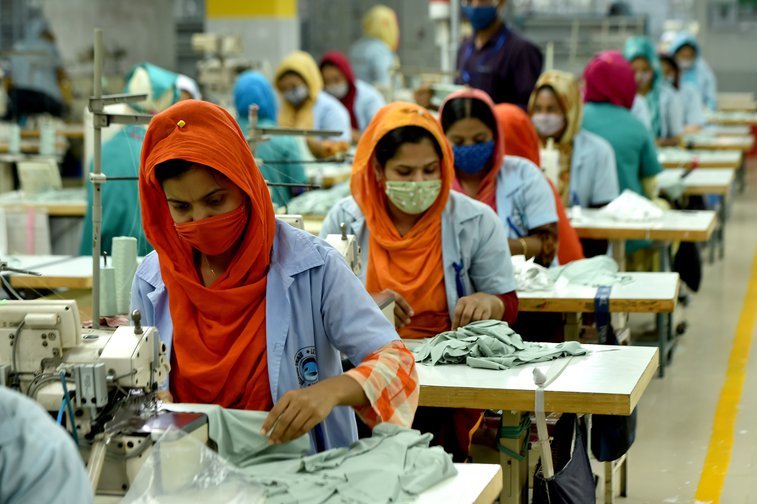
Fashion brands must end exploitation in supply chains and offer fair salaries and working conditions, say industry experts.
Women wearing face masks work at Liz Fashion Industry Limited, a garment manufacturer, in Gazipur on the outskirts of Dhaka, Bangladesh on Jan. 3, 2021 | Salim/Xinhua News Agency/PA Image
18 January 2021 (openDemocracy)* — In 2019 the fashion industry generated $2.5trn in global revenues, making it one of the largest industries in the world. But when COVID-19 struck in 2020, it virtually collapsed.
17 January 2021 (UNEP)* — 2020 was not only the year of the COVID-19 pandemic. It was also the year of intensifying climate change: high temperatures, floods, droughts, storms, wildfires and even locust plagues. Even more worryingly, the world is heading for at least a 3°C temperature rise this century.
.
Image by UNEP / 14 Jan 2021
We need strong action to reduce greenhouse gas emissions to meet the Paris Agreement goals of holding global warming this century to well below 2°C and pursuing 1.5°C. This would limit the impacts of climate change on vulnerable communities and ecosystems.
In August 2010, the secretary-general of the UN Convention on Biological Diversity, Ahmed Djoghlaf, warned that ‘We are losing biodiversity at an unprecedented rate.’ According to the UN Environment Program, ‘the Earth is in the midst of a mass extinction of life’ with scientists estimating that ‘150-200 species of plant, insect, bird and mammal become extinct every 24 hours’ which is nearly 1,000 times the ‘natural’ or ‘background’ rate.
Two months later, at the tenth meeting of the Conference of the Parties to the Convention on Biological Diversity, held from 18 to 29 October 2010, in Nagoya, Aichi Prefecture in Japan, a revised and updated Strategic Plan for Biodiversity, including the Aichi Biodiversity Targets, for the 2011-2020 period was adopted. See ‘Strategic Plan for Biodiversity 2011-2020, including Aichi Biodiversity Targets’.
Nairobi, 14 January 2021 (UNEP)* – As temperatures rise and climate change impacts intensify, nations must urgently step up action to adapt to the new climate reality or face serious costs, damages and losses, a new UN Environment Programme (UNEP) report finds.
Adaptation – reducing countries’ and communities’ vulnerability to climate change by increasing their ability to absorb impacts – is a key pillar of the Paris Agreement on Climate Change. The agreement requires its signatories to implement adaptation measures through national plans, climate information systems, early warning, protective measures and investments in a green future.
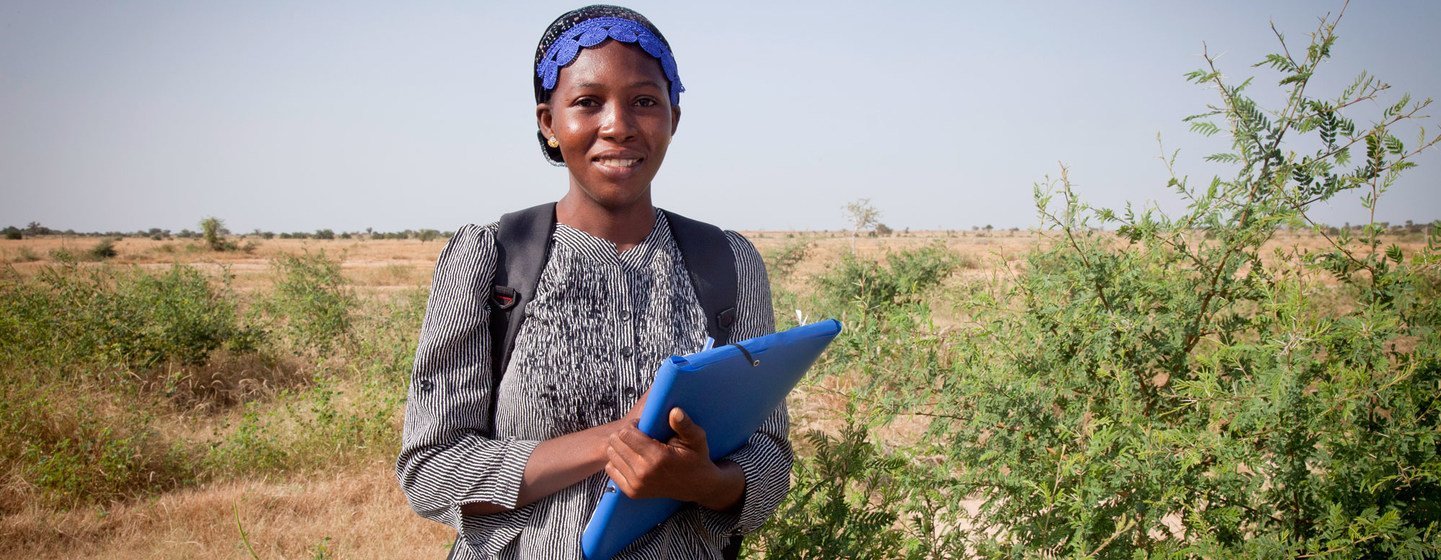 © FAO/Gideon Vink | Barkissa Fofana, a young microbiologist from Burkina Faso, is confident that science can help combat climate change and desertification.





 HUMAN WRONGS WATCH