Geneva, 14 January 2021 (WMO)* – The year 2020 was one of the three warmest on record, and rivalled 2016 for the top spot, according to a consolidation of five leading international datasets by the World Meteorological Organization (WMO). A naturally occurring cooling climate phenomenon, La Niña, put a brake on the heat only at the very end of the year.
2020 was the warmest decade on record, according to the World Meteorological Organization.
All five datasets surveyed by WMO concur that 2011-2020 was the warmest decade on record, in a persistent long-term climate change trend. The warmest six years have all been since 2015, with 2016, 2019 and 2020 being the top three.
The differences in average global temperatures among the three warmest years – 2016, 2019 and 2020 – are indistinguishably small. The average global temperature in 2020 was about 14.9°C, 1.2 (± 0.1) °C above the pre-industrial (1850-1900) level.
(New York) – The Indian government increasingly harassed, detained, and prosecuted activists, journalists, and others critical of the government or its policies, Human Rights Watch o 11 January 2021 said in its World Report 2021.
The Bharatiya Janata Party (BJP)-led government brought politically motivated cases, including under broadly worded sedition and counterterrorism laws, against human rights defenders, student activists, academics, opposition members, and other critics.
Innovative FAO study maps urban-rural catchment areas and points to ways to optimize policy and planning coordination for agriculture, services and agri-food systems
Southern Africa’s rural-urban pattern.
ROME, 12 January 2021 (FAO)* — Fewer than one percent of the global population live in truly remote hinterlands, sharpening the need for better understanding of how urban forms impact food systems as well as social and economic development, according to ground-breaking new research by the Food and Agriculture Organization of the United Nations and the University of Twente.
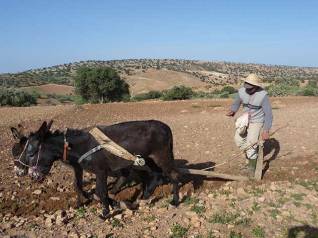
BONN, Jan 11 2021 (IPS)*– Once a year, on 9 August, the International Day of the World’s Indigenous Peoples is commemorated, celebrating their unique culture and knowledge. This is done mostly from a distance, from our homes in (nominally) developed countries. But are we as developed as we pretend to be? On this question, I reflected for a while, still remembering a special and personal experience of having spent several days with an indigenous Berber family in Morocco.
(UN News)* — As Portugal assumes the presidency of the European Union (EU), to be followed by Slovenia later this year, the UN refugee Agency (UNHCR) on Tuesday [12 January 2021] called on them to lead the effort to forge a better protection system for those seeking refuge across the continent and beyond.
Gonzalo Vargas Llosa, UNHCR’s Representative for EU Affairs, also called for reform to be central during negotiations over a new EU Pact on Migration and Asylum, and highlighted the importance of “an EU that saves lives, protects refugees in Europe and globally, and finds solutions to end forced displacement and build resilient societies is needed more than ever”.
12 January 2021 (UN News)* — The UN and humanitarian partners in Afghanistan are seeking $1.3 billion to assist almost 16 million people in need of life-saving assistance as a result of decades of conflict, recurrent natural disasters, and the added impact of the continuing COVID-19 pandemic.
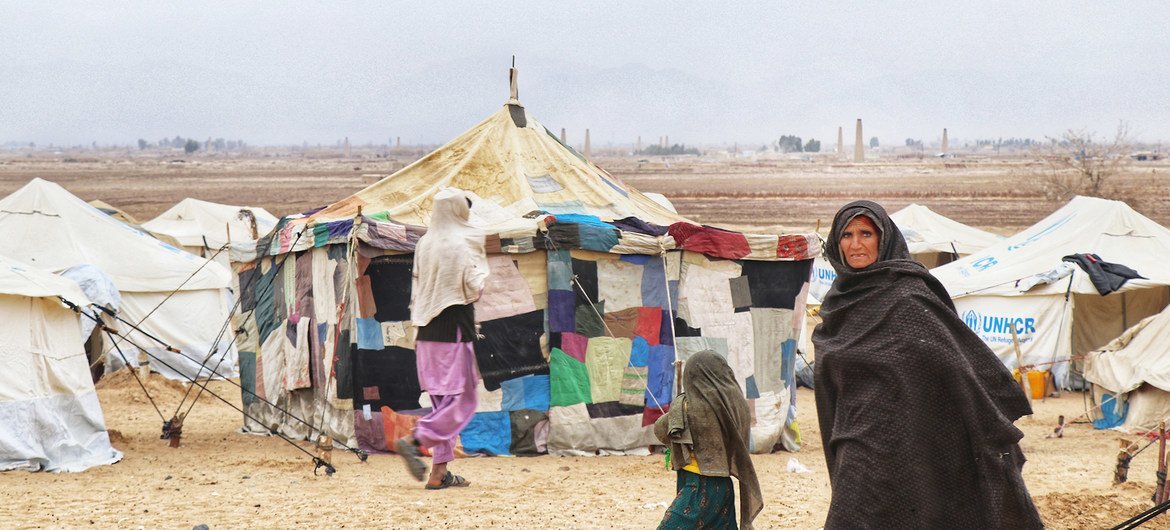
OCHA Afghanistan/Fariba Housaini | A woman walks in front of tents at an internally displaced persons (IDP) site in Kandahar, southern Afghanistan.
The number of people targeted for assistance is over a six-fold increase compared to four years ago, when 2.3 million people were targeted for assistance, according to Stéphane Dujarric, spokesperson for the UN Secretary-General.
The situation of children is particularly worrying.
In 1624, English poet John Donne penned his famous poem ‘No Man Is an Island’, sublimely evoking the realityof human unity: ‘Any man’s death diminishes me, because I am involved in mankind.’ Therefore, he concluded his poem, ‘never send to know for whom the bell tolls; It tolls for thee.’
Robert j. Burrowes
This report does two things.
First, in the hope of generating greater consideration of the human condition and the state of the planet, I have presented in straightforward language and point form, a reasonable summary of the nature and extent of our predicament as well as citing the relevant scientific and/or other evidence that explains each problem in more detail.
11 January 2021 (UNEP)* — More and more people in water-scarce countries rely on desalinated water for drinking, cooking and washing. The process involves removing salt from seawater and filtering it to produce drinking quality water. But the fossil fuels normally used in the energy-intensive desalination process contribute to global warming, and the toxic brine it produces pollutes coastal ecosystems.
Photo by Reuters / 11 Jan 2021
While shifting towards low-carbon energy sources to power desalination plants can help reduce carbon dioxide emissions, the discharge of toxic brine from desalination plants into the ocean is a more challenging problem.
COVID-19 and climate change are two sides of the same coin. To overcome both we must confront their root cause: an economic system that is killing the planet.
Xinhua/SIPA USA/PA Images
7 January 2021 (openDemocracy)* — Last year will be remembered for many things, and let’s be honest: most of them will be bad. But amidst the hardship and suffering, there is a positive story to be told.
2020 was perhaps the first time in living memory when governments around the world took radical action to put the interests of public health and wellbeing above that of private profit. For a world that is so dominated by the logic of capitalism, that’s no small triumph.
10 January 2021 (Wall Street International)* — Paul Hoffman is the former editor of Discover magazine. He tells how in the April 1995 issue, the magazine announced a startling development in the world of science. Respected wildlife biologist Dr. Aprile Pazzo found a news species of mammal he named the Hotheaded Naked Ice Borer. It was a hairless mole-like creature that lived in tunnels under the Antarctic ice shelf. The top of its head was covered with bony plates fed by blood vessels that could turn the plates red-hot.







 HUMAN WRONGS WATCH