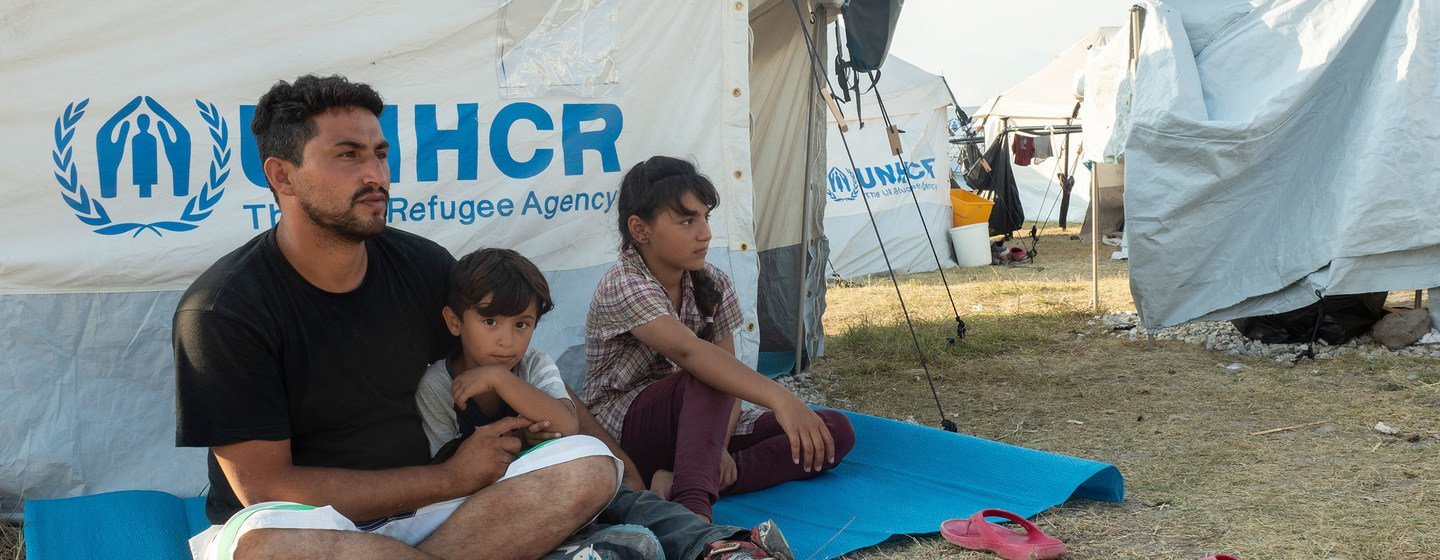
1 January 2021 (UNHCR)* — For most people, 2020 cannot end soon enough. The COVID-19 pandemic has killed nearly 1.8 million people and caused extreme hardship. As the year comes to an end and vaccinations begin, many are hopeful the virus can be contained. But the socioeconomic effects of the pandemic could be felt for years – especially in the world’s least developed countries, where most of the world’s forcibly displaced people live. | Français
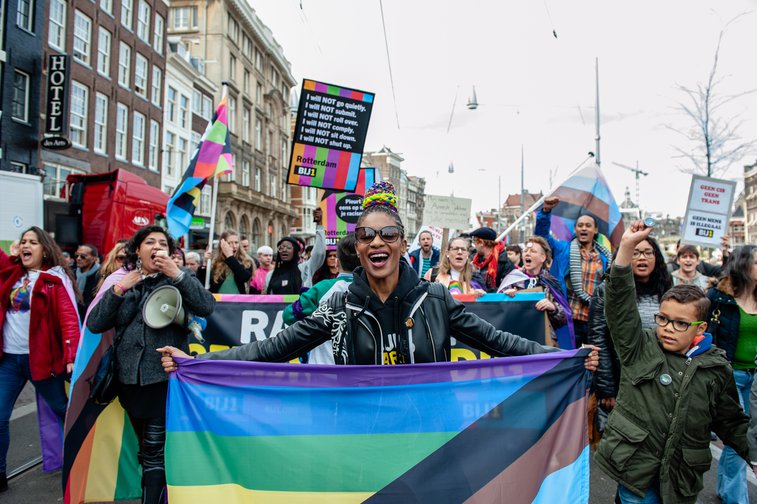
Sylvana Simons’ party will stand in the 2021 Dutch general election. ‘We’re activating people who’ve never felt politicians speaking to them.’ #12DaysofResistance
Sylvana Simons attends a demonstration against racism and discrimination in Amsterdam, Netherlands in March 2019. | SOPA Images/SIPA USA/PA Images.
1 January 2021 (openDemocracy)* — “The Dutch have perfected their facade. They are the definition of ‘facade!’” Sylvana Simons tells me, laughing, on a video call from her home in the Netherlands. “Things look great from the outside. We have told ourselves that we’re tolerant and we’re understanding and we’re progressive, and the rest of the world is so backwards.”
Now is a time to emphasize what we should always do anyway, namely: align across sectors for the common good.
The unbounded idea includes sharing surplus, moving resources from where they are not needed to where they are needed, following the ancient principle Pope Francis is now repeating in one form or another almost every day: our property belongs not only to us but also to those we can help with our surplus.
It is about peace by peaceful means; education, ethics, and practical applications; more than about playing hardball with people who choose to live by a different philosophy.
In this editorial I refer especially to the United States, where the future of democracy now hangs in the balance. Surely similar considerations apply at least to some extent elsewhere.
Recently the University of Chicago historian Kathleen Belew and others have been meticulously documenting how widespread, well-organized, and well-armed anti-democratic movements are.
He goes on to say that that the central ambition of the United Nations for 2021 is to build a global coalition for carbon neutrality – net zero emissions – by 2050.
31 December 2020 (Wall Street International)* — While the Coronavirus has rightly taken much of our attention, a fundamental geopolitical realignment has been taking shape in the world, and it will become clearer in 2021. The realignment is the start of a Second Cold War, which hopefully will not become a ‘hot’ war.
The new Cold War will be between China and the West, but it will be quite different from the one with the Soviet Union. The world has changed significantly since 1989, the year of the fall of the Berlin Wall.
30 December 2020 (UN News)* — Powerful digital tools using artificial intelligence (AI) software are helping in the fight against COVID-19, and have the potential to improve the world in many other ways. However, as AI seeps into more areas of daily life, it’s becoming clear that its misuse can lead to serious harm, leading the UN to call for strong, international regulation of the technology.
.
ITU T | The UN is drawing up international rules governing the use of AI
The phrase “artificial intelligence” can conjure up images of machines that are able to think, and act, just like humans, independent of any oversight from actual, flesh and blood people. Movies versions of AI tend to feature super-intelligent machines attempting to overthrow humanity and conquer the world.
29 December 2020 (UN News)* — In part four of our review of the global impact of COVID-19, UN News considers the new challenges faced by refugees and migrants during 2020; from a heightened risk of catching the COVID-19 virus in crowded camps, to being stranded due to travel restrictions, and becoming the targets of criminal gangs.
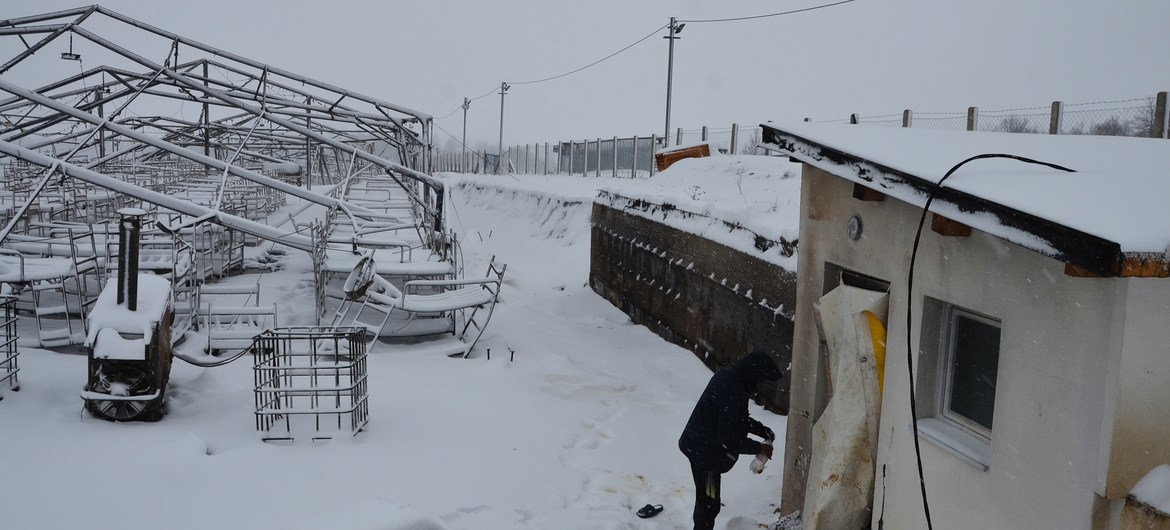
28 December 2020 (UN News)* — United Nations agencies and humanitarian partners have called on authorities in Bosnia and Herzegovina to act urgently to help hundreds of migrants, stranded and without shelter, amid freezing winter temperatures.
IOM 2020/Ervin Causevic | A migrant at what remains of the Lipa Emergency Tent Camp in northern Bosnia and Herzegovina, after it was destroyed in a fire.
Big Oil, King Coal, Big Chemical, Big Tech and Big Pharma are titans of a Deep State cartel that is driving our country down the road to plutocracy and environmental apocalypse. We must unite to fight them — and not each other.
“To greed, all nature is insufficient.” — Seneca
Long before it turned its attention to systematically destroying the planet, the carbon industry set its sights on destroying American democracy and on bulldozing our values.
The term “Deep State” is one of those toxic phrases that highlights and exacerbates the widening chasm between Democrats and Republicans. Ironically, polarization is a key strategic objective for the sinister cabal that the phrase describes.
23 December 2020 (Debates Indigenas | IWGIA)* – After a decade as Chancellor of Evo Morales, David Choquehuanca was the leader chosen by the Pacto de Unidad to represent indigenous, native and peasant peoples in the Movimiento al Socialism’s (MAS) binomial. Following the victory by 55% of the votes, in his speech, the Vice President of the Plurinational State of Bolivia called for reconciliation and dialogue among the Bolivian people. Regarded as a wise Aymara, for his knowledge of the worldview of “Vivir Bien” (Living Well), he called upon the indigenous peoples of Abya Yala, to the complementarity of the Chacha-Warmi and to the Andean solidarity of the Ayni.
Choquehuanca with Morales when he was Minister of External Affairs. Photo: Communidad Andina.





 HUMAN WRONGS WATCH