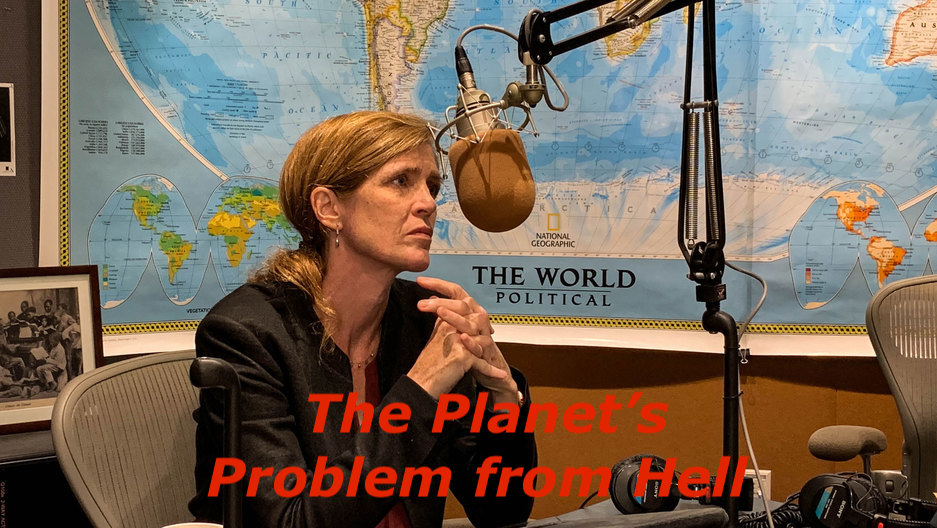
As head of USAID, Power will be in perfect position to wield foreign aid as a cudgel for beating foreign heads of state till they bow to US empire.
.
.
Just when it seemed that Joe Biden’s coming administration couldn’t be more of a horror show, Axios reported that he’s likely to appoint another monster from the deep, violent know-it-all Samantha Power, to head the US Agency for International Development (USAID). I rescheduled my piece on contact tracing’s potential to further empower the surveillance state for next year’s first Black Agenda Report and instead updated my 2015 piece “Samantha Power: Africa’s Problem from Hell.”
Once omitted from biodiversity treaty negotiations, indigenous people now have a say in a landmark global framework expected to be signed by 190 countries
Members of Dominica’s Kalinago community, the largest indigenous group in the Eastern Caribbean, on a tour with government officials at a recent event in the Kalinago Territory. Courtesy: Alison Kentish
UNITED NATIONS, Dec 23 2020 (IPS)* – The picturesque Mahuat River in Dominica is one of 8 communities that make up the Kalinago Territory – a 3,700-acre area on the Caribbean island’s east coast that is home to the Kalinago people, the largest indigenous group in the Eastern Caribbean.
Geneva, 23 December 2020 (ILO)* — In 2020, for the first time in the ILO’s history, an International Labour Standard achieved universal ratification, with acceptance by all 187 Member States. Universal ratification of ILO Convention No. 182 on Worst Forms of Child Labour (1999) means that all children now have legal protection against the worst forms of child labour.
.
The landmark achievement comes at a significant moment, because the United Nations has designated 2021 as the International Year for the Elimination of Child Labour. Vera Paquete-Perdigao answers some key questions on child labour and the Convention.
25 December 2020 (UN News)* — Inequality between the rich and poor worsened during the COVID-19 pandemic and poverty increased, for the first time in decades. In part two of our series on how the virus has changed the world, we look at the ways the pandemic has pushed back efforts to create more equitable societies.
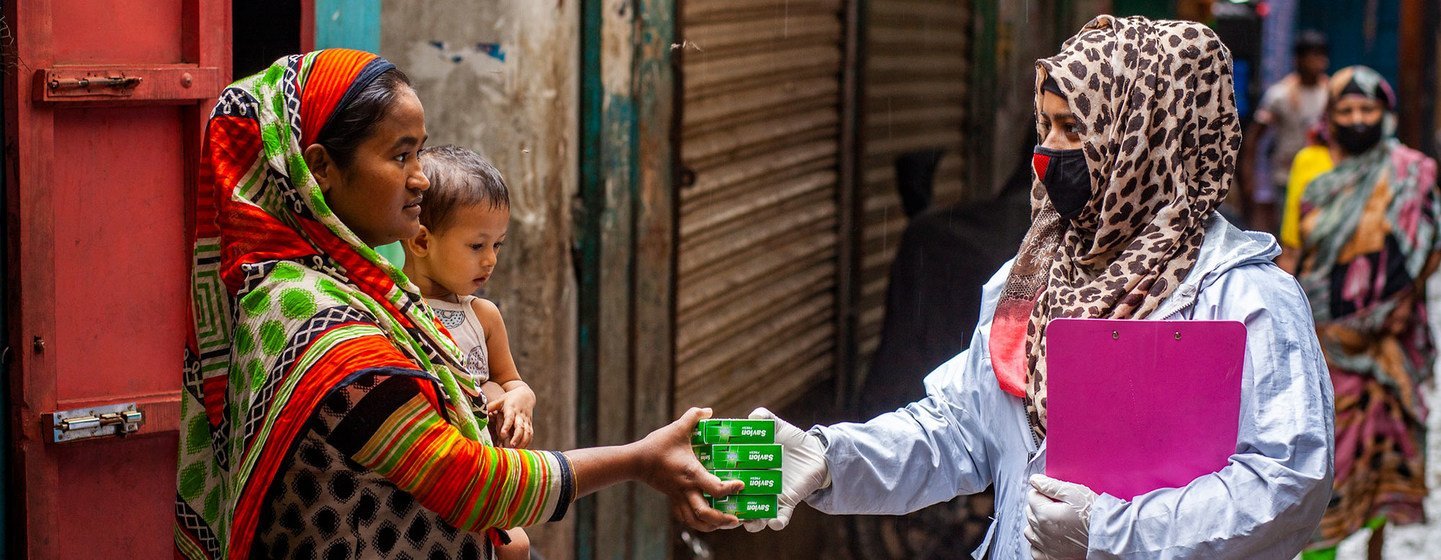
UN Women/Fahad Kaizer | A health worker distributes hygiene supplies to a family in Dhaka, Bangladesh.
Over the past 12 months, COVID-19 has deepened those inequalities, a view highlighted in February, by the UN’s labour-focused agency, ILO, which declared that the two billion people working in the informal sector were particularly exposed.
24 December 2020 (WMO)* — As 2020 draws to an end, it closes the warmest decade (2011-2020) on record, according to the World Meteorological Organization. This year remains on track to be one of the three warmest on record, and may even rival 2016 as the warmest on record. The six warmest years have all been since 2015.
Responses to interview questions from Javad Heiran-Nia on ‘World Order in the Time of COVID-19,’ with emphasis on China & United States, especially as reflected in the restructuring of the world economy.
The underlying issue is whether the Chinese or U.S. approach to global policy and world order will gain the upper hand, and at what costs to humanity. The interview will be published in a forthcoming issue of Age of Reflection, a monthly magazine.
This post adds some observations at the end that do not appear in the interview.
1 – In recent years, and especially with the spread of the Corona virus and the way China and the United States have dealt with this virus, the issue of Chinese and American order has received more and more attention. Do you think it is relevant to talk about Chinese order?
NEW YORK, Dec 22 2020 (IPS)* – The year 2020 is ending with the world caught up in an unprecedented human and economic crisis. The pandemic has contaminated 75 million people and killed 1.7 million. With the lockdowns, the global economy has suffered the worst recession in 75 years, causing the loss of income for millions of people. In such a bleak environment, what will the new year bring? Whilst uncertainty is the only certainty, eight points are likely to be key in the year ahead:
Isabel Ortiz
1. A gradual but uneven recovery With the deployment of vaccines and public support, high-income countries will be on the path to recovery from the second half of 2021.
However, middle income and particularly low income countries in Africa, Asia and Latin America will see recovery delayed – unless the UN or China provide them with sufficient COVID19 vaccines and governments escalate public support.
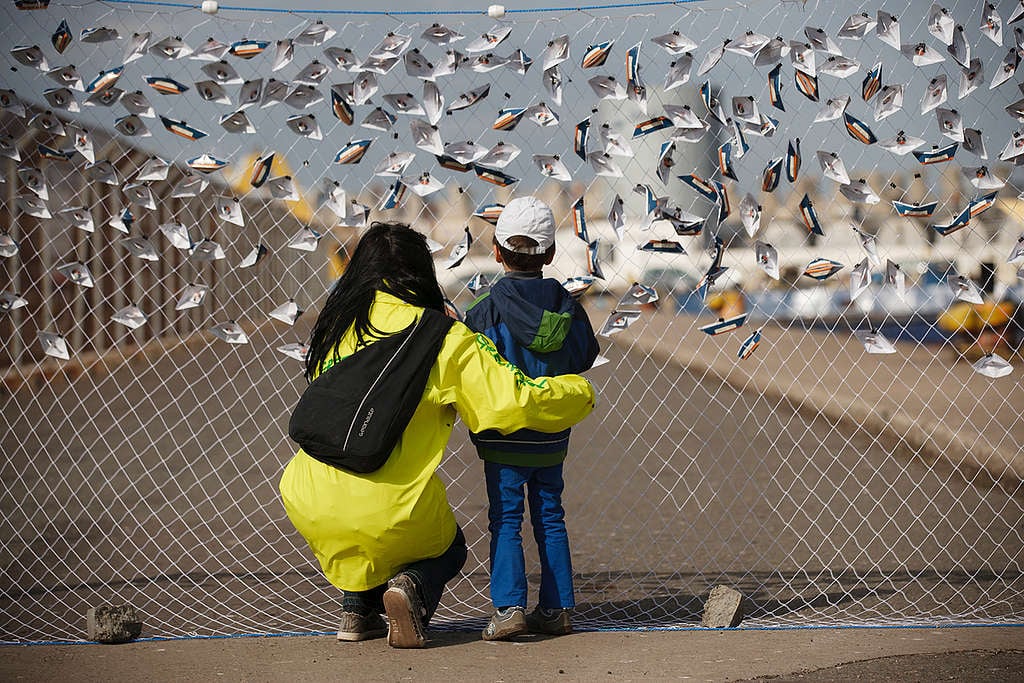
(IOM)* — Faced with the lack of options for safe and legal migration opportunities, thousands of Ethiopians leave the country every year using irregular channels to reach destinations in Northern Africa and Europe, the Gulf States and Southern Africa. These journeys are often risky, with thousands of Ethiopians believed to have died or gone missing, whether due to violence, vehicle accidents, shipwrecks or lack of access to medicine, shelter and food along the way.
As everyone knows, Adam Smith invented the theory that individual self-interest is, and ought to be, the main motivating force of human economic activity, and that this, in effect, serves the wider social interest. He put forward a detailed description of this concept in an immense book, “The Wealth of Nations” (1776).
Adam Smith (1723-1790) had been Professor of Logic at the University of Glasgow, but in 1764 he withdrew from his position at the university to become the tutor of the young Duke of Buccleuch.
In those days a Grand Tour of Europe was considered to be an important part of the education of a young nobleman, and Smith accompanied Buccleuch to the Continent. To while away the occasional dull intervals of the tour, Adam Smith began to write an enormous book on economics which he finally completed twelve years later.
 .
.




 HUMAN WRONGS WATCH
