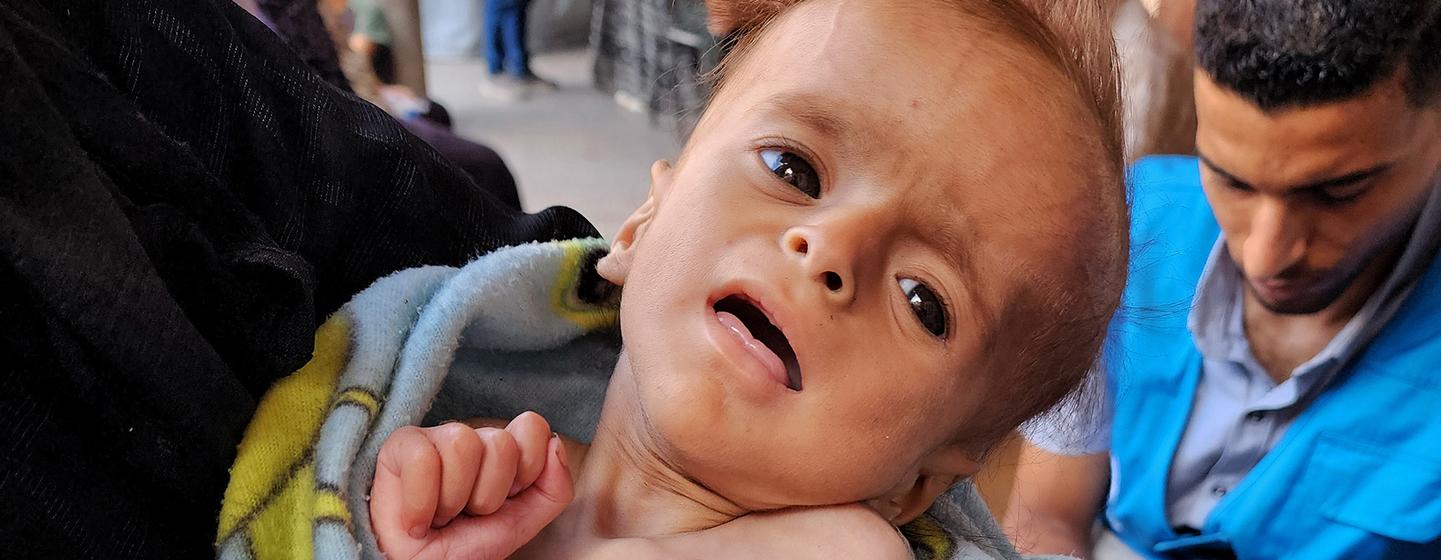
(UN News)* — The ongoing 21-month-long war in Gaza has seen more than 58,000 killed and 100,000 wounded as Israeli attacks continue amid rising numbers of child deaths from malnutrition.
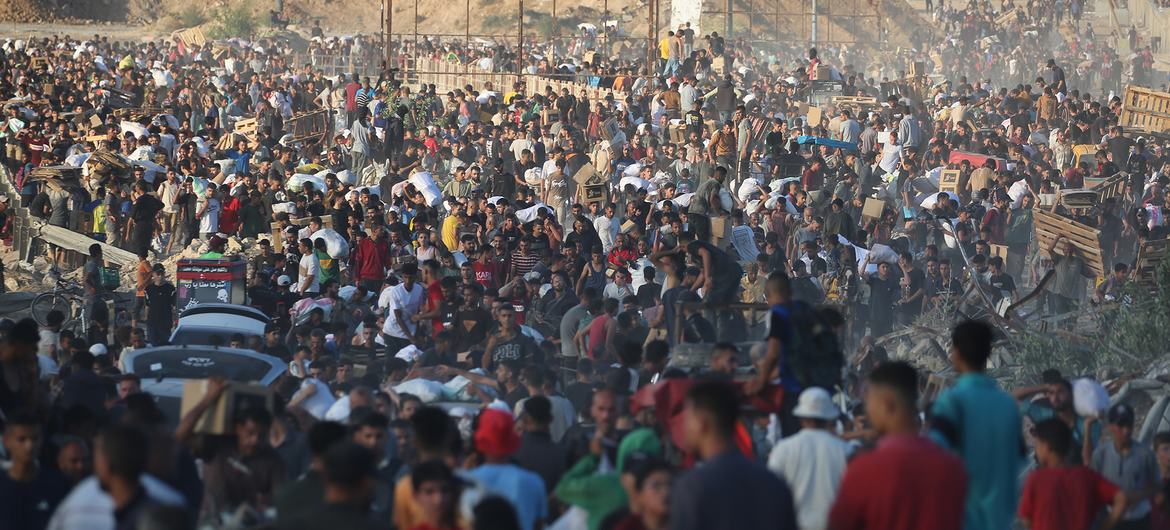
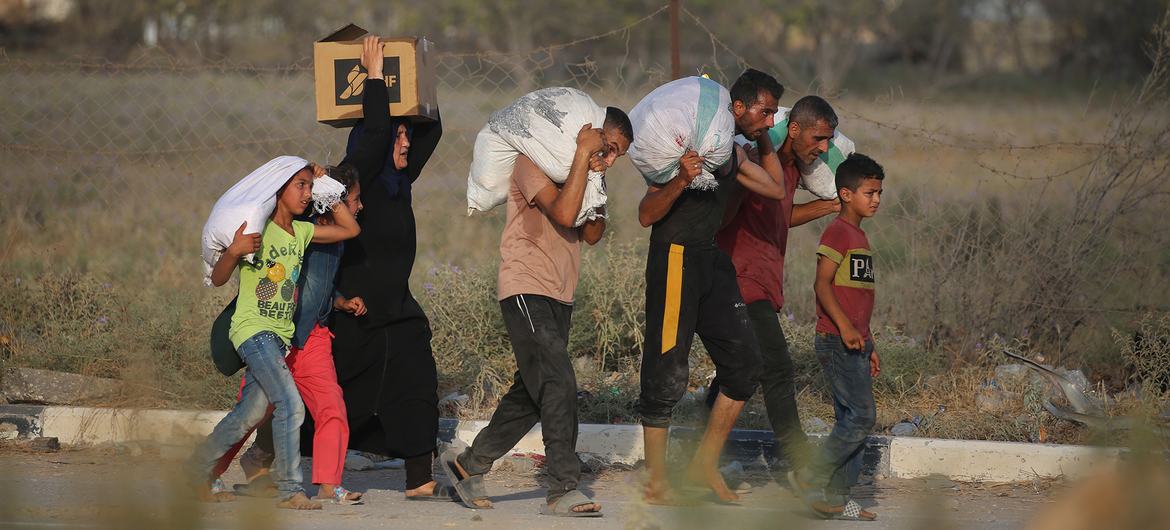
In recent weeks, UN agencies have recorded nearly 900 deaths of desperate and hungry Gazans as they try to collect food – with most linked to private aid hubs run by the so-called Gaza Humanitarian Foundation (GHF).
In January this year, a nuclear trafficking case made the international news headlines. The United States Department of Justice announced that Takeshi Ebisawa, an alleged Japanese gangster, had pleaded guilty to charges of major narcotics trafficking as well as conspiring to traffic nuclear materials.
World’s nuclear arsenals being enlarged and upgraded
(Stockholm) The Stockholm International Peace Research Institute (SIPRI) on 16 June 2025 launched its annual assessment of the state of armaments, disarmament and international security.
SIPRI Yearbook 2025. Photo: SIPRI.
Key findings of SIPRI Yearbook 2025 are that a dangerous new nuclear arms race is emerging at a time when arms control regimes are severely weakened.
Nearly all of the nine nuclear-armed states—the United States, Russia, the United Kingdom, France, China, India, Pakistan, the Democratic People’s Republic of Korea (North Korea) and Israel—continued intensive nuclear modernization programmes in 2024, upgrading existing weapons and adding newer versions.
Palestinian communities are being displaced and dispersed across the occupied West Bank as settler violence, backed by Israeli authorities, forces families from their land. One community has just been emptied. Others may soon follow.
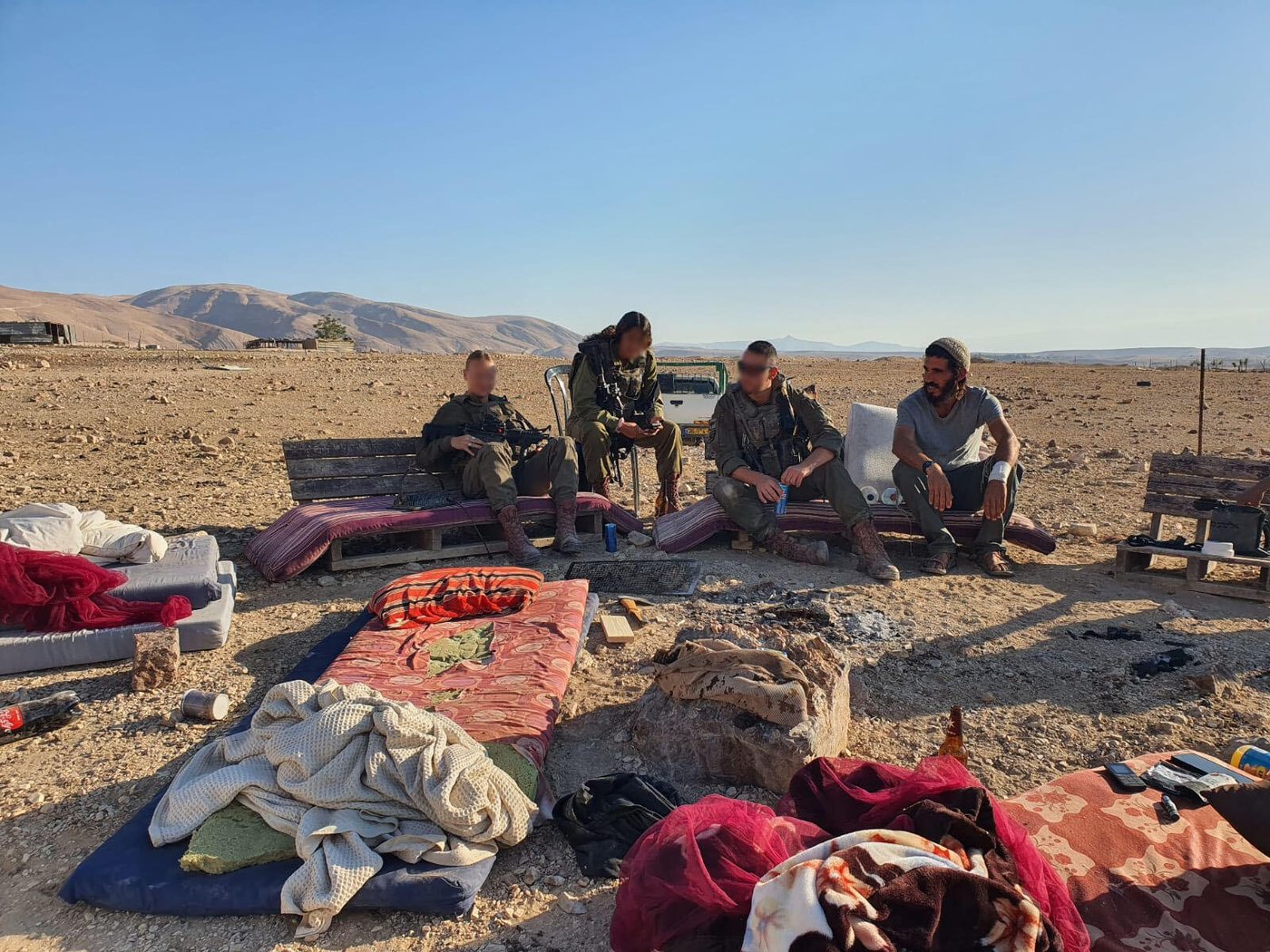
Israeli forces sit with sanctioned settler Zohar Sabah (far right) in Muarrajat East. Photo: Aliya Mlihat
The Norwegian Refugee Council (NRC) warns that the recent uprooting of families from Muarrajat East could soon be repeated in Ras Ein al-Auja, where sustained settler attacks and mounting restrictions on water and grazing access are making it nearly impossible for families to remain.
(UN News)* — The fuel crisis in Gaza has reached a breaking point, threatening to bring all humanitarian operations to a halt and endangering the lives of everyone reliant on aid inside the enclave, UN agencies warned in a powerful joint statement on Saturday [].
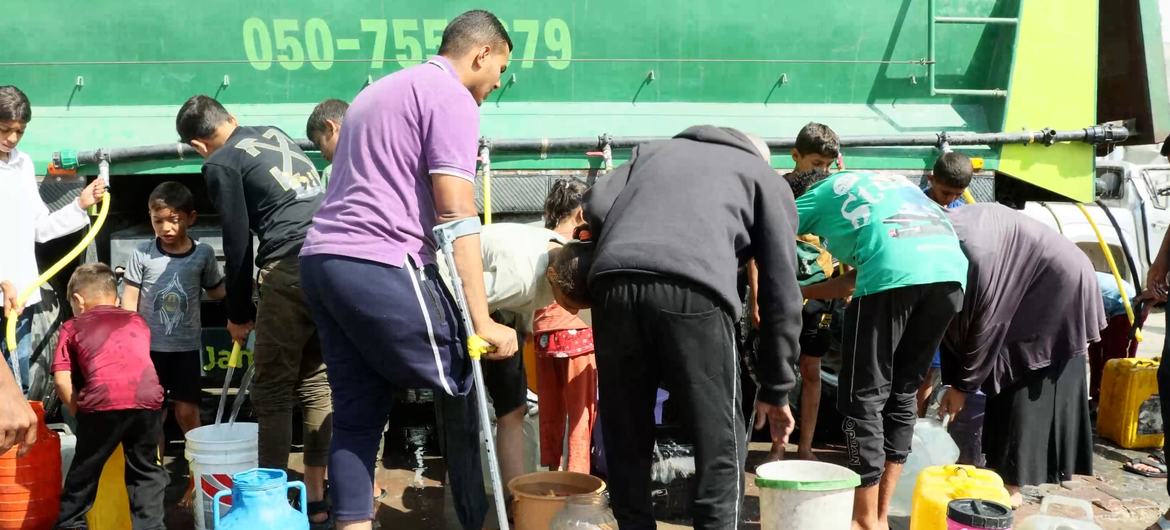
UN News | People gather to fill containers with clean water from a UNDP distribution truck in Gaza. Fuel supplies are now critically low, threatening to shut down all aid operations.
“Fuel is the backbone of survival in Gaza,” said the statement. “Without fuel, these lifelines will vanish for 2.1 million people.”
UN humanitarian workers stressed that fuel powers everything from hospitals and water systems to bakeries and ambulances.
Without a steady supply, “maternity, neonatal and intensive care units are failing, and ambulances can no longer move.”
(UN News)* —Top UN human rights officials have voiced serious concern over the imposition of sanctions by the United States targeting Francesca Albanese, a UN-appointed independent expert on the Occupied Palestinian Territory.
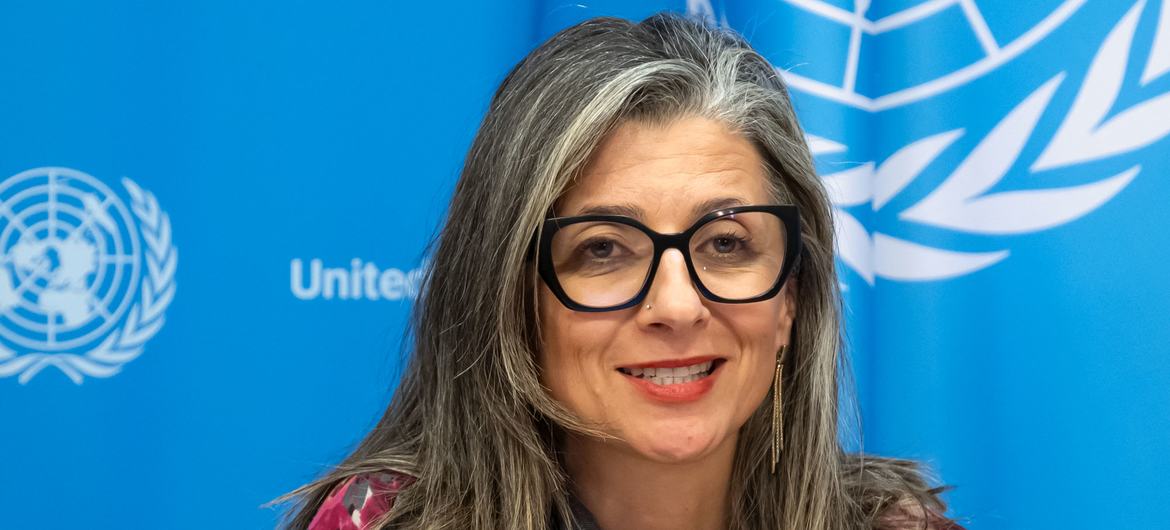
UN Photo/Mark Garten | Francesca Albanese, Special Rapporteur on the situation of human rights in the Palestinian Territory occupied since 1967.
They’re calling for the decision to be reversed, warning it could undermine the wider international human rights system.
The sanctions were announced by US Secretary of State Marco Rubio on Wednesday under a Presidential Executive Order.
Mr. Rubio alleged that Ms. Albanese had “directly engaged with the International Criminal Court (ICC) in efforts to investigate, arrest, detain, or prosecute nationals of the United States or Israel, without the consent of those two countries,” which he called a “gross infringement” on national sovereignty.
The US and Israel are not parties to the Rome Statute, the international treaty that established the ICC.
On July 9, the US government imposed sanctions on UN Human Rights Council-appointed Special Rapporteur on the situation of human rights in the Palestinian Territory occupied since 1967 Francesca Albanese under an executive order issued by President Donald Trump in February 2025.
In response, the following quote can be attributed to Liz Evenson, international justice director at Human Rights Watch:
“The US government’s decision to sanction Albanese for seeking justice through the International Criminal Court is actually all about silencing a UN expert for doing her job, speaking truth about Israeli violations against Palestinians and calling on governments and corporations not to be complicit…
(UN News)* — Following the deaths of several children in an Israeli strike on Palestinians waiting in line for nutritional supplements in central Gaza on Thursday , UN humanitarian officials have once again condemned the killings of people at aid distribution sites in the enclave.
UN Human Rights Office (OHCHR) spokesperson Ravina Shamdasani told reporters in Geneva on Friday that “we’ve raised concerns about atrocity crimes having been committed andthe risk of further atrocity crimes, where people are lining up for essential supplies such as food and medicine and where they are being attacked, where again… they have a choice between being shot or being fed”.
(UN News)* —The head of the UN Children’s Fund (UNICEF) has voiced deep dismay over the “unconscionable” killing of children during an aid distribution in the central Gaza Strip on Thursday .
Catherine Russell said she was appalled by the reported killing of 15 Palestinians, including nine children and four women, who were waiting in line for nutritional supplements provided by Project Hope, a UNICEF partner organization.
(UN News)* — As scores of people – including medical staff and their families – have reportedly been killed in the past week, UN health partners in Gaza continue to provide emergency care despite very limited resources.
Across the Gaza Strip, as people desperately search for food, mass casualty incidents are reported almost daily, UN Spokesperson Stéphane Dujarric, told reporters at his regular briefing in New York.
Hospitals, already under immense strain, are struggling to cope and lack of essential supplies – including fuel and medicines – is placing even greater pressure on overstretched teams.



 HUMAN WRONGS WATCH
In January this year, a nuclear trafficking case made the international news headlines. The United States Department of Justice announced that Takeshi Ebisawa, an alleged Japanese gangster, had pleaded guilty to charges of major narcotics trafficking as well as conspiring to traffic nuclear materials.