Human Wrongs Watch
(UN News)* — The UN Secretary General on Friday [] warned a high-level meeting in New York focused on ridding the world of nuclear weapons that the threat is only “accelerating and evolving”.

Tweet URL
read more »
'Unseen' News and Views
(UN News)* — The UN Secretary General on Friday [] warned a high-level meeting in New York focused on ridding the world of nuclear weapons that the threat is only “accelerating and evolving”.

(UN News)* — Artificial intelligence holds vast potential but poses grave risks if left unregulated, UN Secretary-General António Guterres told the Security Council on Wednesday [24 September 2025].

“The question is not whether AI will influence international peace and security, but how we will shape that influence.”
(UN News)* — The explosive growth of AI tools around the world has yet to be matched by effective, internationally agreed rules on how this powerful technology is governed.
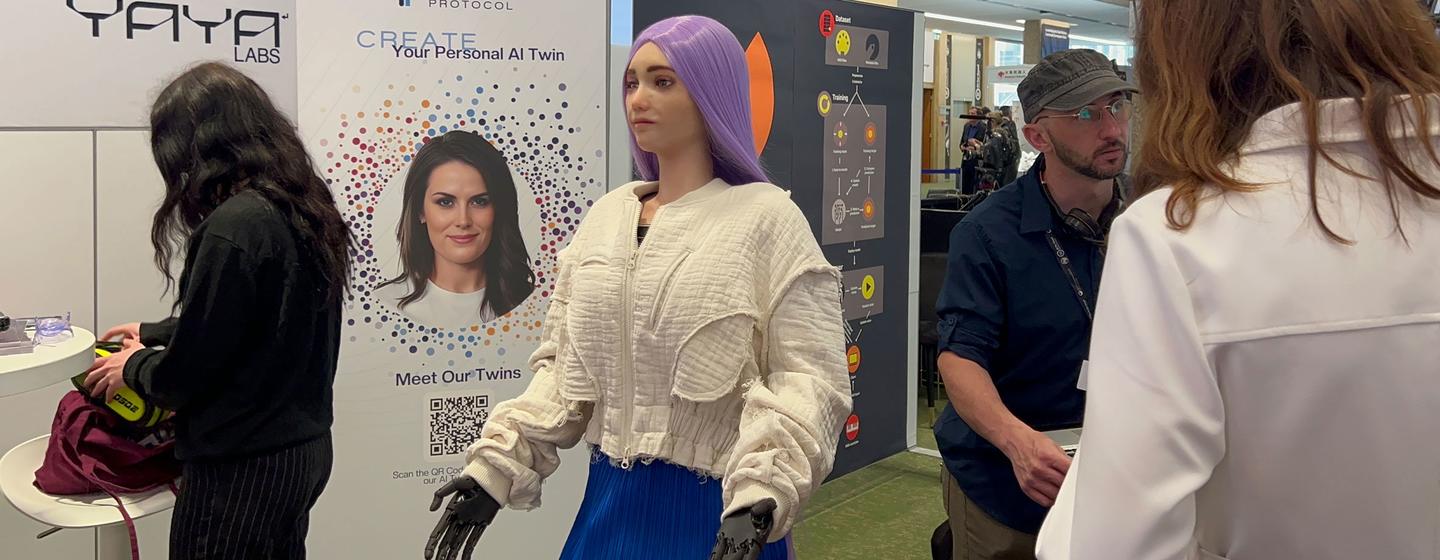
 Image from OXFAM International.
For example, Tesla, the firm owned by the world’s richest man, Elon Musk, made $5.63bn from Electric Vehicles (EVs) sales in 2024.
For each EV, the company earned profits of $3,145 – 321 times more than the entire Democratic Republic of Congo (DRC) got for supplying the 3Kg of cobalt in each car.
(UN News)* — Foreign Ministers from across the Americas met on the margins of the UN General Assembly on Tuesday [] to rally for greater support for Haiti.
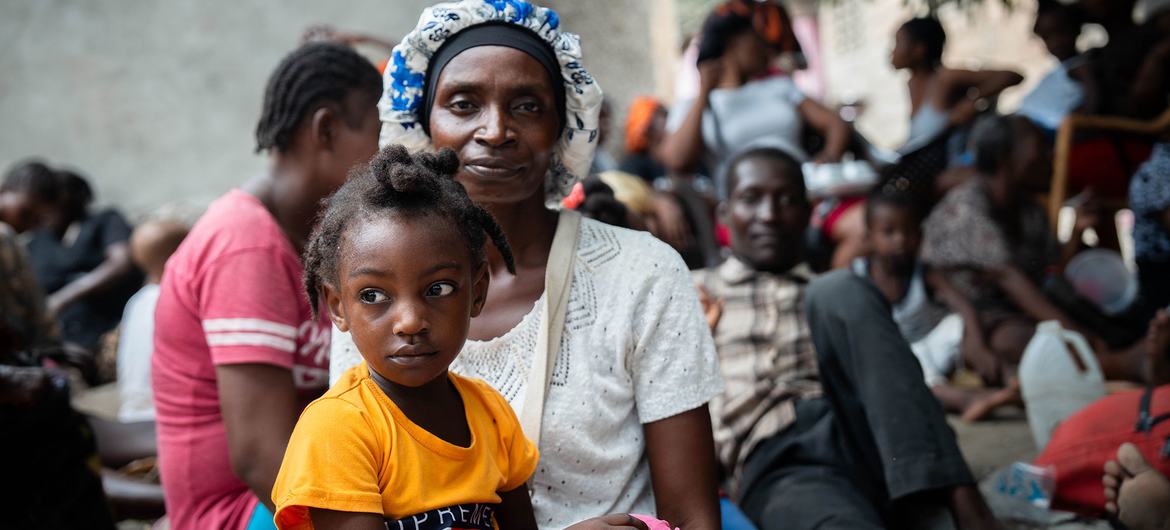
The Caribbean country remains in the grip of a deepening multidimensional crisis affecting the political, security, human rights and humanitarian spheres, with implications for the region.
Armed gangs control large swathes of the territory, more than six million people are in urgent need of assistance, and 1.4 million have fled their homes, mainly women and children.
Killings and abductions are rampant, while cases of sexual and gender-based violence have significantly increased.
– US President Trump’s snide barbs against his appointee, US Federal Reserve Bank Chairman Jerome Powell, have revived support for central bank independence – long abused by powerful finance interests against growth and equity.

Jomo Kwame Sundaram
Independent central banks are supposed to improve the quality, equity, and growth impact of monetary policy.
Instead, they have primarily served powerful financial interests, with contractionary and regressive effects leading to slower, unequal growth.
Independent of whom?
Central banks were established to determine monetary policy to shape financial conditions to achieve national economic objectives.
In recent decades, the new conventional policy wisdom has been that independent central banks should set monetary policy. Thus, they have been influenced by powerful financial interests, typically foreign, in smaller, open developing countries.
Zarni tells it like it is.
11 Sep 2025 – Kirk, Charlie Kirk is DEAD. By that single “BEAUTIFUL” shot, as his Patron Donald Paedo Trump Jr is wont to say (ala BIG and Beautiful Bill).
Obviously, it must have been a Big and Beautiful Bullet. The shot was too neat and professional, needing no follow-up, that in turn, rules out any “woke” or Left or Marxist or Muslims or LGBTQs.
22 September 2025 — Deep in the forest in Venezuela’s Bolivar state, residents live in fear of horrific violence at the hands of armed groups involved in the illicit gold trade.

During a 2020 investigation, a 17-year-old boy told Human Rights Watch how he witnessed members of a Venezuelan armed group amputating both hands of a miner they accused of stealing gold. Summary executions and forced child labor by armed groups is still happening today.

Credit: Leonardo Fernandez Viloria/Reuters via Gallo Images
People who risked everything to escape persecution, often because they helped US forces, now find themselves treated as unwanted cargo under the Trump administration’s anti-migration policy.
Trump’s expanded deportation programme targets an estimated 10 million foreign-born people who live in the USA but lack proper legal documentation.
 .
. HUMAN WRONGS WATCH