This report, based on interviews with survivors and experts, and a survey, documents the spread and impact in South Korea of what are referred to there as “digital sex crimes.”
Digital sex crimes are crimes involving non-consensual intimate images.
These crimes are a form of gender-based violence, using digital images that are captured non-consensually and sometimes shared, captured with consent but shared non-consensually, or sometimes faked.
(Stockholm) — The Stockholm International Peace Research Institute (SIPRI) on 14 June 2021 launches the findings of SIPRI Yearbook 2021, which assesses the current state of armaments, disarmament and international security. A key finding is that despite an overall decrease in the number of nuclear warheads in 2020, more have been deployed with operational forces.
I would like to announce the publication of a book, which discusses the reasons why the institution of war continues to threaten human civilization and the biosphere, and the steps that might be taken to rid the world of war.
The book may be downloaded and circulated free of charge from the following link:
20 June 2021 (UN News)* — The negative environmental impact of cryptocurrencies such as Bitcoin has been widely covered in the press in recent weeks and months, and their volatility has also been flagged as a cause for concern.
Unsplash/André François McKenz | Bitcoin is a decentralized digital currency that you can buy, sell and exchange directly, without an intermediary like a bank.
Nevertheless, the UN believes that blockchain, the technology lying behind these online currencies, could be of great benefit to those fighting the climate crisis, and help bring about a more sustainable global economy.
Canada incarcerates thousands of people, including those with disabilities, on immigration-related grounds every year in often abusive conditions, Human Rights Watch and Amnesty International on 17 June 2021 said in a joint report ahead of World Refugee Day on June 20.
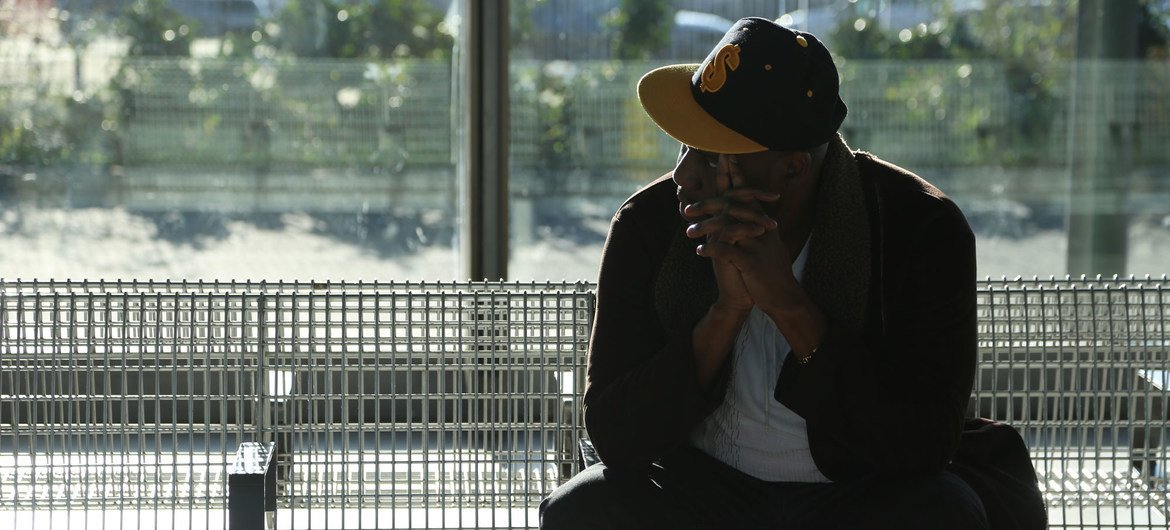
22 June 2021 (UN News)* — Millions of stateless people around the world could miss out on COVID-19 vaccinations because they lack identity papers and are essentially “invisible to the authorities”.
(UNEP)* — 18 June is Sustainable Gastronomy Day, an international celebration of local cuisine that is produced in ways that are both environmentally friendly and minimize waste. That last part is becoming increasingly important.
A recent report from the United Nations Environment Programme (UNEP) found the world is in the grip of an epidemic of food wastage. In 2019, consumers tossed away nearly a billion tonnes of food, or 17 per cent of all the fare they bought.
20 June 2021 (UNEP)* — Industrialized farming has been a reliable way to produce lots of food at a relatively low cost. But it’s not the bargain it was once believed to be. Unsustainable agriculture can pollute water, air and soil; is a source of greenhouse gases, and destroys wildlife.
By Phumzile Mlambo-Ngcuka, Executive Director of UN Women*
Phumzile Mlambo-Ngcuka
The COVID-19 pandemic has strained health systems, widened socio-economic gaps, and shifted strategic, political, and funding priorities, all of which disproportionately affect women and girls, particularly those who are most marginalized.
The doubled risk of death for men from COVID-19 has not only created more widows; the pandemic has in many cases magnified the impact of the challenges they face, for example when confronted by extreme poverty from being disinherited from land and property with no alternative source of support.
22 June 2021 (United Nations)* — For many widows, losing their husband also means losing identity, land rights, property, income, and possibly their children. Their physical safety is at greater risk, just when they may be suffering serious emotional trauma.
Martha Alicia Benavente, from Tucurú, a small municipality in Guatemala, is a mother of four children whom she raised alone after her husband passed away. She trained for six months to become a solar engineer, and she is bursting with energy. She can’t wait to start building solar lamps so that her community can have sustainable energy at last. Photo: UN Women/Ryan Brown








 HUMAN WRONGS WATCH