14/06/2021

Left: A market vendor sells produce at Victoria Market in Port Victoria, Seychelles. Right: 64 years old, Christine Banlog, has been a market woman for 22 years. She is widowed, and raising her three grandchildren in Nyalla, Cameroon. PHOTO:UN Women/Ryan Brown
.
(United Nations)* — Although all age groups are at risk of contracting
COVID-19, older persons are at a significantly higher risk of mortality and severe disease following infection, with those over 80 years old dying at five times the average rate.
.
An estimated 66% of people aged 70 and over have at least one underlying condition, placing them at increased risk of severe impact from COVID-19.
Posted in Africa, Asia, Latin America & Caribbean, Market Lords, Middle East, Migrants and Refugees, Others-USA-Europe-etc., The Peoples, War Lords |
Leave a Comment »
14/06/2021
Children around the world are being poisoned by lead on a massive and previously unrecognized scale.
.

UNICEF/UNI118470/Noorani
Lead is a highly poisonous element that is responsible for nearly 1.5 per cent of annual global deaths – almost as many deaths as from HIV and AIDS, and more than from malaria.
Nearly a third of the world’s children – up to 800 million children – are affected by lead poisoning.
read more »
Posted in Africa, Asia, Latin America & Caribbean, Market Lords, Middle East, Migrants and Refugees, Mother Earth, Others-USA-Europe-etc., The Peoples |
Leave a Comment »
14/06/2021
(FAO)* — Cotton is one of the most common fabrics in the world, from its origins in ancient India to the modern garments many of us wear today. This durable, versatile and naturally organic fabric is made from the white, fluffy fibres around the seeds of cotton plants.
Cotton is one of the most popular fabrics around the world, but, in some countries, child labour is common in its production. ©FAO/Swiatoslaw Wojtkowiak
However, the backstory of cotton is more complicated. Its production is heavily dependent on natural resources and labour; and unfortunately, child labour is often a part of this.
read more »
Posted in Africa, Asia, Latin America & Caribbean, Market Lords, Middle East, Migrants and Refugees, Mother Earth, Others-USA-Europe-etc., The Peoples, War Lords |
Leave a Comment »
14/06/2021
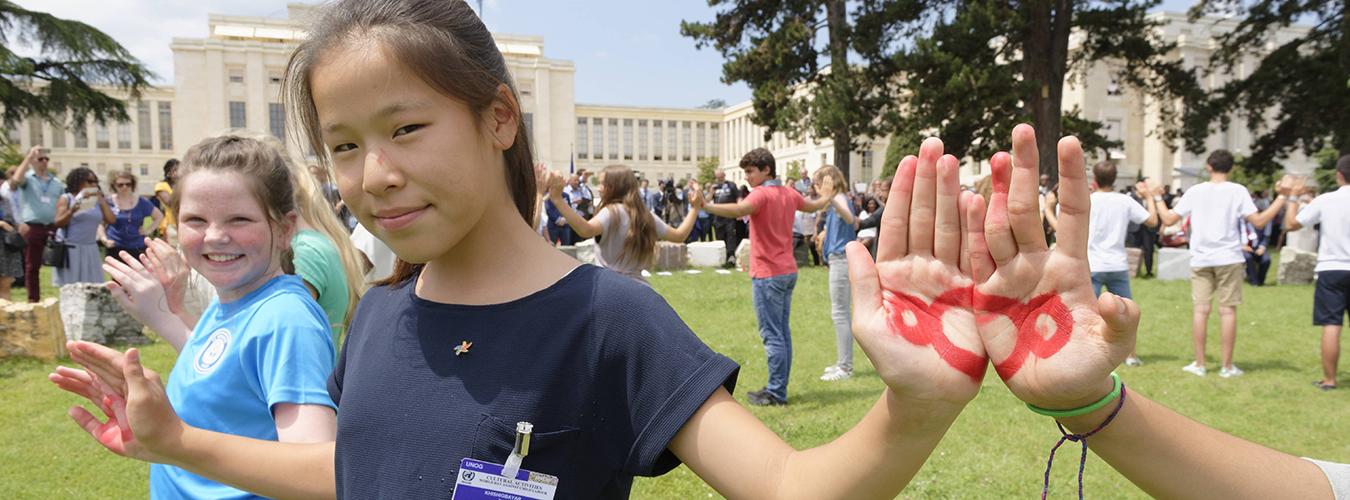
Children from Collège du Léman and the International School of Geneva performed on the World Day Against Child Labour event (12.06.2017) at 106th Session of the International Labour Conference.
PHOTO:© Crozet / Pouteau
Posted in Africa, Asia, Latin America & Caribbean, Market Lords, Middle East, Migrants and Refugees, Others-USA-Europe-etc., The Peoples |
Leave a Comment »
14/06/2021
The International Labour Organization and UNICEF warn nine million additional children at risk as a result of COVID-19 pandemic.
Posted in Africa, Asia, Latin America & Caribbean, Market Lords, Middle East, Migrants and Refugees, Mother Earth, Others-USA-Europe-etc., The Peoples, War Lords |
Leave a Comment »
11/06/2021
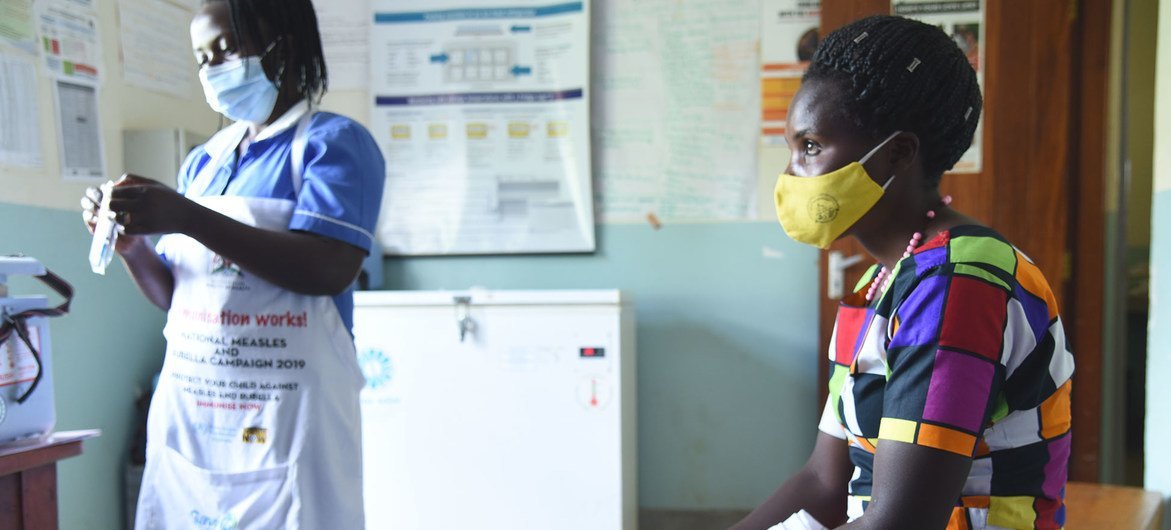
(UN News)* — Nine in 10 African nations look set to miss the September target of vaccinating 10 per cent of their populations against COVID-19, the World Health Organization (WHO), on 10 June 2021 said.
© UNICEF/Catherine Ntabadde | A nurse prepares to administer a COVID-19 vaccination to a patient at a health centre in Kabale, Uganda.
At 32 million doses, Africa accounts for less than one per cent of the more than 2.1 billion doses administered globally.
Just two per cent of the continent’s nearly 1.3 billion people have received one dose, and only 9.4 million Africans are fully vaccinated.
Posted in Africa, Asia, Latin America & Caribbean, Market Lords, Middle East, Others-USA-Europe-etc., The Peoples, War Lords |
Leave a Comment »
11/06/2021
$72.6 billion is how much nine nuclear armed countries spent on their nuclear weapons as the pandemic spread in 2020 and a global treaty banning nuclear weapons took full effect.

The report “Complicit: 2020 Global Nuclear Weapons Spending” details the spending of these nine countries on their arsenals, the companies that profited, and the lobbyists hired to keep nuclear weapons in business.
This amounts to $137,666 every minute, and (after adjusting for inflation) represents an increase of $1.4 billion from last year.
The U.S. spent three times more than the next in line- a whopping $37.4 billion.
China was the only other country crossing the ten billion mark, spending $10.1 billion.
Russia had the third highest spending at $8 billion, though the U.K.’s $6.2 billion and the French $5.7 billion weren’t so far behind.
India, Israel, Pakistan also each spent over a billion on their arsenals, while North Korea spent $667 million.
read more »
Posted in Africa, Asia, Latin America & Caribbean, Market Lords, Middle East, Migrants and Refugees, Mother Earth, Others-USA-Europe-etc., The Peoples, War Lords |
Leave a Comment »
08/06/2021

Magnificent sea anemone with its vivid red underside presents its guest, a resident pink skunk anemonefish. Ngemelis Region, Palau, South Pacific. This photo was one of the winners in the UN Oceans Day Photo Contest. PHOTO:Michael Gallagher
The ocean produces at least 50% of the planet’s oxygen, it is home to most of earth’s biodiversity, and is the main source of protein for more than a billion people around the world.
Not to mention, the ocean is key to our economy with an estimated 40 million people being employed by ocean-based industries by 2030.
read more »
Posted in Africa, Asia, Climate Crisis, Latin America & Caribbean, Market Lords, Middle East, Migrants and Refugees, Mother Earth, Others-USA-Europe-etc., The Peoples |
Leave a Comment »
08/06/2021
Ahead of G7, coalition of luminaries says “new relationship with the planet” and “transformational action this decade” absolutely necessary.

Students demonstrate holding signs reading “There is no Planet B” during the Fridays for Future climate strikes in May 2019. (Photo: Kay Nietfeld/picture alliance via Getty Images)
A group of 126 Nobel laureates and other experts today called on the leaders of the G7 nations and the United Nations secretary-general to help put the global community on a path to establishing “a new relationship with the planet,” as the world continues to battle the Covid-19 pandemic and faces a coming decade which will be “decisive” in determining whether the Earth remains habitable.
read more »
Posted in Africa, Asia, Climate Crisis, Latin America & Caribbean, Market Lords, Middle East, Migrants and Refugees, Mother Earth, Others-USA-Europe-etc., The Peoples, War Lords |
Leave a Comment »



 HUMAN WRONGS WATCH