The pandemic has revealed the gross inequality in American culture and society | Image fromWall Street International.
30 March 2021 (Wall Street International)* — It has been a year since the Covid-19 virus interrupted and changed our lives forever. The virus attacked not only our bodies but every aspect of our lives, our livelihoods, our children’s care and education, our ability to gather, to even kiss our grandparents.
A virus attacks the bodies of those who are most vulnerable, who have the least strong and healthy immune systems, but most critically those with “pre-morbidity.”
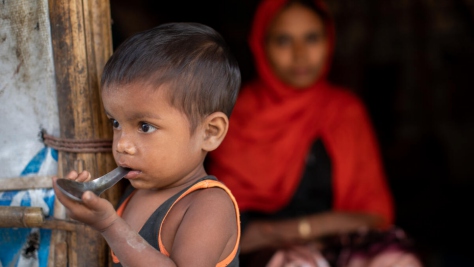
31 March 2021 (UNHCR)* — By the time Kimberly Virguez finally took the wrenching choice to leave her native Venezuela, widespread food shortages there had left her 15 kilos lighter. In Peru, where she sought asylum, she quickly put the weight back on.
But then the COVID-19 pandemic struck. Kimberly lost her job, and she and her husband had to start skipping meals to have enough to feed their growing twin boys. After months of eating just once a day, Kimberly again weighs about what she did when she left Venezuela in 2018.
(UN News)* — The report from a team of international scientists assembled by the World Health Organization (WHO) to examine how COVID-19 first spread to humans was published on Tuesday 30 March 2021, and was described by the UN health agency’s chief as a welcome start, but far from conclusive.
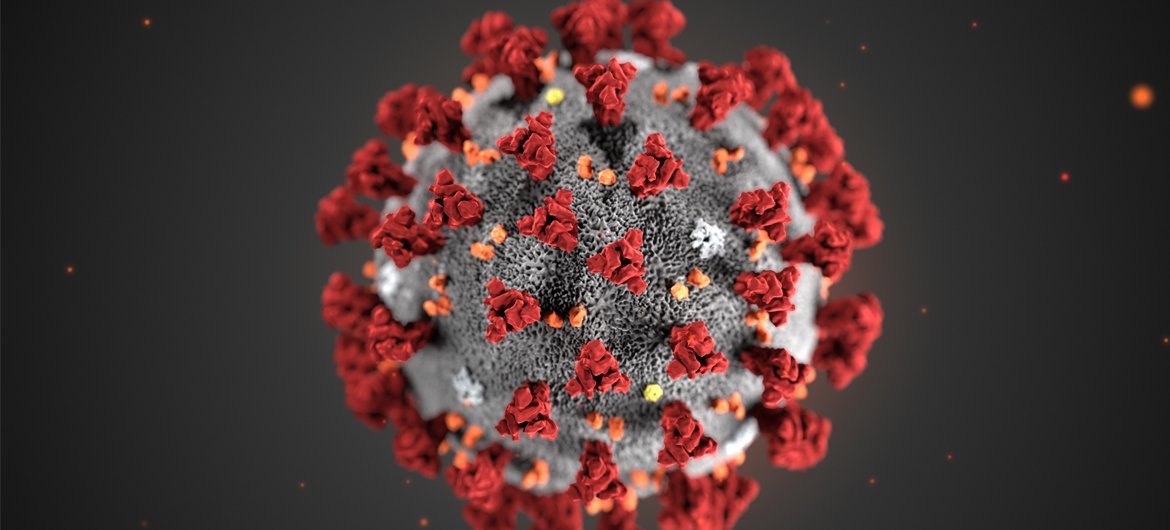
Centers for Disease Control and Prevention | A digital illustration of the coronavirus shows its crown-like appearance.
“This report is a very important beginning, but it is not the end”, said WHO Director-General, Tedros Adhanom Ghebreyesus.
“We have not yet found the source of the virus, and we must continue to follow the science and leave no stone unturned as we do.”
New investigation shows how a US Christian right group is pushing an ‘unproven, unethical’ treatment to ‘reverse’ abortions
Illustration: Inge Snip
25 March 2021 (openDemocracy)* — “You are the first client I personally have worked with in Germany, but we have assisted many women all over Europe,” a US-based nurse told an openDemocracy undercover reporter, posing as a woman who had taken the first, but not the second, pill required to have a medical abortion.
(UN News)* — Though significant steps have been taken to prevent debt crises across the world sparked by the COVID-19 crisis, they have not been sufficient to restore economic stability in many developing countries, according to a policy brief issued by the UN Secretary-General on Monday 29 March 2021.
.
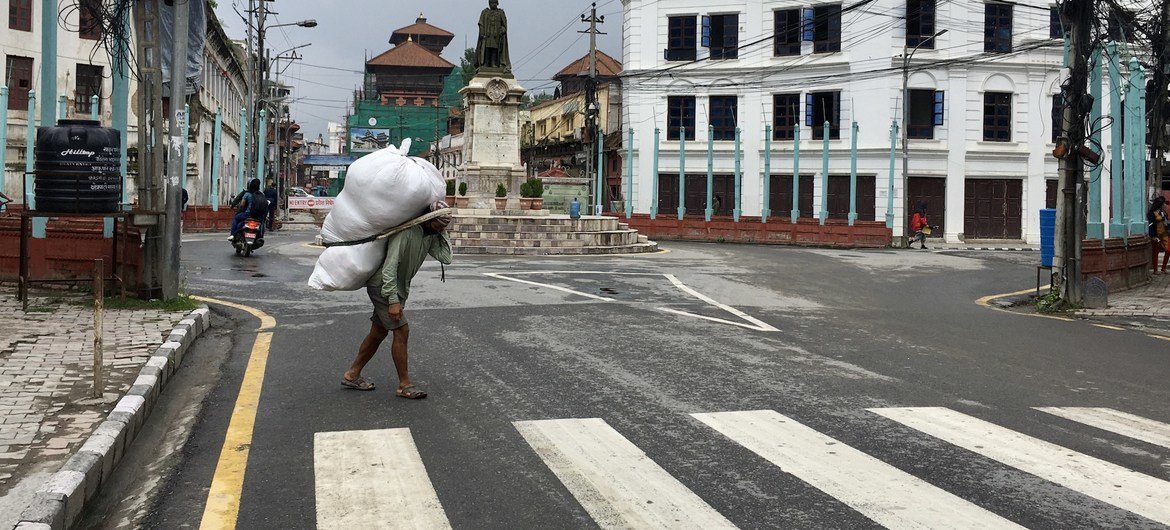
UN News\Vibhu Mishra | Developing countries, in particular, have been hit hard by the impacts of the coronavirus pandemic. Pictured, here a daily wage earner during the COVID-19 lockdown in Kathmandu, Nepal.
SYDNEY and KUALA LUMPUR, Mar 30 2021 (IPS)* – COVID-19 has set back the uneven progress of recent decades, directly causing more than two million deaths. The slowdown, due to the pandemic and policy responses, has pushed hundreds of millions more into poverty, hunger and worse, also deepening many inequalities.
Anis Chowdhury
Development setbacks
The outlook for developing countries is grim, with output losses of 5.7% in 2020. Compared to pre-pandemic trends, the expected 8.1% loss by end-2021 will be much worse than advanced countries dropping 4.7%.
COVID-19 has further set back progress towards the Sustainable Development Goals (SDGs). As progress was largely ‘not on track’ even before the pandemic, developing countries will need much support to mitigate the new setbacks, let alone get back on track.
In late 2020 Robert J. Burrowes and myself were asked by some Melbourne activists protesting against the lockdowns and Covid vaccinations to help them develop more effective strategy.
Anita McKone
Many of the protesters were new to activism, and those with an inclination towards following a nonviolent approach wanted education in this area.
In February, Robert and I ran two Introduction to Nonviolent Action workshops, and one Nonviolent Strategy weekend, and with the inspiration and input of this great group of participants, I have now put the basics of a worldwide nonviolent campaign strategy to defeat the Great Reset on a website. We have named this campaign We Are Human, We Are Free.
The website is designed as a resource that activists anywhere in the world can use to develop effective local nonviolent campaigns.
Shark fin soup is well-known. When we hear that 100 million sharks are killed every year by the fishing industry, some people may assume it’s because of shark fin soup. But these assumptions are just not true. Only focusing on shark fin soup crowds out other reasons sharks are in trouble, including a huge global market for shark products like meat and oil.
Improving tenure in Amazon basin can lower deforestation rates and biodiversity loss
Indigenous and Tribal Peoples in Latin America and the Caribbean are the best guardians of their forests when compared to those responsible for the region’s other forests.
Santiago, Chile/Rome (FAO)* – Deforestation rates are significantly lower in Indigenous and Tribal territories where governments have formally recognized collective land rights, according to a new report launched on 25 March 2021.
27 March 2021 (Wall Street International)* — As almost every new technology emerging, ML (Machine Learning) is a double-edged sword that can be used as a solution or as harm depending on the situation.
Machine Learning can be used as a solution or as harm depending on the situation | Image fromWall Street International.
So, it is only natural to assume that adversaries will become more and more interested in learning how to attack involving ML models.






 HUMAN WRONGS WATCH