On 19 August, we mark the World Humanitarian Day — a time to honor those who step into crises to help others, and to stand with the millions of people whose lives hang in the balance.
PHOTO:United Nations
This year the message is clear: the humanitarian system is stretched to its limits; underfunded, overwhelmed and under attack.
Where bombs fall and disasters strike, humanitarian workers are the ones holding the line keeping people alive, often at great personal risk. But more and more those who help are becoming targets themselves.
In 2024 alone over 380 humanitarian workers were killed. Some in the line of duty, others in their homes. Hundreds more have been injured, kidnapped or detained, and there is reason to fear 2025 could be worse.
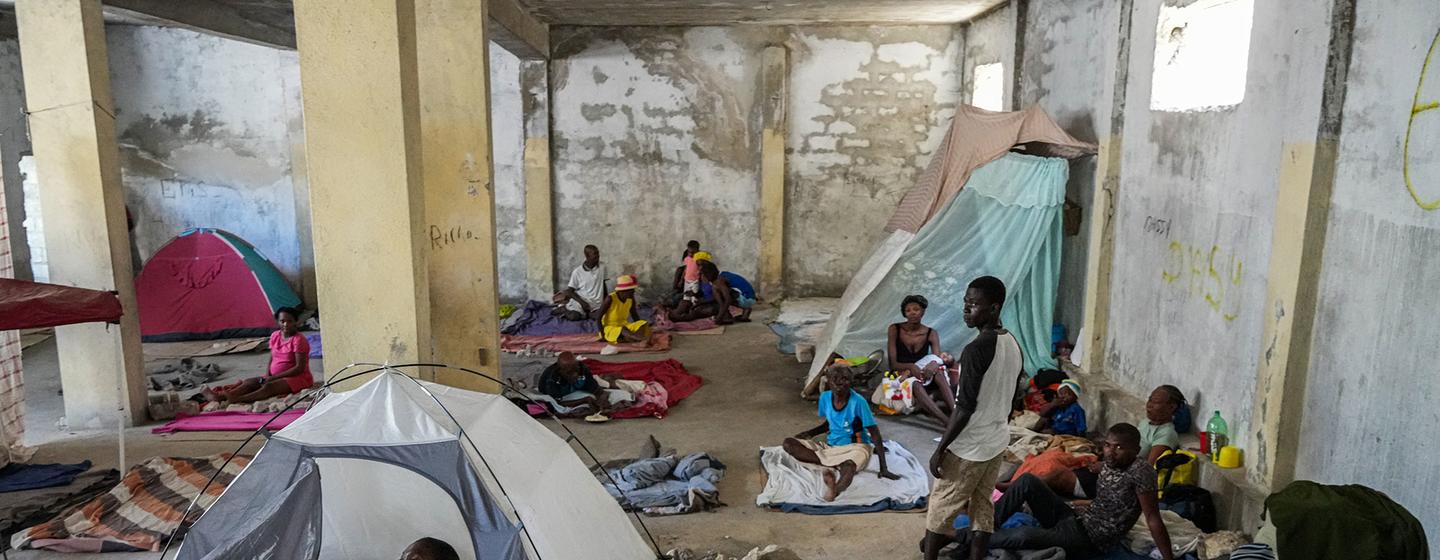
(UN News)* —As gang violence across Haiti escalates, and the United States and other donors reduce their humanitarian funding, 1.3 million people who have fled their homes are facing the direst of consequences.
Women and girls face the brunt of this crisis. Gender-based violence (GBV) such as gang rape is rampant, particularly in the capital Port-au-Prince, and is exacerbated by precarious conditions in displacement camps.
Yet, recent funding cuts have shut down centres for sexual and reproductive health and GBV services. Displacement and insecurity make the services that do exist often too difficult to access.
“The vast majority of governments want a strong agreement, yet a handful of bad actors were allowed to use process to drive such ambition into the ground,” said one environmentalist.
.
Plastic waste washes ashore in the Maldives archipelago. Credit: UNDP
NEW YORK, Aug 18 2025 (IPS)** –– Negotiators in Geneva adjourned what was expected to be the final round of plastics treaty negotiations on Friday [15 August 2025] without reaching an agreement, a failure that environmentalists blamed on the Trump-led United States, Saudi Arabia, and other powerful nations that opposed any effort to curb plastic production—the primary driver of a worsening global pollution crisis.
UNITED NATIONS, Aug 15 2025 (IPS)* — Asia-Pacific’s midwives are a healthcare lifeline capable of delivering nearly 90 percent of essential maternal and newborn services. Yet the region grapples with severe shortages, underinvestment, and systemic neglect.
Strong health systems start with midwives. Credit: Unsplash
The newly released State of Asia’s Midwifery 2024 Report, released by the United Nations Population Fund (UNFPA), reveals that despite midwives’ lifesaving potential, many countries lack enough workers, face poor training and support systems, and struggle with weak policy backing.
The findings underscore an urgent need to elevate midwives from auxiliary roles to central pillars of health systems across the region.
(Washington, DC) – The Trump administration’s omission of key sections and manipulation of certain countries’ rights abuses degrade and politicize the 2025 US State Department human rights report, Human Rights Watch on 12 August 2025 said.
It’s this vicious cycle that as long as the institutions are still so weak, you have the Wild West like in old American movies, where the sheriff is the judge, jury and executioner, all in one.
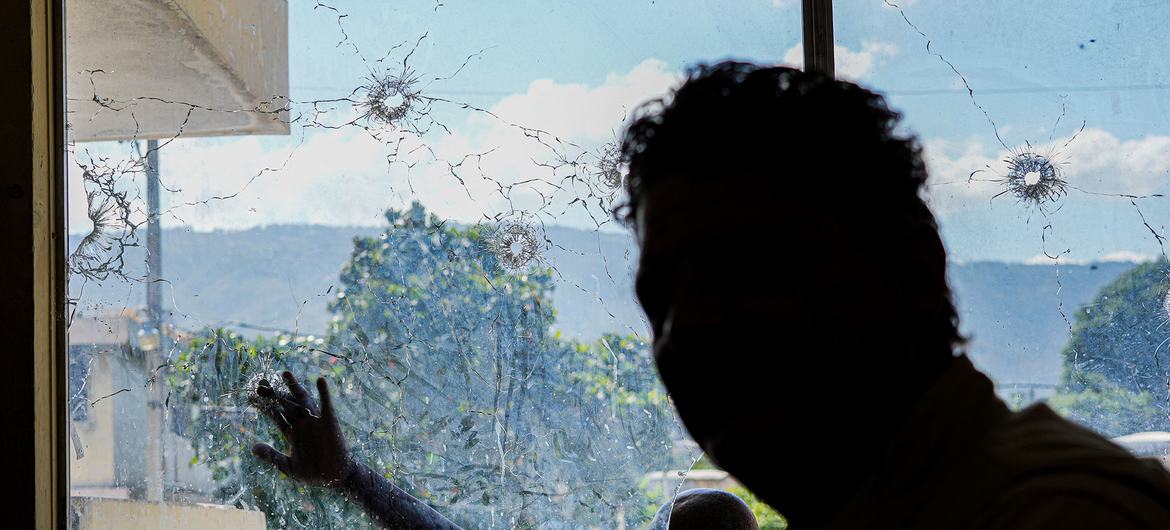
(UN News)* — With armed gangs expanding their influence, self-defence groups morphing into gang-like entities and public officials acting with impunity, Haiti is slowly becoming something like the Wild West, according to William O’Neill, the UN’s designated expert on human rights forthe Caribbean island nation.
And if you ask Mr. O’Neill what is creating conditions akin to the Wild West, the answer is desperation.
With over 1.3 million Haitians displaced and half of the country going hungry, desperation is not some abstract idea in Haiti — it is a lived reality.
(UN News)* — Sexual violence in conflict zones rose sharply in 2024, increasing by a quarter compared to the previous year, the UN reported on Thursday [].
More than 4,600 survivors endured abuses used as weapons of war, torture, terrorism and political repression.
According to the annual Report of the Secretary-General on Conflict-Related Sexual Violence, both State and non-State actors were responsible for violations in 21 countries, with the highest numbers recorded in the Central African Republic (CAR), the Democratic Republic of the Congo (DRC), Haiti, Somalia and South Sudan.
Women and girls made up 92% of victims, but men, boys, people with diverse sexual orientations and gender identities, racial and ethnic minorities – together with some persons with disabilities – were also targeted, ranging in age from one to 75.
FREIBURG, Germany, Aug 15 2025 (IPS)** –– The EU likes to think of itself as a normative power — a community of values, committed to upholding international law, promoting peace, protecting civilians and building a rules-based global order.
These are not just lofty ideals; they are enshrined in EU treaties, declarations and Council conclusions.
Credit: alliance/Anadolu/Moiz Salhi
But when it comes to the brutal, drawn-out destruction of Gaza and the continued illegal occupation of Palestine, these principles seem to have become hollow rhetoric.
Worse, they are being actively undermined by the craven inaction of the EU’s institutions and the blockage of governments like Germany, Italy, Hungary and the Czech Republic.
The European Commission has been shamefully absent as well.
People in Haiti are living through “hell on earth,” according to William O’Neill, the UN’s designated expert on human rights in Haiti.
Armed gangs – predominantly in the capital Port-au-Prince – are parasitically extracting financial resources from the population and perpetrating horrific acts of violence, he says – but they’re just one cog in a larger cycle of impunity, corruption and violence.
Following the release of the most recent report on human rights in Haiti, UN News’ Naima Sawaya spoke to Mr. O’Neill about whether a path forward to peace even exists. She began by asking if he had ever met a gang leader.
At 22 pages, the current draft text contains 32 draft articles which will be discussed in fine detail, according to the UN. The text is designed to shape the future instrument and will serve as a starting point for negotiations. For 10 days from 5-14 August, delegations from 179 countries will pore over the text as they meet at UN Geneva, alongside more than 1,900 other participants from 618 observer organizations including scientists, environmentalists and industry representatives.
Plastic garbage is offloaded from a fishing boat on the east coast of China. Credit: UNEP/Justin Jin
GENEVA, Aug 12 2025 (IPS)** –– The future plastics treatyis being sold as potentially an environmental breakthrough. But in its current form during this week’s negotiations, it contains adangerous flawthat must be addressed before the final text is agreed — or it could undercut the world’s most widely ratified health treaty, the WHO Framework Convention on Tobacco Control (FCTC), and hand the tobacco industry the tools to expand its market under the banner of environmental action.





 HUMAN WRONGS WATCH