AWAZA, Turkmenistan, Aug 6 2025 (IPS)* ––Agriculture is a critical sector in landlocked developing countries, as more than half (55 percent) of the population is employed in the agriculture sector – significantly higher than the global average of 25 per cent.
As such, the deterioration of food security in landlocked developing countries (LLDCs) is an unfolding catastrophe.
A high-level event focused on agriculture at the ongoing Third United Nations Conference on Landlocked Developing Countries. Credit: Joyce Chimbi/IPS
There are 32 LLDCs, with a combined population of nearly 600 million people.
The prevalence of moderate or severe food insecurity rose from an estimated 43 percent in 2015 to 51 percent in 2023, and the rate of undernourishment from approximately 15 percent to 19 percent in the same period.
(UN News)* —At a major UN forum opening in Awaza, Turkmenistan, this week, parliamentarians from around the world are being urged to take decisive action to improve the lives of more than 600 million people living in landlocked developing countries (LLDCs).
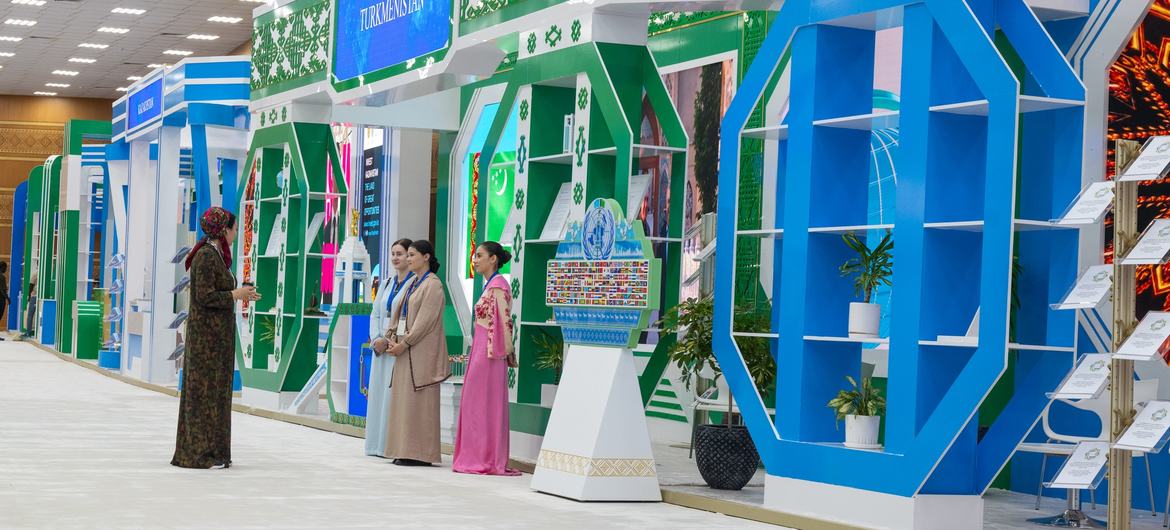
UN Photo/Eskinder Debebe | Final preparations being made at the venue of the LLDC3 conference in Awaza, Turkmenistan.
Speaking at the Parliamentary Forum of the Third UN Conference on LLDCs, senior UN leaders stressed that political will, matched with national legislative action, is essential if a new decade-long development plan is to make a real difference.
There are 32 such countries globally, home to over half a billion people. Many are also among the world’s least developed, hindered by high transport costs, limited access to global markets, and heightened vulnerability to climate impacts.
(United Nations)* — Landlocked Developing Countries (LLDCs) lack territorial access to the sea, leaving them dependent on transit neighbors for a route to world markets.
.
Located more than 500km from the Atlantic coast, Burkina Faso is one of 16 landlocked developing countries in Africa.
PHOTO:UNDP / Aurélia Rusek
This geographic disadvantage drives up transport costs, introduces avoidable delays, and exposes LLDCs to any political or economic instability along those corridors.
The results are stark: Average transport costs are more than twice those of neighboring coastal states.
Export opportunities shrink, foreign direct investment falls, and economic growth slows.
When a transit country is itself a developing economy—often the case—intraregional trade remains modest.
If you want to glimpse the strange, brutal logic that governs our world, don’t start with politicians or generals—start with the bank towers glittering above your city skyline and the endless parade of military hardware rolling across distant deserts.
These are the altars of the age: places where class warfare is waged relentlessly, not through open declarations but via the everyday rituals of finance and force.
And though the language of “class warfare” may evoke images of barricades and revolution, the reality today is far more insidious—a meticulously organized onslaught against the fabric of society itself, a crime against peace perpetrated not by outlaws, but by the very architects of our economic and military order.
Class warfare, in this sense, is neither forgotten rhetoric nor historical artifact.
SRINAGAR, India & KINSHASA, DRC, Jul 29 2025 (IPS)* —The Democratic Republic of Congo (DRC) stands on the precipice of a profound environmental and social crisis, as the government prepares to auction 55 new oil blocks that cover more than half the country’s landmass.
Activists march in the street of Goma, in the Democratic Republic of Congo to demand climate justice and an end to oil exploration in the Virunga National Park. Credit: MNKF Creatives
Touted as a pathway to economic growth, the move has triggered fierce backlash from scientists, civil society groups, Indigenous leaders, and international conservationists, who warn that the proposed fossil fuel expansion threatens some of the most ecologically and culturally significant landscapes on Earth.
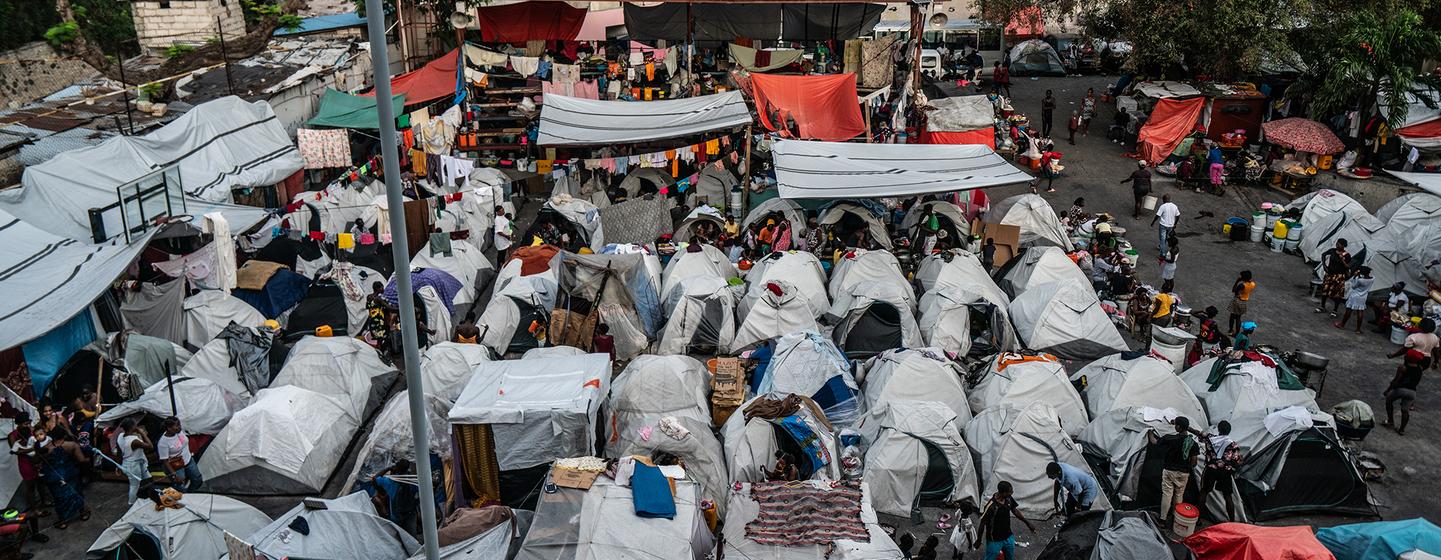
(UN News)* —People in Haiti have expressed “despair” following the “abrupt suspension” of a wide range of humanitarian services, according to the UN aid coordinationoffice, OCHA, in the Caribbean country.
The cancellation of most US funding in January means many services to the most vulnerable people have been cut or put on hold.
Multiple political, security and socioeconomic crises have led to 5.7 million people suffering from a lack of food and have forced 1.3 million people to flee their homes.
With a dramatic reduction in funding, Haiti faces a crucial “turning point”.
ATLANTA, USA, Jul 30 2025 (IPS)* –– Why is a grinning Netanyahu, Israel’s Prime Minister, wildly cheered by both Democrats and Republicans whenever he addresses the US Congress, while at the same time in Gaza countless innocent civilians are being killed by American bombs and bullets—and now babies are starving?
Rescue workers line up body bags in Tal Al Sultan, in Rafah, in southern Gaza. Credit: UNOCHA
Shamefully, Israel’s leader, a certified genocidaire, is one of the few global leaders to have ever been granted the privilege of speaking to Congress, which he has done frequently.
But the world sees and will remember his Big Lie that “There is no starvation in Gaza.”
The mantle of righteousness that once adorned the American flag after WW II is shredded, perhaps beyond repair.
(UN News)* — The promise seemed simple: a job, a fresh start, a way out. Instead, Maria* stepped off a boat onto a picture-perfect Trinidadian beach with hope in her heart and into a nightmare that would shadow her for years.
.On the World Day Against Trafficking in Persons, observed on 30 July, follow the journey of a woman who escaped..Eight years ago, Maria left Caracas, Venezuela, driven by dwindling opportunities and the hope of completing her veterinary studies..At just 21, she accepted an offer from an acquaintance who promised work in Trinidad and Tobago, cleaning homes, waiting tables. It seemed like a lifeline, a way to support herself and her family back home..She didn’t know then that she was stepping into a well-laid trap.
30 July 2025 (United Nations) — Human trafficking continues to be a global threat driven by organized crime. More and more victims are being trafficked every year, across greater distances, with greater violence, for longer periods of time and for greater profit.
From 2020 to 2023, there were more than 200,000 detected victims globally, which is just the tip of the iceberg.
The actual number of unreported cases is believed to be significantly higher.
(UN News)* — In a world increasingly shaped by climate extremes, environmental experts are delivering a blunt warning: four rapidly emerging threats could reshape life for millions unless urgent action is taken.
From ancient microbes awakening in melting glaciers to toxic pollutants unleashed by floods, the dangers are no longer distant or theoretical. They are here, and they are growing.







 HUMAN WRONGS WATCH