10 July 2020 (Wall Street International)* — Attempting to prevent police racism and violence is a worthy and overdue reform. However, to adequately address racism, we need to take a step back and understand the ‘me’ generations. Then perhaps we may begin to move away from the me-culture towards a we-culture.
A Green-Brown-Black New Deal could be the first step to help America heal | Image from Wall Street International.
.
We might even consider completing the French revolution, giving equality and fraternity the same priority as individual freedom (Prilleltensky 2020). We may find our lost morality and build community (Brooks 2020). Let us try to understand how the me generations evolved over the last 60 years.
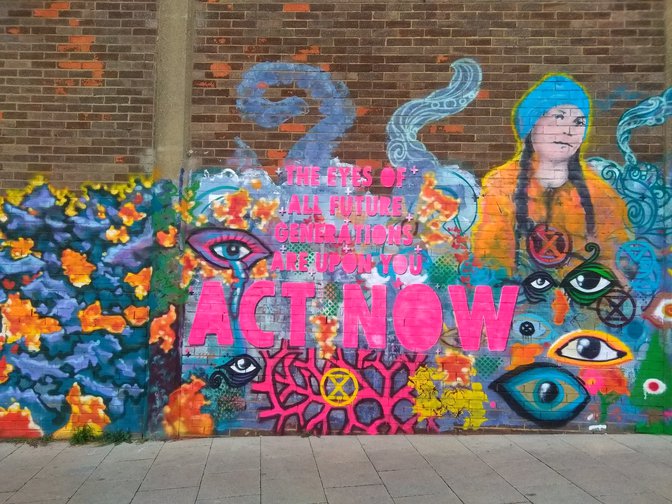
A new movement of time rebels is challenging the myopia of conventional politics.
.
Flickr/Dominic Alves. CC BY 2.0.
12 July 2020 (openDemocracy)* — Democracy has a blind spot so enormous that almost nobody notices it – myself included. In the decade I spent as a political scientist researching democratic governance, it simply never occurred to me that we systematically disenfranchise future generations in the same way that women and slaves have been disenfranchised in the past. Yet that is the reality.
The new Greek asylum system is designed to deport people rather than offer them safety and protection, warned the Greek Council for Refugees (GCR) and Oxfam on 1 July 2020. This means that people who have fled violence and persecution have little chance of a fair asylum procedure, and even families with children are regularly detained in inhumane conditions.
By the UN High Commissioner for Refugees Filippo Grandi*
GENEVA – UNHCR, the UN Refugee Agency, is concerned about planned changes to the asylum system in the United States. We are worried that the proposed “Procedures for Asylum and Withholding of Removal, Credible Fear and Reasonable Fear Review”, currently being circulated for public comment, mark a departure from humanitarian policies and practices long championed by the United States and rooted in international law. | Español | Français | عربي
Philippo Grandi
The United States has for decades been a global leader in the field of refugee protection, on which the lives and freedom of many depend – providing access to asylum on its territory, resettlement places for extremely vulnerable refugees hosted elsewhere, and as the largest humanitarian donor to refugee programmes around the world.
However, the changes contained in the pending regulation, combined with separate restrictions enacted in recent years, would mean that many people fleeing persecution would be unable to request, or obtain, protection in the United States.
12 July 2020 (UN News)* — In the wake of the unprecedented COVID-19 crisis, tax systems should be reformed, and tax avoidance and evasion reduced, to ensure an economic recovery in which everyone pays their share, says the International Monetary Fund (IMF).
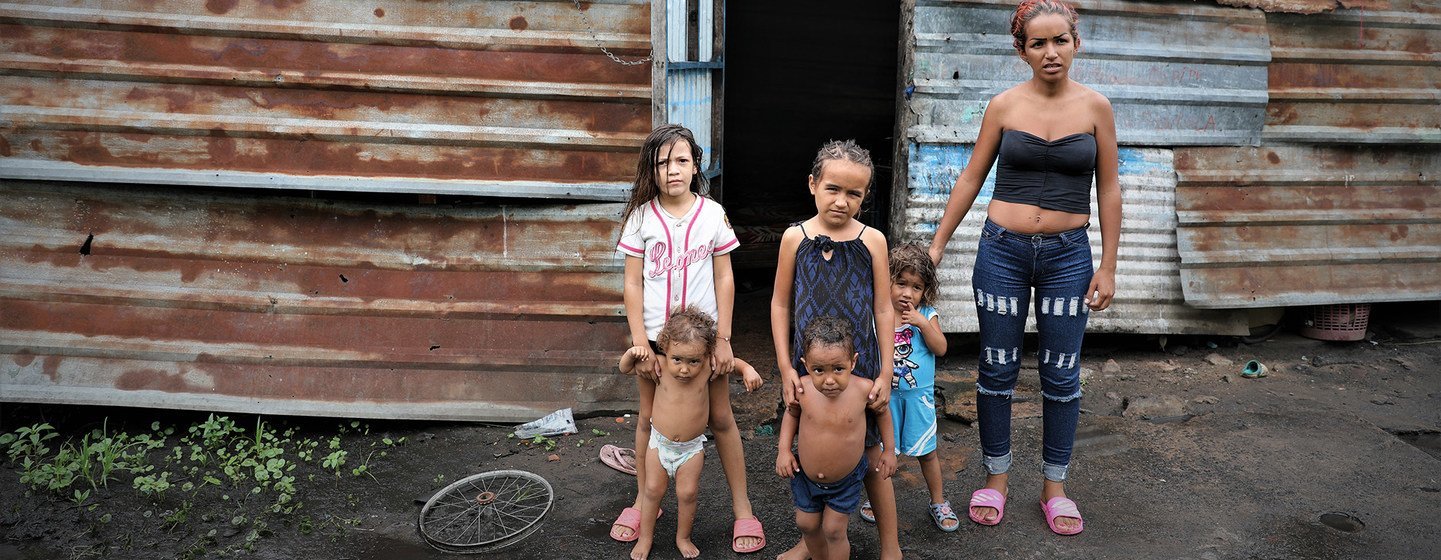
OCHA/Gemma Cortes | Dioximar Guevara lives with her five children in San Felix, a slum of Puerto Ordaz, the main city in Bolívar, Venezuela, where poverty runs deep.
Taxes pay for many of the things that are fundamental to functioning societies across the world, such as schools, health care, and social services. Money raised through taxation is crucial to ensuring that these services are maintained during the COVID-19 crisis. But, when businesses shut down, and millions lose their jobs, as has happened during the current crisis, tax revenue plummets.
11 July 2020 (UN Women)* — Across the globe, many migrants have been waiting to reunite with their families in the wake of the COVID-19 pandemic and travel restrictions to prevent its spread.
Mithu Tamang waits in a queue to get her temperature checked by staff at WHR’s women-managed quarantine facility. Photo: UN Women/Ashma Shrestha
Mithu Tamang, 30, was among more than 300 fellow Nepali migrants stuck in Kuwait for over two months before a chartered flight was arranged to bring them home on 11 June. It was the first flight to land since the national lockdown on 24 March 2020.
12 July 2020 (United Nations)* — World Youth Skills Day 2020 (15 July) will take place in a challenging context. The COVID-19 pandemic and lockdown measures have led to the worldwide closure of technical and vocational education and training (TVET) institutions, threatening the continuity of skills development.
Respondents to a survey of TVET institutions, jointly collected by UNESCO, the International Labour Organization (ILO) and the World Bank, reported that distance training has become the most common way of imparting skills, with considerable difficulties regarding, among others, curricula adaptation, trainee and trainer preparedness, connectivity, or assessment and certification processes.
Image by Scientific Visualization Studio/Goddard Space Flight Center
1.5oC is the point where global warming linked consequences become increasingly severe and more difficult and expensive to adapt to, protect ourselves from, and control further temperature increases.
Scientifically documented consequences of breaching 1.5oC include 70% loss of corals and loss of half the habitat of insects, including food pollinators, by the end of the century, bringing global food security issues, on top of accelerating frequency and intensity of extreme weather events.
UNITED NATIONS, Jul 9 2020 (IPS)* – When governments and states begin their recovery journey from the economic downturn caused by the coronavirus pandemic, there might be a heightened threat to indigenous peoples, their land and resources.
A dated photo of indigenous women in Chiquimula in Guatemala making rope out of maguey (Agave americana) fibre. Experts say there is concern about whether there will be the protection and respect of indigenous peoples’ right to land and national resources as there will be huge interest in those resources during the post-COVID-19 recovery. Credit: Danilo Valladares/IPS







 HUMAN WRONGS WATCH
,_plate_V_-_BL.jpg)