
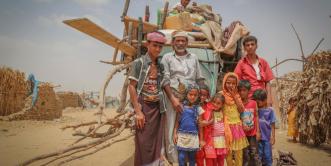
A total of 8.5 million people were forced to flee within their own country by conflict and violence during 2019, according to a new report from the Internal Displacement Monitoring Centre (IDMC).
read more »
'Unseen' News and Views

Waorani leaders before Thursday’s press conference, Shell, Pastaza, Ecuadorian Amazon. | Photo: Mitch Anderson / Amazon Frontlines
22 May 2020 (teleSUR)* — The Waorani indigenous community in Ecuador’s Amazon filed legal action against the state for failing to act and establish a concerted emergency response to fight the spread of the coronavirus within Indigenous communities, representatives of the first nation informed Thursday [21 May 2020] at a press conference.
.
A total of 8.5 million people were forced to flee within their own country by conflict and violence during 2019, according to a new report from the Internal Displacement Monitoring Centre (IDMC).
– It is easy to generalize about migration. Populist politicians often portray migrants as strangers and ”our” homeland as a stable entity, rooted in an old agricultural society. When they do so they tend to forget that most of us are in fact migrants who have left that traditional farming community far behind and if it was not we who did so, it was our ancestors.
 Another form of generalization is to mirror the general in the personal, something that is done in novels and films. I believe that virtually every country on earth can present moving descriptions of people leaving the countryside for the city.
Reading a novel or watching movie describing this process may help us to realize that behind every migrant, international as well as internal, there is a unique human destiny.
.
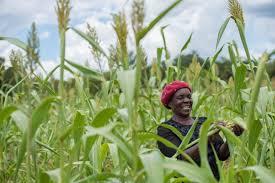
In Zimbabwe, introducing lost varieties of different crops and creating diversity has ensured more varied and nutritious diets. ©CTDT/ Tinashe Sithole
22 May 2020, Rome/Nairobi (FAO and UNEP)* – Urgent action is needed to safeguard the biodiversity of the world’s forests amid alarming rates of deforestation and degradation, according to the latest edition of The State of the World’s Forests released today [22 May 2020].
 Fishing in a forest lake at Gede Pangrango in Indonesia.
Published on the International Day for Biological Diversity (22 May), the report shows that the conservation of the world’s biodiversity is utterly dependent on the way in which we interact with and use the world’s forests.
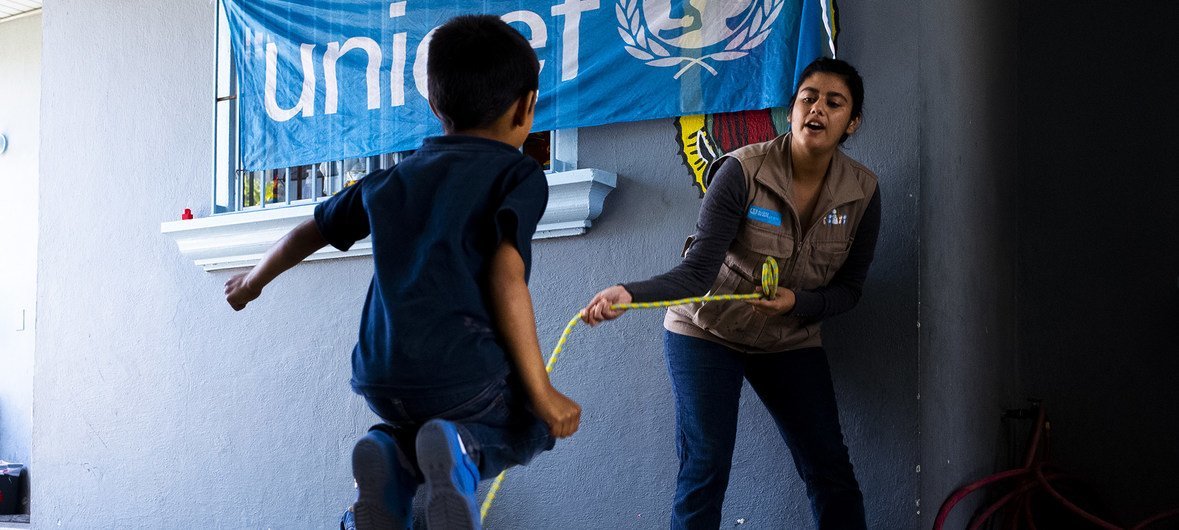
(UN News)* — Migrant children forcibly returned from the United States to Mexico and Central America are facing danger and discrimination aggravated by the COVID-19 pandemic, according to the UN Children’s Fund (UNICEF).
COVID-19 has hit the Brazilian Amazon particularly hard, exposing highly vulnerable native people from Venezuela to the potentially deadly disease. | Español | Français | عربي
 Venezuelan indigenous Warao refugees and migrants are relocated to a safe space in Manaus, Brazil, amid the COVID-19 pandemic.© UNHCR/Felipe Irnaldo
Orlando Martínez had barely heard of COVID-19 when 26 members of his Warao ethnic group came down with tell-tale symptoms of the illness.
20 May 2020 (UNHCR)* — “At first they got a fever and couldn’t eat. Then, they got headaches and chest pains. Then, they started coughing and couldn’t walk,” recalled Orlando, a 43-year-old Warao community leader who fled hunger, violence and insecurity in Venezuela in 2017, along with some 18 other families from the indigenous group.
“They were very, very sick,” he said.
Geneva, 21 May 2020 (IOM)* – The International Organization for Migration (IOM), and the UN Refugee Agency (UNHCR), are calling on Malta and other European States to speed efforts to bring some 160 rescued migrants and refugees, who remain at sea on board two Captain Morgan vessels, on to dry land and to safety.
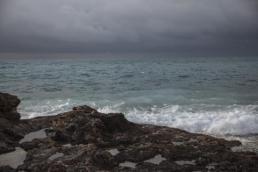 A separate group of 21 people, mostly families, women and children, were already evacuated and disembarked in Malta several days ago. It is important to disembark the remaining people as soon as possible, as they have been on board the vessel for some two weeks – the standard quarantine period for COVID-19 – without any clarity on disembarkation. It is unacceptable to leave people at sea longer than necessary, especially under difficult and unsuitable conditions.

 HUMAN WRONGS WATCH