Nairobi, 22 April 2020 (UN Environment)* – In response to the COVID-19 crisis, an unprecedented coalition has come together to launch “Earth School,” which provides free, high-quality educational content to help students, parents and teachers around the world who are currently at home.
Initiated by the United Nations Environment Programme (UNEP) and TED-Ed, Earth School takes students on a 30-day “Adventure” through the natural world.
A central bank-financed UBI can fill the debt gap, providing a vital safety net while preventing cyclical recessions.
Ellen Brown
According to an April 6 article on CNBC.com, Spain is slated to become the first country in Europe to introduce a universal basic income (UBI) on a long-term basis.
Spain’s Minister for Economic Affairs has announced plans to roll out a UBI “as soon as possible,” with the goal of providing a nationwide basic wage that supports citizens “forever.”
UN News* — The COVID-19 pandemic will herald the worst economic contraction in the history of Latin American and the Caribbean, with a projected -5.3 per cent drop in activity this year, according to a report by the UN office for the region, ECLAC, published on Tuesday [21 April 2020].
U.N. Mexico/Alexis Aubin | Shopping centres in Mexico City are largely empty as people are kept away by the threat of the coronavirus .COVID-19.
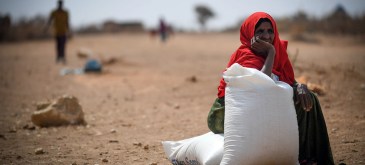
UN News* — The world is not only facing “a global health pandemic but also a global humanitarian catastrophe”, the UN food relief agency chief told the Security Council on Tuesday [21 April 2020] via video link.
FAO/IFAD/WFP/Michael Tewelde | In 2019, Ethiopia experienced the fifth-worst food crisis of all the countries on earth.
21 April 2020 (UN News)* — With most of the world’s students now at home due to COVID-19, the pandemic is revealing startling divides in digitally-based distance learning, data from the UN education and cultural agency, UNESCO, and partners has revealed.
UNICEF In response to school closures caused by COVID-19, UNESCO recommends the use of distance learning programmes to limit the disruption of education.
They found that half of all students currently out of the classroom – or nearly 830 million learners globally — do not have access to a computer. Additionally, more than 40 per cent have no Internet access at home.
SYDNEY and KUALA LUMPUR, Apr 21 2020 (IPS) – Brazil’s President Jair Bolsonaro appointed medical entrepreneur Nelson Teich his new health minister on 17 April. The businessman quickly echoed his boss’ desire to resume business as usual regardless of its potentially lethal consequences.
Bolsonaro had fired his previous health minister, displeased by Luiz Henrique Mandetta’s public remarks on the need for lockdowns and physical distancing.
Mandetta’s firing was met with outrage across Brazil. Locked-down citizens banged pots and pans, shouting “Bolsonaro Murder”.
In his final briefing as minister, Mandetta urged staff to challenge “denialism” and mount an “unyielding defence of life and science”. “Don’t be afraid”, he said, “Science is light … and it is through science that we will find a way out of this.”
Covid-19 apocalypse
Meanwhile, Brazil has begun digging large graveyards ahead of an anticipated peak of the national Covid-19 epidemic. In Sao Paulo’s Vila Formosa cemetery, the largest in Latin America, about 20 excavators are digging graves around the clock.
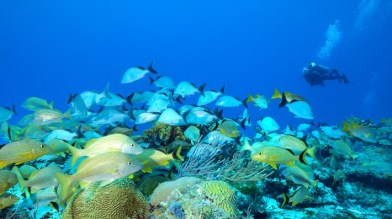
Palancar Reef – Cozumel. Photo by Jett Britnell / Coral Reef Image Bank
21 April 2020 (UN Environment)* — Due to the COVID-19 pandemic, many across the word are figuring out how to move forward with day-to-day activities as the plans to addresses the health, socio-economic and recovery issues take shape.
But nature, now more than ever, needs us to pay attention to its warning signals and to take care of it so it can take care of us.
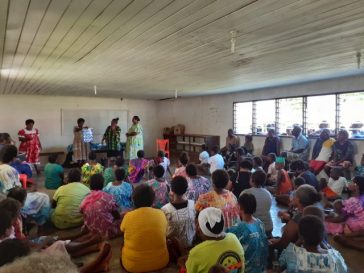
Women in the South Pacific island nation of Vanuatu are dealing with six crises currently – COVID 19, drought, scarcity of potable water, and volcanic ash, acid rain and sulphur gas as there are several active volcanoes on the island. But global women’s rights organisations are collaborating with regional alliances in supporting local women.
STOCKHOLM / ROME, Apr 20 2020 (IPS)* – Epidemic diseases are not random events that afflict societies capriciously and without warning, on the contrary, every society produces its own specific vulnerabilities. To study them is to understand the importance of a society’s structure, its standard of living, and its political priorities. […] Epidemics are a mirror, they show who we really are: Our ethics, beliefs, and socio-economic relationships.
Frank Snowden 1
After contagion, the symptoms of the Ebola Virus become evident between two days and three weeks – vomiting, diarrhoea and rash as victims begin to bleed both internally and externally, an average of 50 percent of the afflicted will die.
The disease was first identified in 1976. The largest outbreak to date was in West Africa, between December 2013 and January 2016, with 11,323 deaths.2
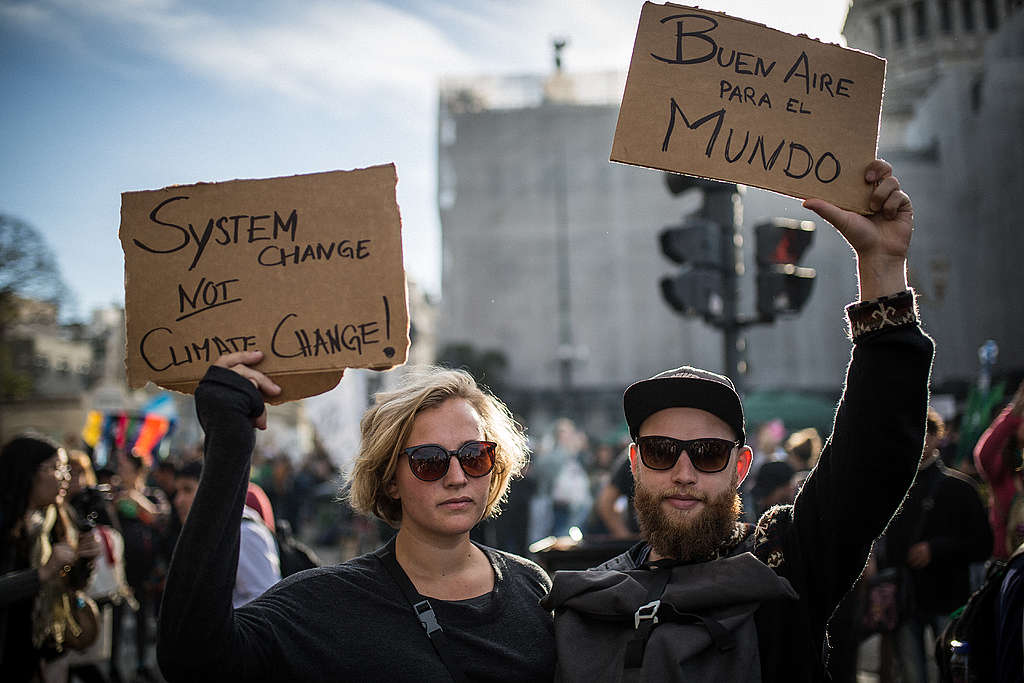
– In a moment when the way to show we care is by keeping our distance as much as possible, fighting effectively for a safe and just society and planet can feel impossible.






 HUMAN WRONGS WATCH