On January 3, 2020, the U.S. military, following President Trump’s orders, killed Major General Qassim Suleimani, respected leader of the Islamic Revolutionary Guard Groups’ Qud Force.
I never understood the morality of foreign policy, but I’m getting the hang of it, thanks to the little-known pocket manual “The U.S. Holy Code Book of Double Standard Morality.”
According to U.S. Code, U.S. troops’ killing of Suleimani is honorable because he’s considered responsible for killing Americans, but if Iranians were to kill his American equivalent, the CIA director, whose role in killing is not subject to evaluation, it would be reprehensible.
According to Perkins, he began writing Confessions of an Economic Hit Man in the 1980s, but “threats or bribes always convinced [him] to stop.”
Perkins’ function was to convince the political and financial leadership of underdeveloped countries to accept enormous development loans from institutions like the World Bank and USAID.
Saddled with debts they could not hope to pay, those countries were forced to acquiesce to political pressure from the United States on a variety of issues.
CureVac issued a statement on Sunday [15 march 2020], in which it said that “the company rejects current rumors of an acquisition.”
The privately-held company CureVac based in Tuebingen, Germany hopes to have an experimental vaccine ready by June or July. | Photo: EFE (Photo posted here fromteleSur’s article).
15 March 2020 (teleSUR)* — German government sources told Reuters news agency Sunday that the United States administration was looking into how it could gain exclusive access to a potential vaccine being developed by a German firm, CureVac.
Public health experts say that if the COVID-19 epidemic is not successfully contained, it could become a global pandemic, perhaps spreading to 80% of the world’s population.
John Scales Avery
With a 1% mortality rate, this would mean that 70 million people would die of the disease.
With a 2% mortality rate, the total number of deaths would be twice that number, 140 million people. Comparable numbers of people have died in the tragic wars and pandemics of the past. There is a serious danger that it might happen again.
Perhaps the best way to avoid such a tragedy would be to quickly develop an inexpensive and effective vaccine against the COVID-19 virus, and to distribute it very widely, free of charge, with the support of government funds.
The most promising techniques for doing so, in my opinion, are the methods of monoclonal antibodies and gene-splicing.
14 March 2020 (Wall Street International)* — These are words from a poem by José Ángel Valente “… after a shipwreck, after so many things that have been destroyed within ourselves…”.
Too many things must indeed have been destroyed within ourselves if we can still see —without being moved, and becoming outraged!— the pictures of thousands of refugees (including children and old people!) in the Greek-Turkish border, the border between Mexico and US, the Mediterranean sea…
DAYLESFORD, Australia, 15 March 2020 — As the human onslaught against life on Earth accelerates, no part of the biosphere is left pristine. The simple act of consuming more than we actually need drives the world’s governments and corporations to endlessly destroy more and more of the Earth to extract the resources necessary to satisfy our insatiable desires.
Robert J. Burrowes
In fact, an initiative of the World Economic Forum has just reported that ‘For the first time in history, more than 100 billion tonnes of materials are entering the global economy every year’ – see ‘The Circularity Gap Report 2020’ – which means that, on average, every person on Earth uses more than 13 tonnes of materials each year extracted from the Earth.
As I have explained elsewhere, however, the psychological damage we have all suffered, which leaves us with unmet but critically important emotional needs (and, in many cases, the sense that our lives are meaningless), cannot be rectified by material consumption. Despite this, most of us will spend our lives engaged in a futile attempt to fill the aching void in our psyche by consuming and accumulating, at staggering cost to the Earth.
12 March 2020 (UN Environment)* — On 26 July 2019, 22-year-old Sam Bencheghib asked the crowd of friends, supporters and media gathered around him, to take two deep breaths as a reminder of the importance that the oceans have in giving life.
Finish Line, Photo by Jacqueline Verdugo
Bencheghib was about to embark upon a 3,100-mile run across the United States of America from coast to coast. He planned to average 20 miles per day for six months, running from New York City to Los Angeles.
(UN News)* — The coronavirus outbreak may have forced millions around the world already into “social distancing”, keeping a metre apart to prevent its spread, but it will not stop them from uniting to combat racism, the UN High Commissioner for Human Rights declared in Geneva on Friday [13 March 2020].
UNDPLAC Young women from the Caribbean island of Dominica.
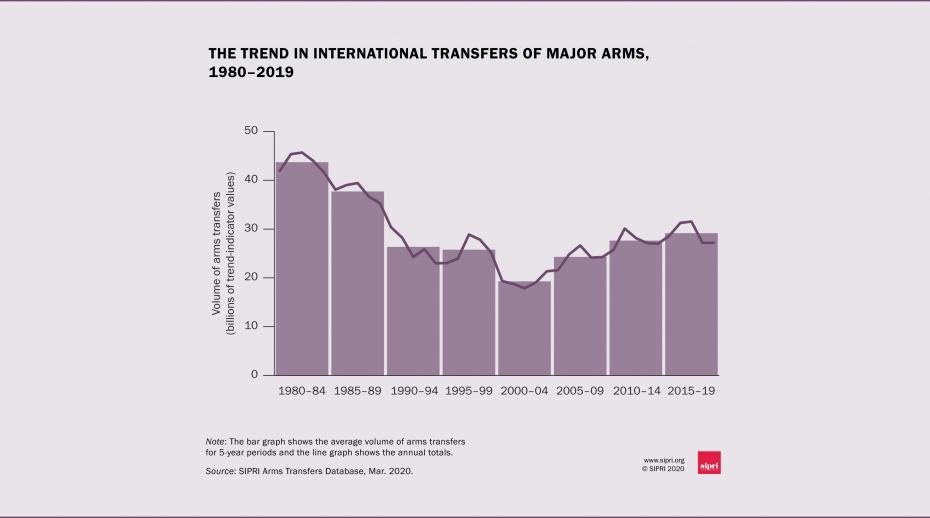
(Stockholm, 9 March 2020) International transfers of major arms during the five-year period 2015–19 increased by 5.5 per cent compared with 2010–14. According to new data from the Stockholm International Peace Research Institute (SIPRI), the largest exporters of arms during the past five years were the United States, Russia, France, Germany and China. The new data shows that the flow of arms to the Middle East has increased, with Saudi Arabia clearly being the world’s largest importer.
 I never understood the morality of foreign policy, but I’m getting the hang of it, thanks to the little-known pocket manual “The U.S. Holy Code Book of Double Standard Morality.”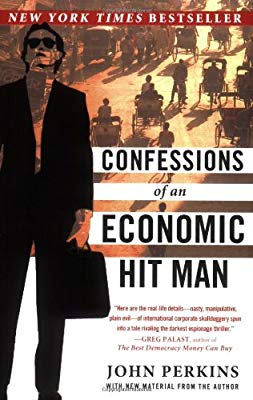






 HUMAN WRONGS WATCH