16/11/2019
15 November 2019 (UN Environment)* — Behind a family home not far from downtown Apia, a small mountain of computer cases teeters in the tropical sun at over 3 metres high. Nearby, stacks of thousands of circuit boards create rolling green foothills. Steel drums, plastic buckets and fraying carboard boxes dot this electronic landscape—overflowing reservoirs of connectors, transistors and wires.
“He’s dismantled thousands of computers in the last couple years,” says Marina Keil, the President of the Samoa Recycling and Waste Management Association, gesturing at the piles surrounding us.
.
read more »
Posted in Africa, Asia, Latin America & Caribbean, Market Lords, Middle East, Mother Earth, Others-USA-Europe-etc., The Peoples |
Leave a Comment »
16/11/2019
15 November 2019 (UNESCO)* — One of the main obstacles refugees and migrants face when applying for higher education or seeking work in their new countries is the lack of recognition of their prior studies and qualifications. How do we solve this challenge?
Posted in Africa, Asia, Latin America & Caribbean, Market Lords, Middle East, Migrants and Refugees, Mother Earth, Others-USA-Europe-etc., The Peoples, War Lords |
Leave a Comment »
16/11/2019
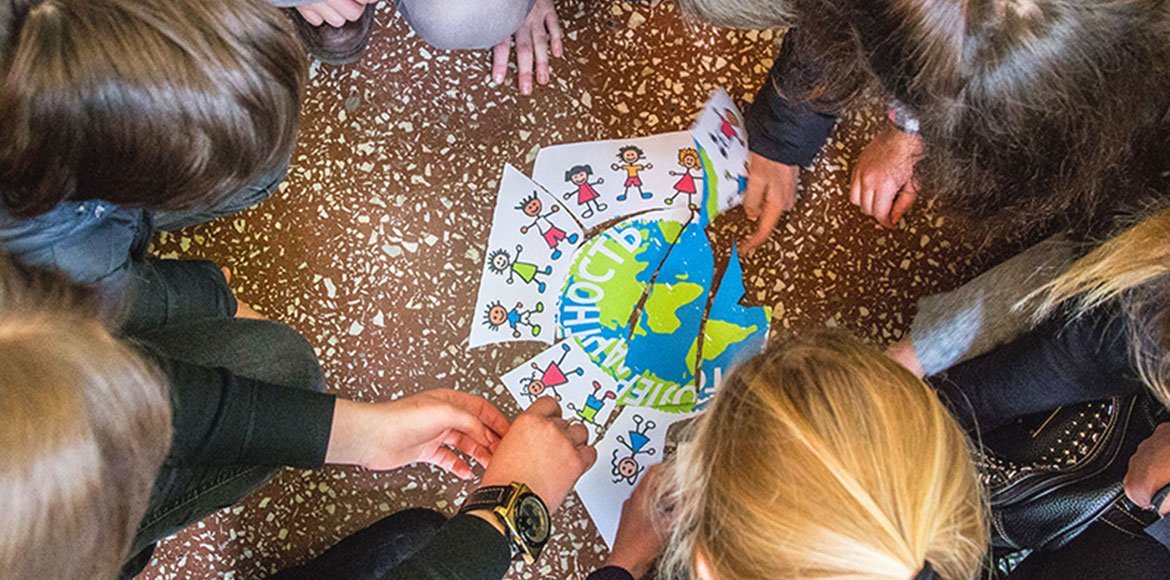
15 November 2019 — At a time when extremism and fanaticism are too often unleashed, when “the venom of hatred” continues to poison a part of humanity, “tolerance has never been more vital a virtue”, the United Nations cultural agency’s chief has said in her message on the International Day for Tolerance. (*).
UNDP Ukraine/Oleksandr Ratushnyak | Children in Ukraine play with an SDG poster illustrating children from different races around the world.
Posted in Africa, Asia, Latin America & Caribbean, Market Lords, Middle East, Migrants and Refugees, Mother Earth, Others-USA-Europe-etc., The Peoples, War Lords |
Leave a Comment »
15/11/2019
13 November 2019 (UN Environment)* — Over the past few months, a series of air pollution episodes have set new records across Asia. Earlier this summer, hundreds of people were evacuated, and schools had to be closed due to poor air quality in many parts of Indonesia, during a crisis that made the skies over the region turn red. More recently, air quality levels have worsened in India creating public outcry with dire consequences for large swaths of society.

The spikes, especially in fine particulate matter (PM2.5), have caused closure of schools, declaration of health emergency by the state government, demonstrations by civil society and alarming media coverage.
read more »
Posted in Africa, Asia, Latin America & Caribbean, Market Lords, Middle East, Migrants and Refugees, Mother Earth, Others-USA-Europe-etc., The Peoples |
Leave a Comment »
15/11/2019
It is not true, but I believe it!
14 November 2019 (Wall Street International)* — “Ciao, how are you?” “So so, we keep going” is the answer. An Italian will never say “I am fine” or “Things are fantastic”. In Italy, people tend to be afraid of causing jealousy and envy so understate all success. According to a widespread belief, envy is at the base of “malocchio”, the evil eye, from the combination of “mal”, bad, and “occhio”, eye. The evil eye is a form of curse, transmitted through the gaze, hence the name, many cultures believe causes injury or bad luck to the person it is directed.
read more »
Posted in Africa, Asia, Latin America & Caribbean, Middle East, Migrants and Refugees, Others-USA-Europe-etc., The Peoples |
Leave a Comment »
15/11/2019
12 November 2019 (UN Environment)* —
Go into any beauty store and you will see shelves full of products that promise to fix every problem with your appearance that you didn’t realize you had. Is your hair too oily or too dry? There’s a shampoo for that. Got flaky skin? Take this exfoliator. Is your skin discoloured? Use this colour-correcting foundation or check out this blusher.
Photo by UNEP/ Viola Kup
Distracted by choices about which products to choose, consumers may not take time to consider the environmental impact of these products.
read more »
Posted in Africa, Asia, Latin America & Caribbean, Market Lords, Middle East, Mother Earth, Others-USA-Europe-etc., The Peoples |
1 Comment »
15/11/2019
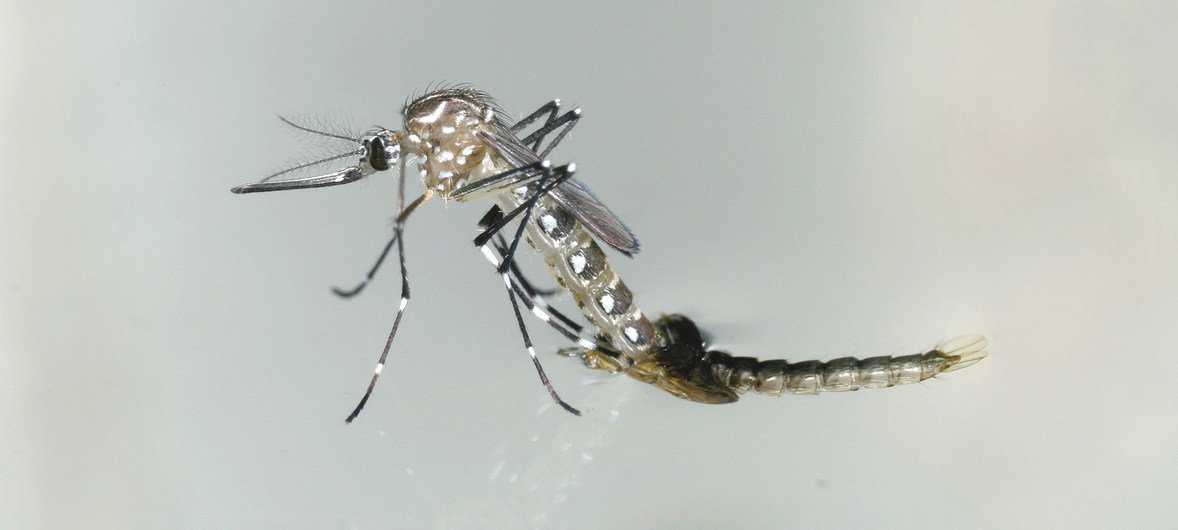
With more than half the world now at risk from mosquito-transmitted dengue fever, according to the World Health Organization (WHO), the UN has taken the lead on a global effort to eradicate the disease – and many others – by measuring the impact of releasing millions of sterilized pests across several continents, it announced on Thursday [14 November 2019]. (*).
IAEA | The aedes aegypti mosquito transmits zika, in addition to dengue and chikungunya.
.
read more »
Posted in Africa, Asia, Latin America & Caribbean, Market Lords, Middle East, Mother Earth, Others-USA-Europe-etc., The Peoples |
Leave a Comment »
15/11/2019
7 November 2019 (International Work Group for indigenous Affairs – IGWIA)* — “We will surrender our lives but not our land, hills and forests,” says representatives of Datobeda village, Jharkhand, India
 These are the words of representatives of Datobeda village, Jharkhand, India, who have been leading the resistance to a limestone mine on their ancestral land and today live in fear of arrest.
Surendranath Tudu, Pandu Sardar, Sonu Sardar and Netramohan Sardar have been falsely accused by the mining company of a number of crimes including kidnapping, assault and extortion.
read more »
Posted in Africa, Asia, Latin America & Caribbean, Market Lords, Middle East, Others-USA-Europe-etc., The Peoples |
Leave a Comment »
14/11/2019
New information on child labour, forced labour and human trafficking in global supply chains is revealed in a report compiled by the ILO, OECD, IOM and UNICEF – members of the Alliance 8.7 partnership on child labour, forced labour, modern slavery and human trafficking. (*)

read more »
Posted in Africa, Asia, Latin America & Caribbean, Market Lords, Middle East, Migrants and Refugees, Mother Earth, Others-USA-Europe-etc., The Peoples, War Lords |
Leave a Comment »
14/11/2019
The Earth is living, and also creates life. Over 4 billion years the Earth has evolved a rich biodiversity — an abundance of different living organisms and ecosystems — that can meet all our needs and sustain life.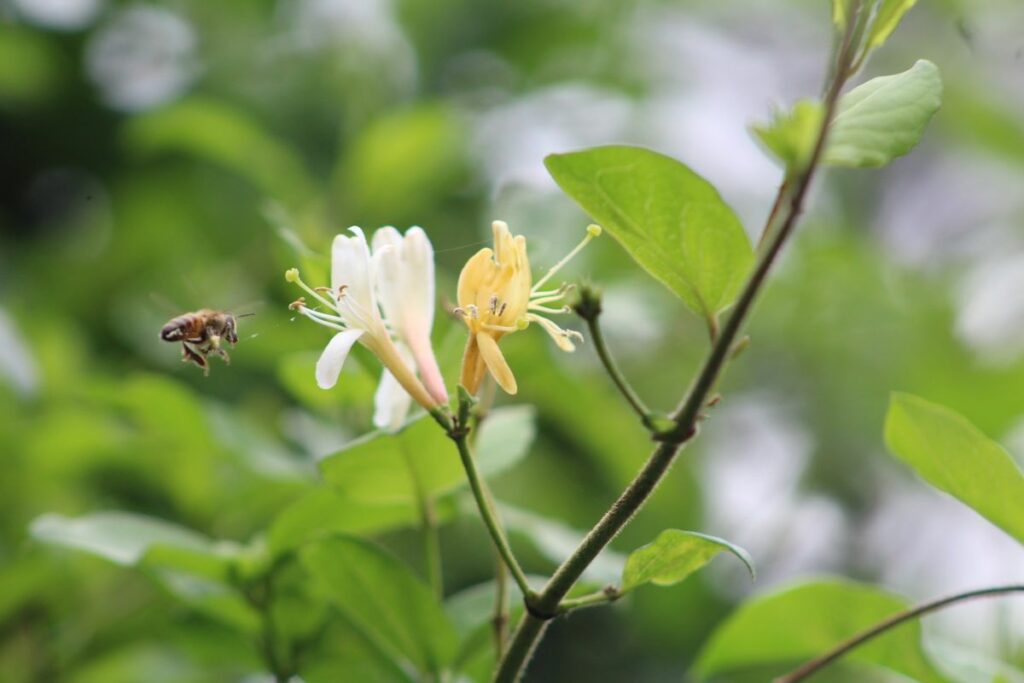 Through biodiversity and the living functions of the biosphere, the Earth regulates temperature and climate, and has created the conditions for our species to evolve.
read more »
Posted in Africa, Asia, Latin America & Caribbean, Market Lords, Middle East, Migrants and Refugees, Mother Earth, Others-USA-Europe-etc., The Peoples |
Leave a Comment »




 HUMAN WRONGS WATCH