“Small disconnected facts, if you take note of them, have a way of becoming connected.” – Walker Percy, The Thanatos Syndrome
Edward Curtin
News headlines for July, 2, 2019 seen at a kiosk in Grand Central Station: Trump says tanks will be on display July 4th as a sign of the nation’s firepower; bombing kill dozens and hurts schoolchildren as Taliban talks resume; Israel is blamed for deadly missile strike in Syria; could a mandatory keto diet improve U.S. military performance; and Japan resumes commercial whaling.
The traveler saw these notices of strength and power and passed them by in disgust.
On the train from New York City, the advertisement on the wall with a picture of a disconsolate white guy read: “They say laughter is the best medicine. But not when it comes to ED.”
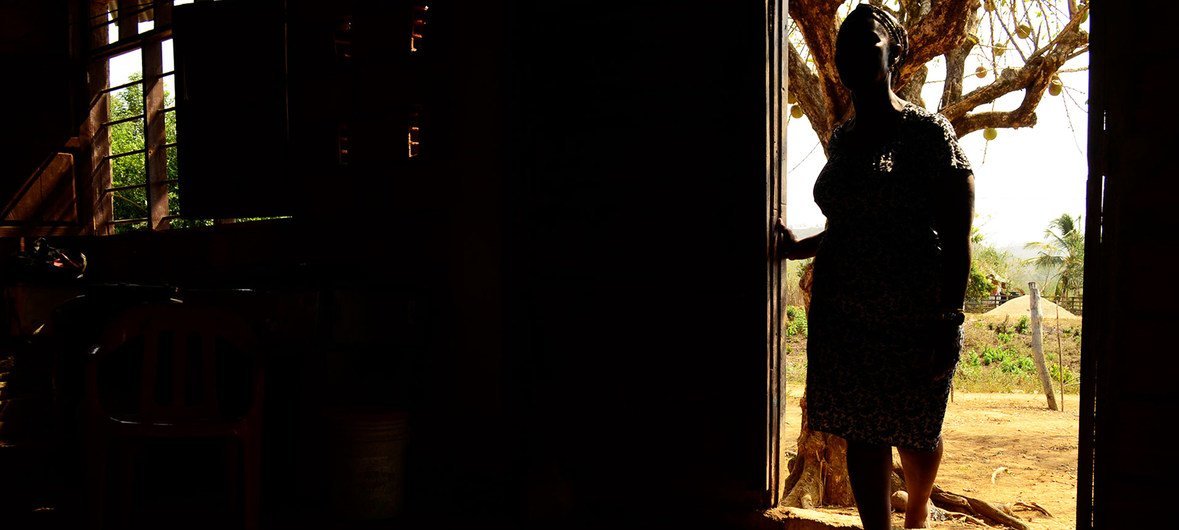
16 August 2019 (UN Environment)* — Sougue Kadjatou is a 45-year-old farmer who lives with her husband and two children in Agboville, a village in Côte d’Ivoire. Her cocoa plantation, where she works every day from morning until early afternoon, is a 40-minute walk from the village. “I’m glad they told me to plant banana and timber trees in my cocoa plantation,” she says.
Photo by Brice Delagneau (Photo poste here fromUN Environment).
August 2019 (Wall Street International)* — What can we learn from the present ecological, economic, social crisis? I believe we need to revise some deep assumptions which are constitutive of our Western culture and through the process of globalization have become part of our world culture. We need to think in a new way, a new way that actually recovers (on a new level) a very old way.
.
The circulation of money on the globe is estimated at four trillion dollars a day | Image from Wall Street International.
The word sacrifice is bandied about by both sides of the debate on climate action. Shall we unpack this loaded shuttlecock?
The Sacrifice of Isaac by Jean-Hippolyte Flandrin. | Image: LACMA, CC0
You who build these altars now To sacrifice these children, You must not do it anymore. -Leonard Cohen
15 August 2019 (openDemocracy)* — Raising the spectre of sacrifice is the all the vogue in current climate denier and delayer circles: it is representative of our current moment in time.
16 August 2019 (FAO)* — Many people equate FAO to a knowledge centre or technical agency, the provider of statistics and world reports on issues such as food insecurity, biodiversity and deforestation.
So it can come as a surprise when they learn that when conflict, extreme weather events, natural disasters, plants pests, animal diseases or other threats devastate livelihoods and push people into hunger, FAO is on the ground to help — from the earliest days of the response.
By providing seeds, fishing gear, animal vaccines or other assets, FAO works to rebuild livelihoods and local food systems to support the self-reliance of those affected and boost their resilience against future threats.
ENTRE RIOS DO OESTE, Brazil, Aug 16 2019 (IPS)* – Romário Schaefer is fattening up 3,300 pigs that he receives when they weigh around 22 kg and returns when they reach 130 to 160 kg – a huge increase in meat and profits for their owner, a local meat-processing plant in this city in Brazil. | En español
The UN environment agency and human rights office (OHCHR) signed a landmark new agreement on Friday [16 August 2019] aimed at better protecting vulnerable human and environmental rights defenders and their families, while increasing protection for people and the places where they live, across the world.
UN Colombia | A wide range of human rights activists have been targeted in Colombia, especially those living in rural areas.Human and environmental rights campaigners are one focus of a new UNEP/OHCHR agreement signed 16 August, 2019.
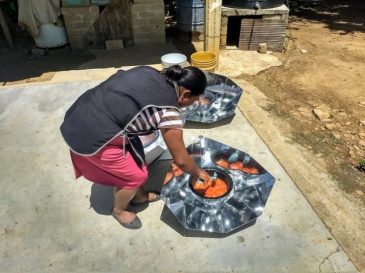
VILLA DE ZAACHILA, Mexico, Aug 13 2019 (IPS)* – Reyna Díaz cooks beans, chicken, pork and desserts in her solar cooker, which she sets up in the open courtyard of her home in a poor neighborhood on the outskirts of this town in southwestern Mexico.| En español
When the Federal Reserve cut interest rates on July 31st for the first time in more than a decade, commentators were asking why.
Ellen Brown
According to official data, the economy was rebounding, unemployment was below 4%, and GDP growth was above 3%. If anything, by the Fed’s own reasoning, it should have been raising rates.
The explanation of market pundits was that we’re in a trade war and a currency war.
Other central banks were cutting their rates and the Fed had to follow suit, in order to prevent the dollar from becoming overvalued relative to other currencies.
The theory is that a cheaper dollar will make American products more attractive on foreign markets, helping our manufacturing and labor bases.




 HUMAN WRONGS WATCH