The first-ever comprehensive scientific assessment of the links between land and climate change is a critical contribution to efforts to curb greenhouse gas emissions, tackle the impacts of global warming and protect food security, the World Meteorological Organization said on 8 August 2019*.
12 August 2019 (FAO)* — It is often said that young people are the future. However, when we talk about rural youth, the reality is that not many see a future in agriculture or in their places of origin. Lack of access to land, technology, credit or productive resources push many rural youth to consider migration, often to urban areas, as their only option to achieve a better future.
10 August 2019 (FAO)* — There are currently 1.8 billion people between the ages of 10 and 24 in the world, the largest young population ever.
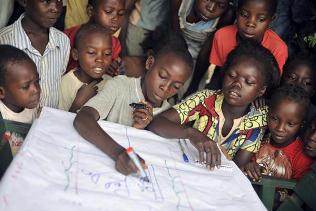
Students drawing during a JFFLS session in Samba, Central African Republic. | Photo from FAO.
On the occasion of International Youth Day (12 August), have a look at FAO’s selection of publications relating to youth and their role as agents of change.
12 August 2019 (United Nations)* — There are currently 1.8 billion young people between the ages of 10 and 24 in the world. This is the largest youth population ever.
Schools are “not equipping young people with the skills they need to navigate the technological revolution”, UN Secretary-General António Guterres warned, in a message released to mark the UN’s International Youth Day [12 August 2019].
.
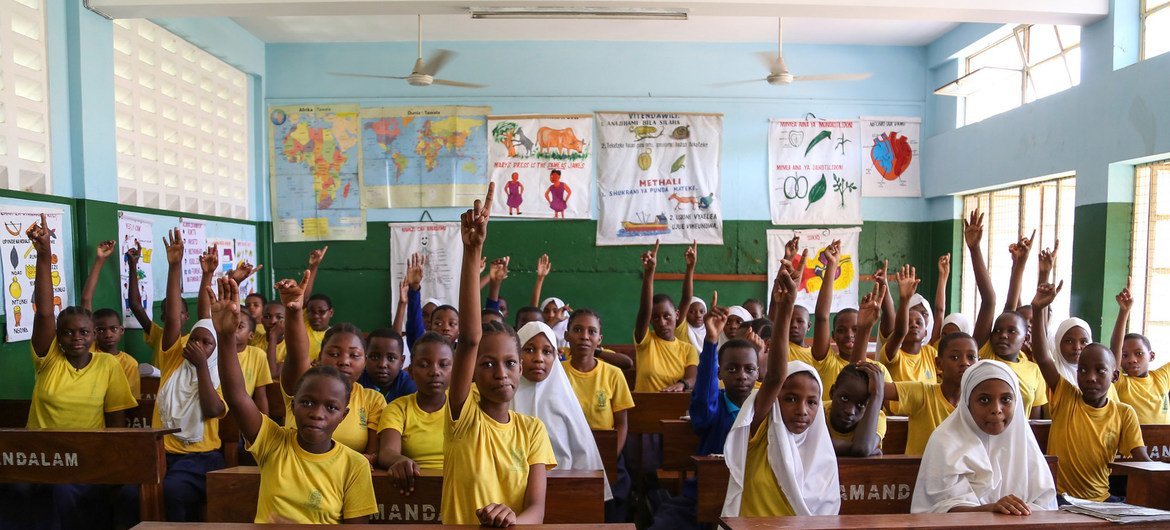
Sarah Farhat/World Bank | Students in Primary Seven at Zanaki Primary School in Dar es Salaam, Tanzania, during an English language class.
.Transforming Education is the theme for this year, which comes at a time when the world is facing a “learning crisis”, says Mr Guterres, and students need not only to learn, “but to learn how to learn”.
Indigenous peoples in the Philippines are increasingly involved in the national conversation about protecting and conserving the South East Asian country’s key biodiversity areas, thanks to support from the United Nations Development Programme (UNDP).
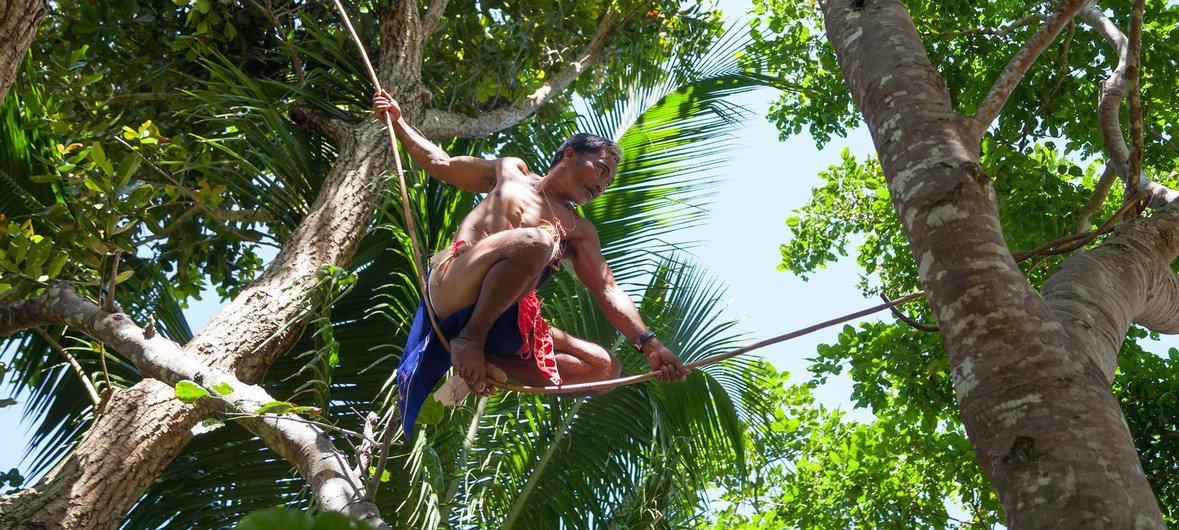
UNDP Philippines/Orange Omengan | An Egongot indigenous man balances on a yantok vine as he crosses from one tree to another in Dipaculao, Aurora, in the Philippines. (23 March 2019)
It is estimated that some 85 per cent of these areas are home to indigenous communities, who live in direct contact with nature and who have the traditional knowledge and skills to protect the environment.
The black guy in Louisiana exclaimed, as we helped ourselves to a rather good meal from his buffet, eating to our heart’s delight.
However, we have had equally good meals elsewhere, even better–certainly more sophisticated, refined, not so sweet, not so salty.
But, for US $5? Maybe not.
Accessible to most people in such a big population? Maybe not.
What did that black guy know about meals around the world?
Probably not much.
But his “only in America” truth was of a deeper kind, transcending all the prejudice, discrimination, killing even lynching, he and his kind had been exposed to.
Keeping the climate at a sustainable level is not prohibitive if we act now.
Keeping the climate at a sustainable level is not prohibitive if we act now | Image from Wall Street International.
10 August 2019 (Wall Street International)* — In 2007 a MIT survey revealed that nearly 60% of Americans feel that “until we are sure that global warming is really a problem, we should not take any steps that would have economic costs” or “its effects will be gradual, so we can deal with the problem gradually” (Sherman, 2007).
8 August 2019 (UN Environment)* — As scorching temperatures continue to break records across Europe, unprecedented wildfires break out in the Arctic, and polar sea ice cover drops—again—to an all-time low, never before has the climate crisis been so palpable, for so many people.
KORCHI/GADCHIROLI, India, Aug 9 2019 (IPS)* –– Kumaribai Jamkatan, 51, has been fighting for women’s land rights since 1987.
Though the constitution of India grants equal rights to men and women, women first started to stake their claim for formal ownership of land only after 2005–the year the government accorded legal rights to daughters to be co-owners of family-owned land.




 HUMAN WRONGS WATCH